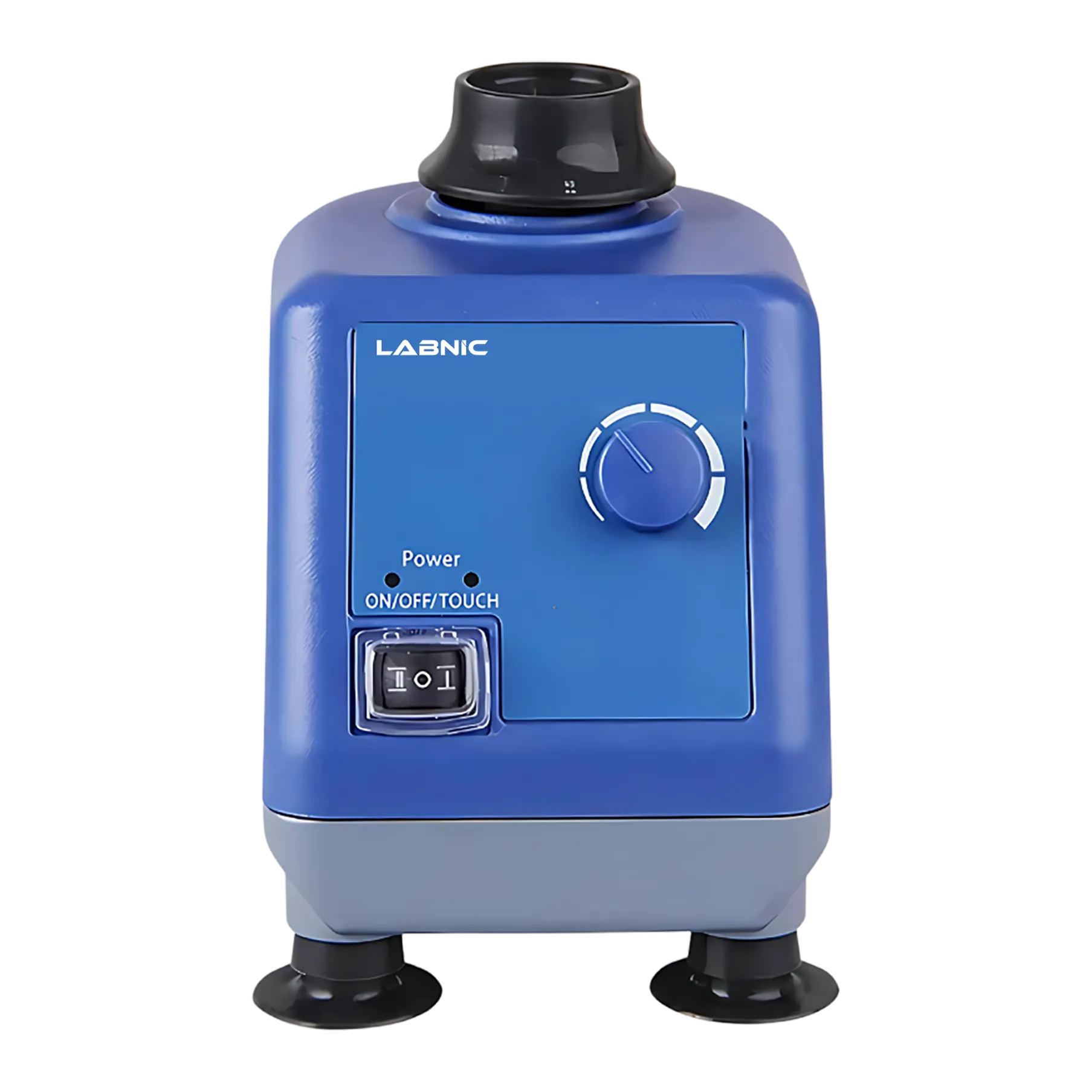
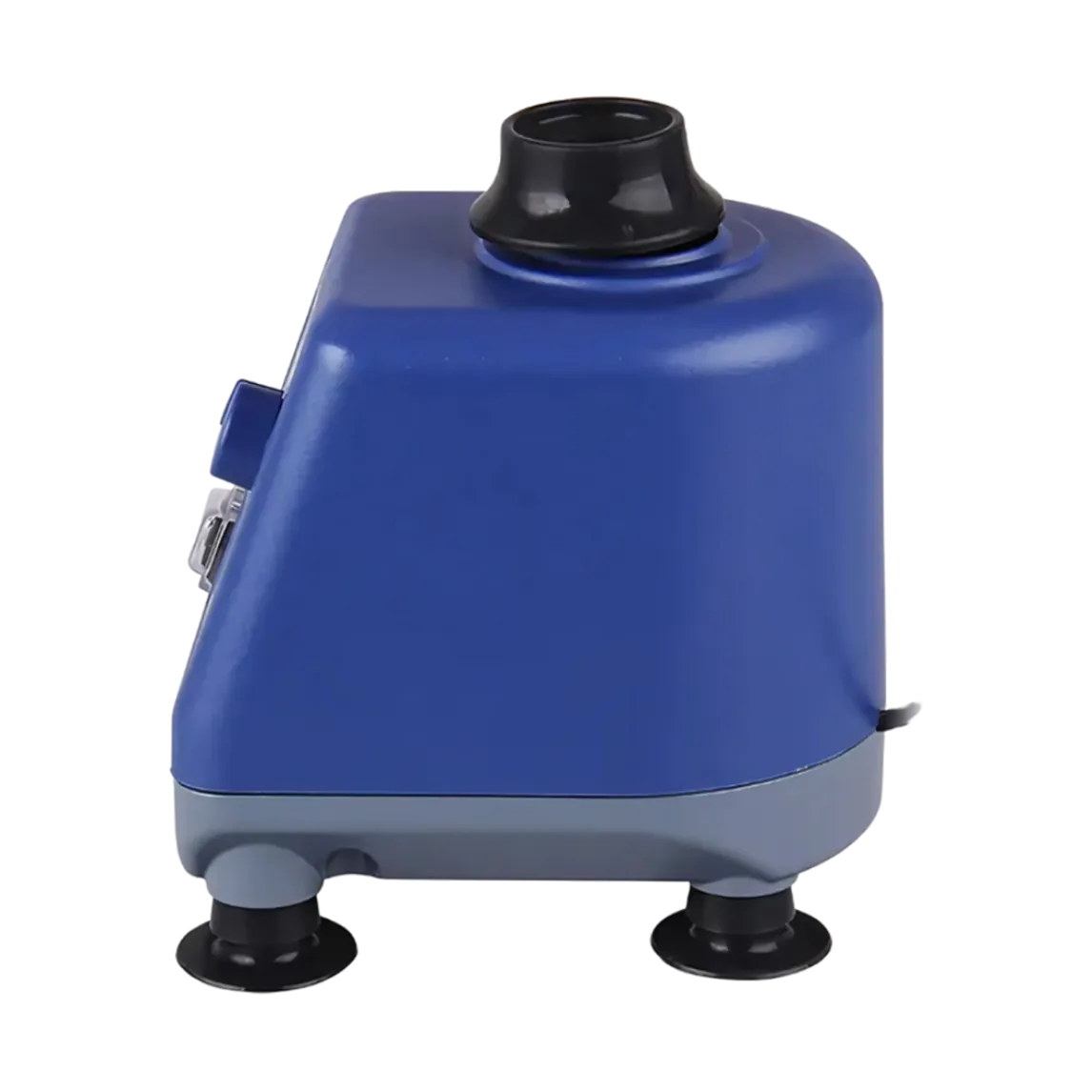

Analog Vortex Mixer LBN-AV151 delivers efficient and reliable sample mixing with a wide speed range of 0 to 3000 rpm for versatile laboratory applications. It features scale-based speed adjustment with continuous and touch operation modes for simple and precise control. Equipped with a 6 mm orbital motion, it ensures rapid and uniform mixing, capable of mixing 50 ml tubes within seconds. Built with a brushless DC motor and robust metal casting base, it provides stable, low-vibration, and long-lasting performance. Our Analog Vortex Mixer is ideal for clinical laboratories, research institutes, educational facilities, and routine sample preparation tasks.
| Speed Range | 0 to 3000 rpm |
| Speed Control | Scale-Based Manual Control |
| Operation Mode | Continuous & Touch |
| Orbital Diameter | 6 mm |
| Mixing Capacity | 50 ml Tube (≈3 sec) |
| Motor Type | Brushless DC Motor |
| Safety Design | Anti-Movement Dynamic Balance |
| Base Construction | Metal Casting Base |
| Power Consumption | 36W |
| Power Supply | 12 V (Low Voltage Operation) |
| Dimensions (mm) | 107×146×166 mm |
| Weight | 3 kg |
Analog Vortex Mixer LBN-AV151is suitable for applications in re-suspending liquids, mixing reagents, buffers, and emulsions, drug extractions, and mixing samples etc. at clinical laboratories, medical centers, hospitals, pharmaceutical labs, and biotechnology industries.
Analog Vortex Mixer LBN-AV151is suitable for applications in re-suspending liquids, mixing reagents, buffers, and emulsions, drug extractions, and mixing samples etc. at clinical laboratories, medical centers, hospitals, pharmaceutical labs, and biotechnology industries.
Most Frequently Asked Questions
1. How does an Analog Vortex Mixer work?
Ans. It operates by using a motor-driven oscillating platform that rapidly agitates the liquid when a container is pressed against it, ensuring thorough mixing.
2. What types of mixing modes are available?
Ans. Analog vortex mixers support touch mode (activated by pressing the tube) and continuous mode (constant mixing without pressure activation).
3. Is it suitable for high-viscosity liquids?
Ans. While it can mix low to moderate viscosity liquids efficiently, highly viscous samples may require a more powerful mixer or extended mixing time.
4. Does it require special maintenance?
Ans. Regular maintenance includes cleaning the platform, ensuring the motor is dust-free, and checking for wear on rubber components to maintain optimal performance.
5. Is it stable during high-speed mixing?
Ans. Most models are designed with anti-slip feet and a balanced motor system to ensure stability and prevent movement during operation.
