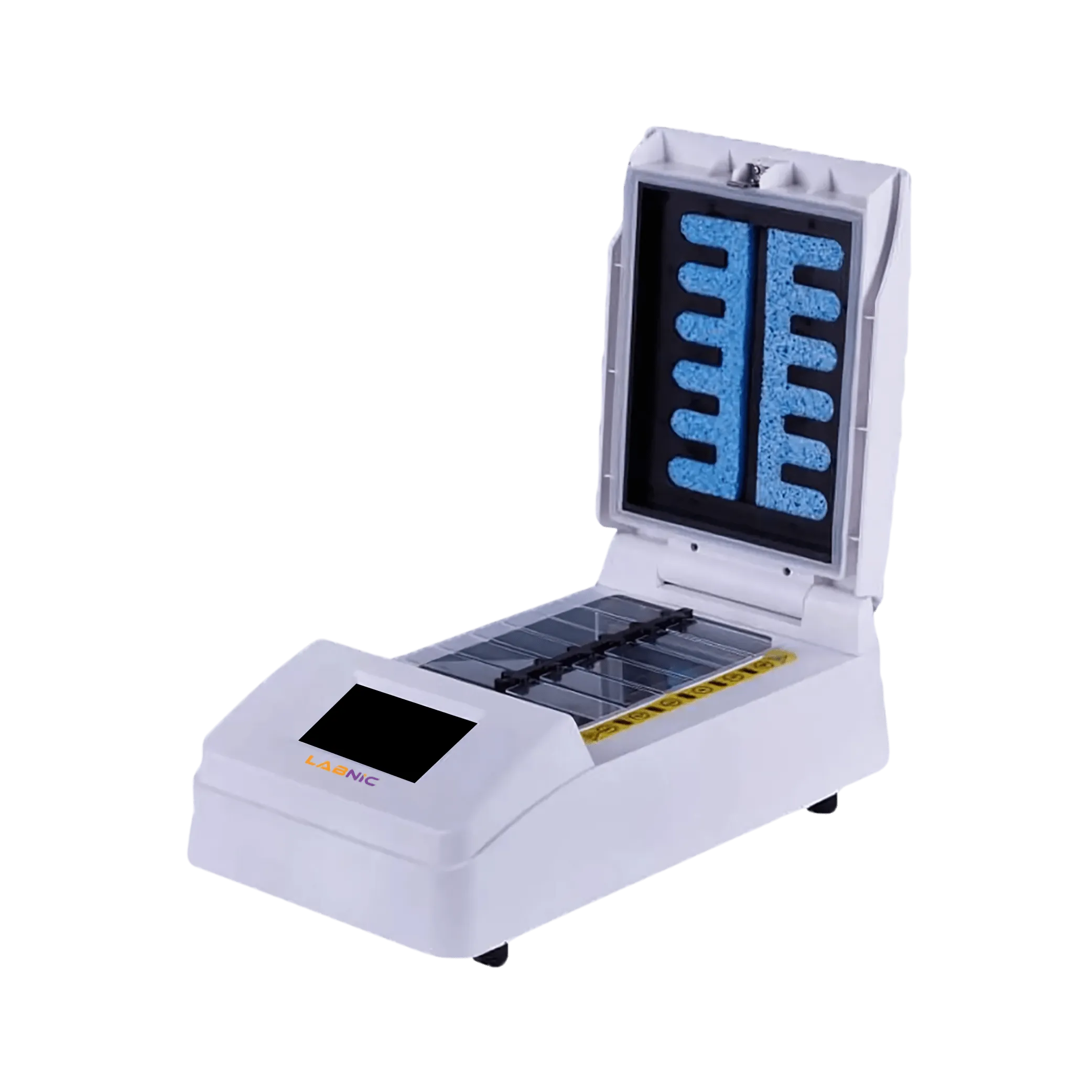
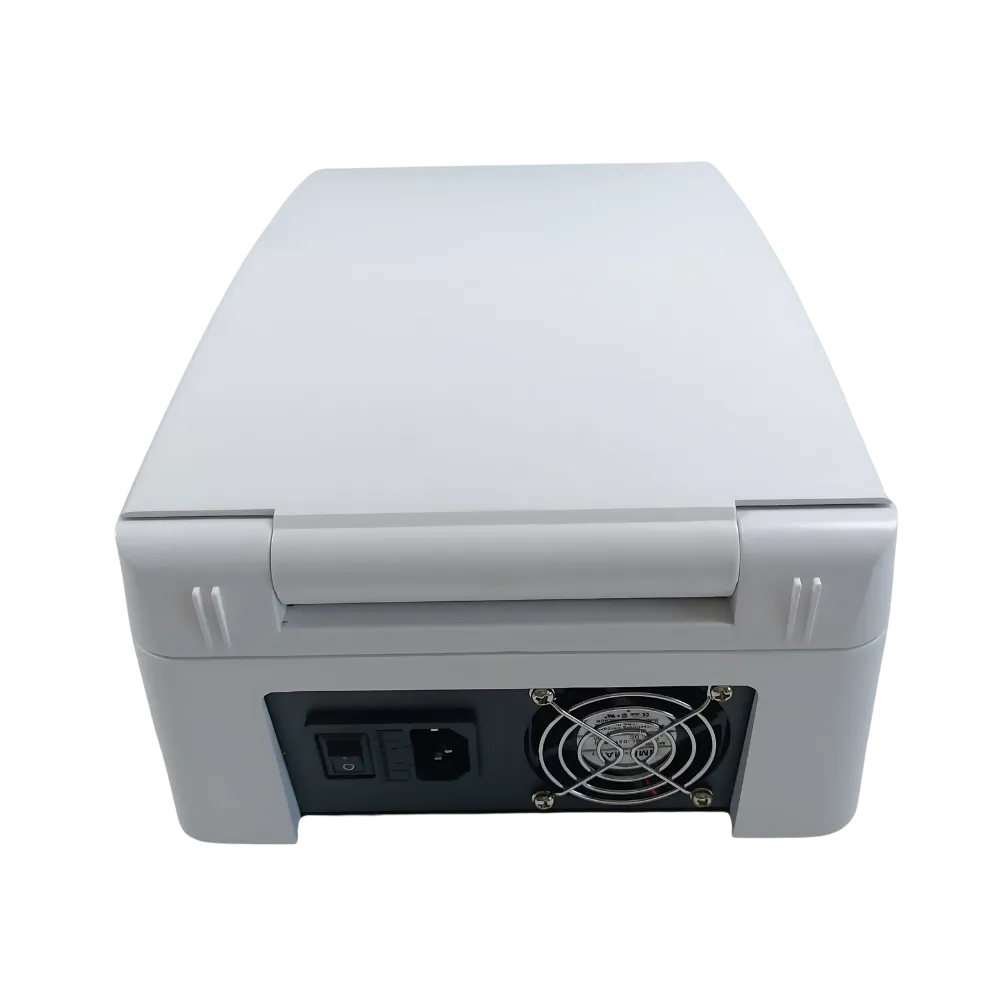
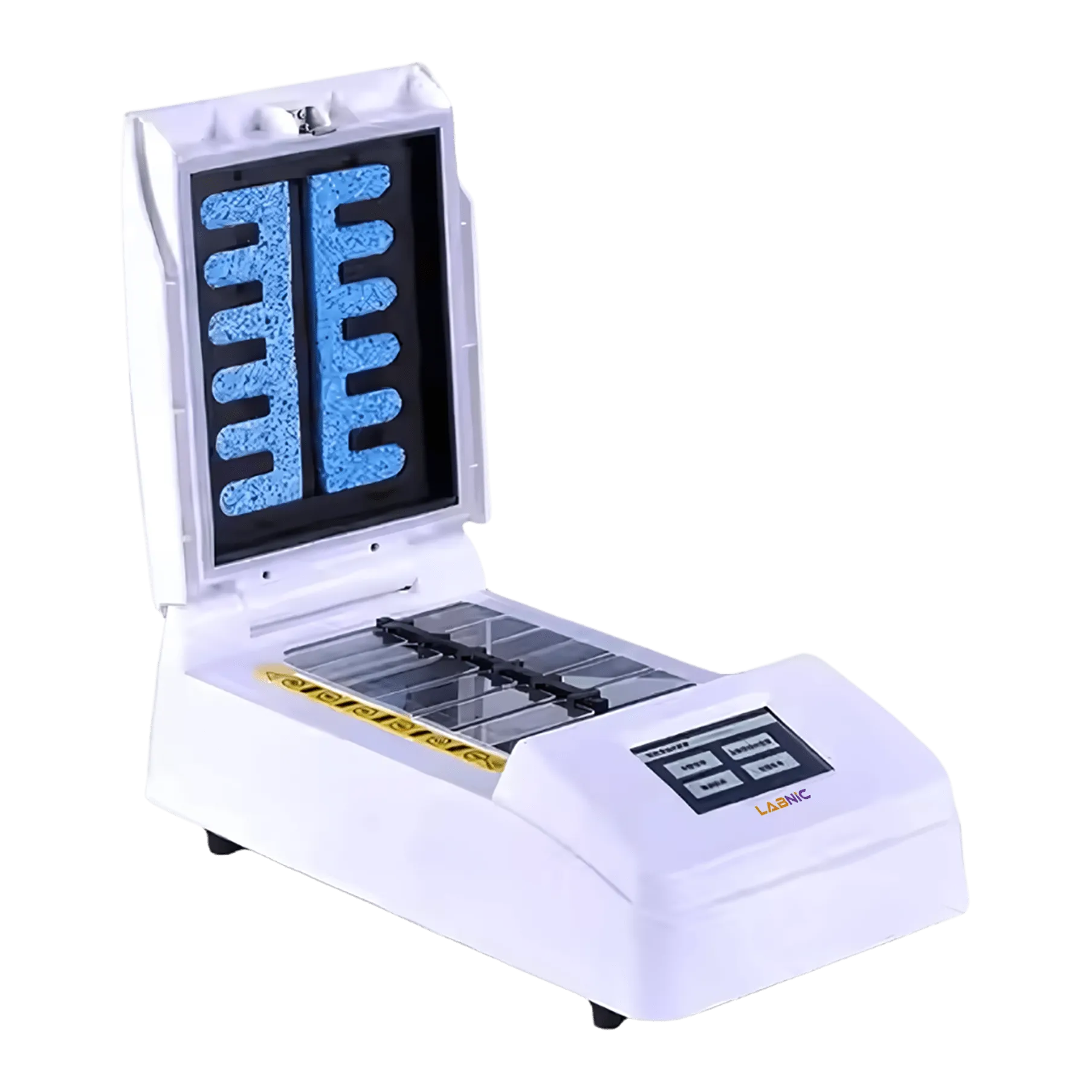
FISH Hybridization LBN-FH141 maintains a temperature range from RT + 5 ℃ to 100 ℃ to allow precise thermal control. It accommodates 12 samples simultaneously for medium-throughput applications. Equipped with automatic cooling and warm-up function for enhanced efficiency. Integrated with multiple-step operation for advanced functionality. Our FISH Hybridization system enables detection, localization, and quantification of DNA/RNA.
| Capacity | 12 samples |
| Temperature Control Range | RT + 5 ℃ to 100 ℃ |
| Temperature Setting Range | 0 ℃ to 100 ℃ |
| Temperature Accuracy | ≤ ±1 ℃ |
| Temperature Uniformity | ≤ ±1 ℃ |
| Heating Time | ≤ 2 minutes (from 37 ℃ to 95 ℃) |
| Cooling Time | ≤ 6 minutes (from 95 ℃ to 45 ℃) |
| Fuse | 250V 3A Φ5×20 |
| Power Consumption | 350 W |
| Power Supply | 220V / 50 to 60 Hz |
| Dimension | 440 × 220 × 120 mm |
| Packing dimension | 580 x 390 x 300mm |
| Net Weight | 4.5 kg |
| Gross weight | 7 kg |
Humidity-reducing sponge strips (4 pieces) 2 inside the machine, 2 in the accessory bag.
3 screws
FISH Hybridization LBN-FH141 is widely used in cytogenetics and molecular diagnostics to facilitate accurate detection of chromosomal abnormalities, gene rearrangements, and genetic disorders through controlled fluorescence in situ hybridization procedures.
FISH Hybridization LBN-FH141 is widely used in cytogenetics and molecular diagnostics to facilitate accurate detection of chromosomal abnormalities, gene rearrangements, and genetic disorders through controlled fluorescence in situ hybridization procedures.
Most Frequently Asked Questions
1. What are FISH Hybridizers used for?
Ans. FISH Hybridizers are used for fluorescence in situ hybridization by maintaining controlled temperature conditions for accurate probe hybridization and sample processing.
2. How do FISH Hybridizers ensure accurate temperature control?
Ans. FISH Hybridizers provide programmable heating and cooling cycles that allow precise temperature regulation throughout different hybridization protocols.
3. What temperature range is supported by FISH Hybridizers?
Ans. FISH Hybridizers support a wide temperature range suitable for various probe chemistries and tissue sample requirements.
4. How do FISH Hybridizers support easy protocol management?
Ans. FISH Hybridizers feature high-resolution touchscreen interfaces that enable simple setup, monitoring, and adjustment of hybridization parameters.
5. How do FISH Hybridizers improve laboratory throughput?
Ans. FISH Hybridizers can process multiple slides simultaneously, helping laboratories increase efficiency and testing capacity.
6. How do FISH Hybridizers ensure uniform heating?
Ans. FISH Hybridizers include a uniform heating chamber that delivers consistent thermal distribution while optimizing workspace efficiency.
