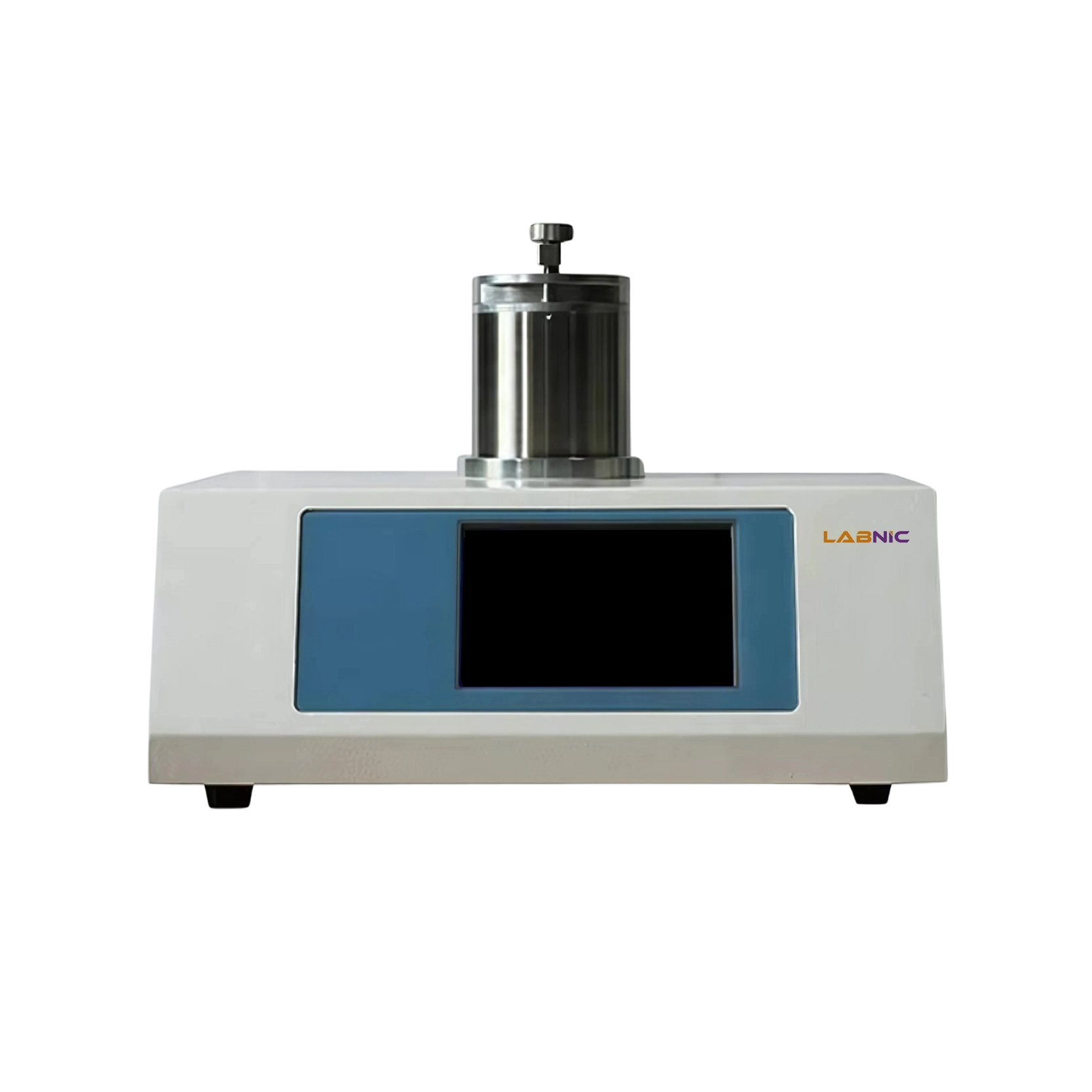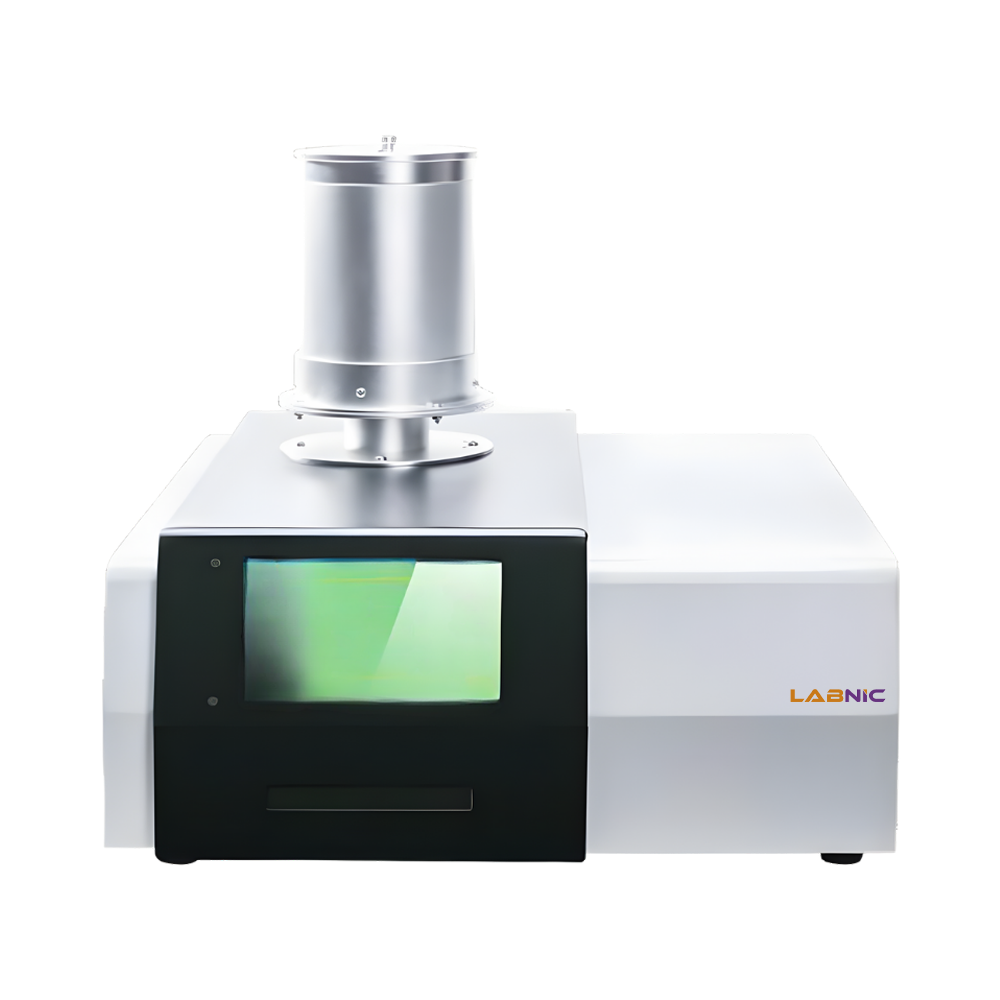
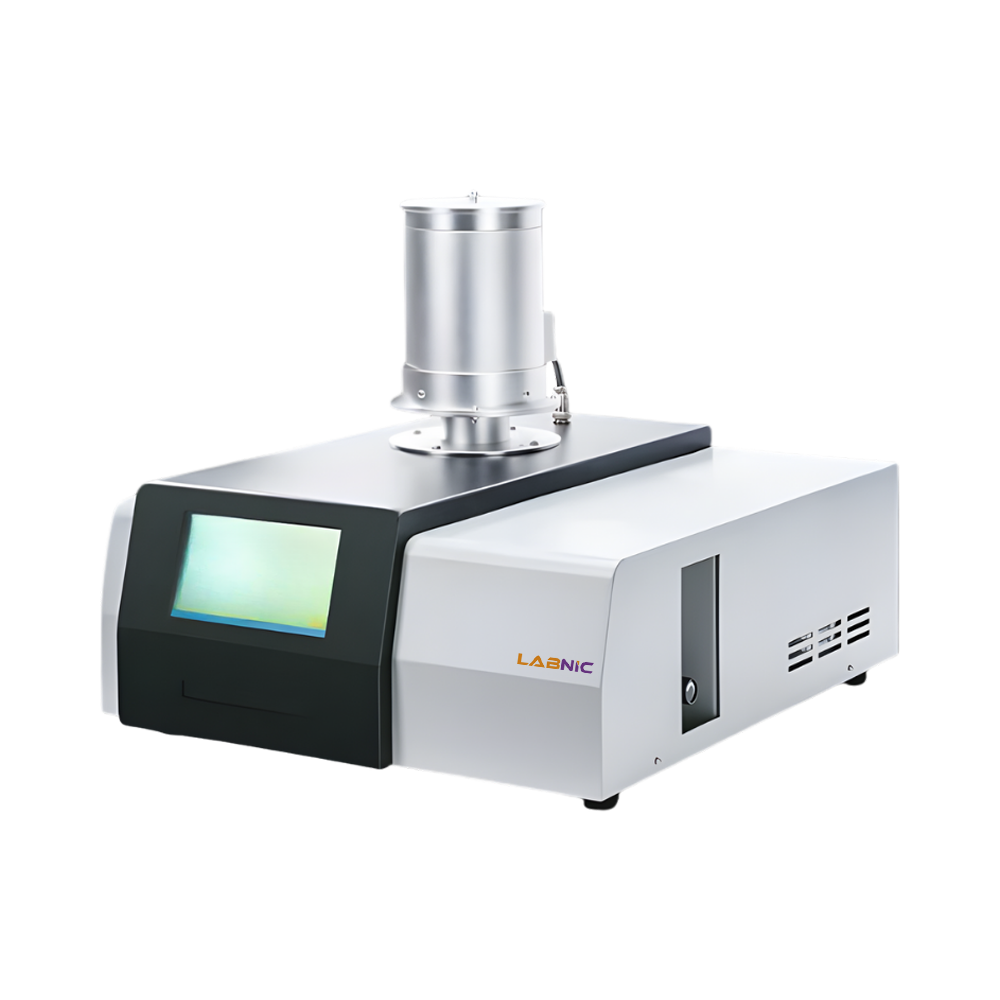
Differential Scanning Calorimeter LBN-SC152 provides accurate thermal analysis with an RT to 800°C temperature range and ±0.1°C accuracy. It measures heat flow differences to identify melting, crystallization, and phase transitions. Equipped with advanced sensors and a closed furnace structure for stable thermal performance. Integrated rapid cooling, multiple thermal control modes, and a 7 inch color touchscreen with USB computer control. Our Differential Scanning Calorimeter is ideal for polymers, pharmaceuticals, chemicals, food testing, research, and quality control labs.
| Temperature Range | RT to 800°C |
| Temperature Resolution | 0.01°C |
| Temperature Accuracy | ±0.1°C |
| DSC Measuring Range | ±500 mW |
| DSC Resolution | 0.001 mW |
| Calorimetry Accuracy | 0.10% |
| Heating Rate | 0.1 to 100°C/min |
| Cooling Rate | 0.1 to 50°C/min |
| Maximum Data Collection Rate | 50 pcs/s |
| Temperature Control Methods | Heating, Constant Temperature, Cooling, Cycle Temperature |
| Atmosphere Control | Gas Mass Flow Meter |
| Thermal Control Method | Multiple Thermal Control Modes |
| Display | 7 inch Color Touch Screen |
| Control Panel | Digital Control Panel |
| Data Interface | USB Two Way Communication, Computer Control |
| Furnace Design | Closed Furnace Structure |
| Sensor Technology | Advanced Heat Flow Sensors |
| Cooling System | Rapid Cooling System |
| Power Supply | AC 220V, 50/60 Hz |
| Product Dimensions (W×D×H) | 460 × 350 × 270 mm |
| Package Dimensions (W×D×H) | 595 × 466 × 420 mm |
| Net Weight | 14.50 kg |
| Gross Weight | 18 kg |
Sample Pans Set
Reference Pans Set
Pan Handling Tweezers
Calibration Standard Material
USB Communication Cable
Power Cable
Software Package
User Instruction Manual
Differential Scanning Calorimeter LBN-SC152 is used for thermal analysis in polymers, pharmaceuticals, food, metals, and oils, assessing phase transitions, crystallization, oxidation stability, and material properties.
Differential Scanning Calorimeter LBN-SC152 is used for thermal analysis in polymers, pharmaceuticals, food, metals, and oils, assessing phase transitions, crystallization, oxidation stability, and material properties.
Most Frequently Asked Questions
1. What is Differential Scanning Calorimetry (DSC)?
Ans. Differential Scanning Calorimeter (DSC) measures heat flow during thermal events like melting, crystallization, or glass transitions by comparing a sample to a reference under controlled temperature conditions.
2. How does a Differential Scanning Calorimeter work ?
Ans. Differential Scanning Calorimeter heats a sample and a reference simultaneously under a controlled temperature program. It measures the difference in heat flow required to maintain both at the same temperature.
3. What types of samples can be analyzed with Differential Scanning Calorimeter ?
Ans. Differential Scanning Calorimeter can analyze solids, liquids, gels, or powders, including polymers, pharmaceuticals, metals, ceramics, and biological materials.
4. What maintenance does a Differential Scanning Calorimeter require?
Ans. Routine cleaning of sample pans, periodic calibration, checking sensors, and ensuring proper gas flow and cooling systems are essential.
5. What are the main applications of a Differential Scanning Calorimeter?
Ans. It is Used to study melting and crystallization temperatures, glass transitions, heat capacity, reaction enthalpies, and thermal stability of materials
6. What are the benefits of using a Differential Scanning Calorimeter?
Ans. DSC Provides fast, accurate thermal analysis with high sensitivity, low sample consumption, and real-time data acquisition for efficient lab testing.
Differential Scanning Calorimeter LBN-SC152 provides accurate thermal analysis with an RT to 800°C temperature range and ±0.1°C accuracy. It measures heat flow differences to identify melting, crystallization, and phase transitions. Equipped with advanced sensors and a closed furnace structure for stable thermal performance. Integrated rapid cooling, multiple thermal control modes, and a 7 inch color touchscreen with USB computer control. Our Differential Scanning Calorimeter is ideal for polymers, pharmaceuticals, chemicals, food testing, research, and quality control labs.