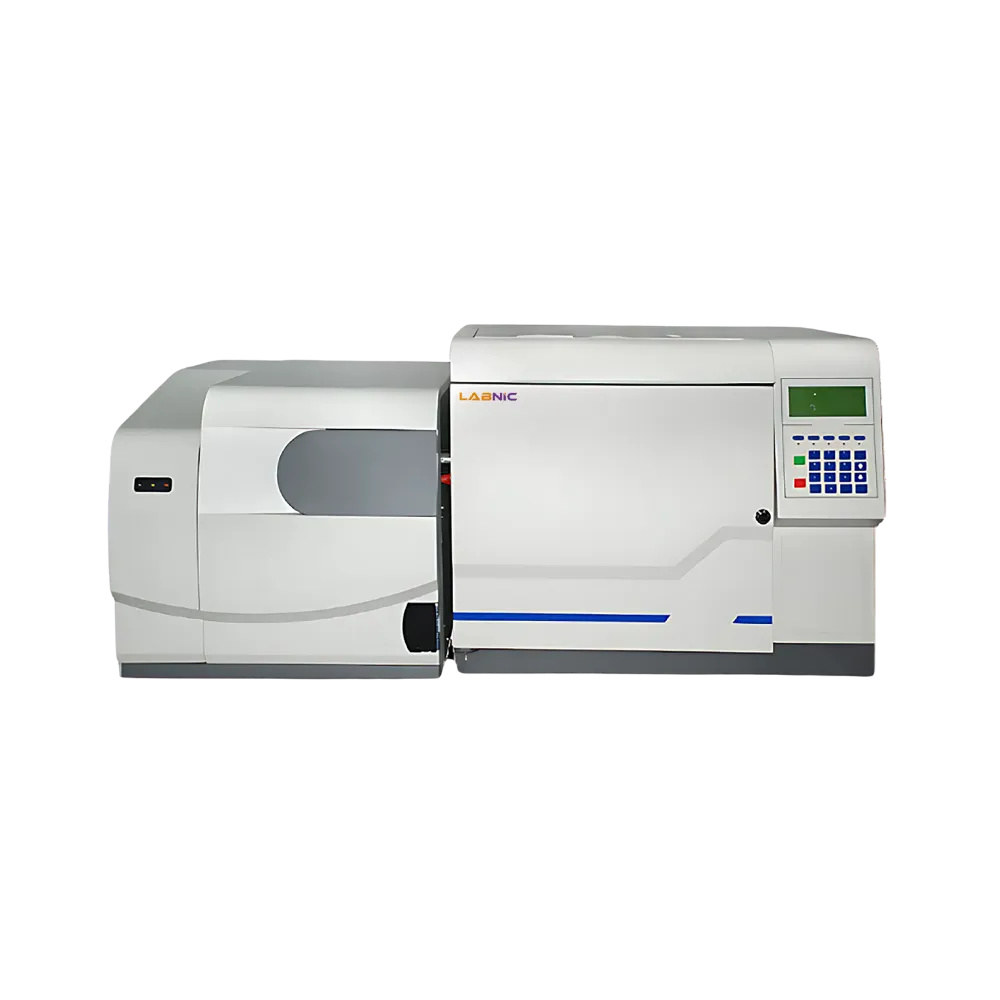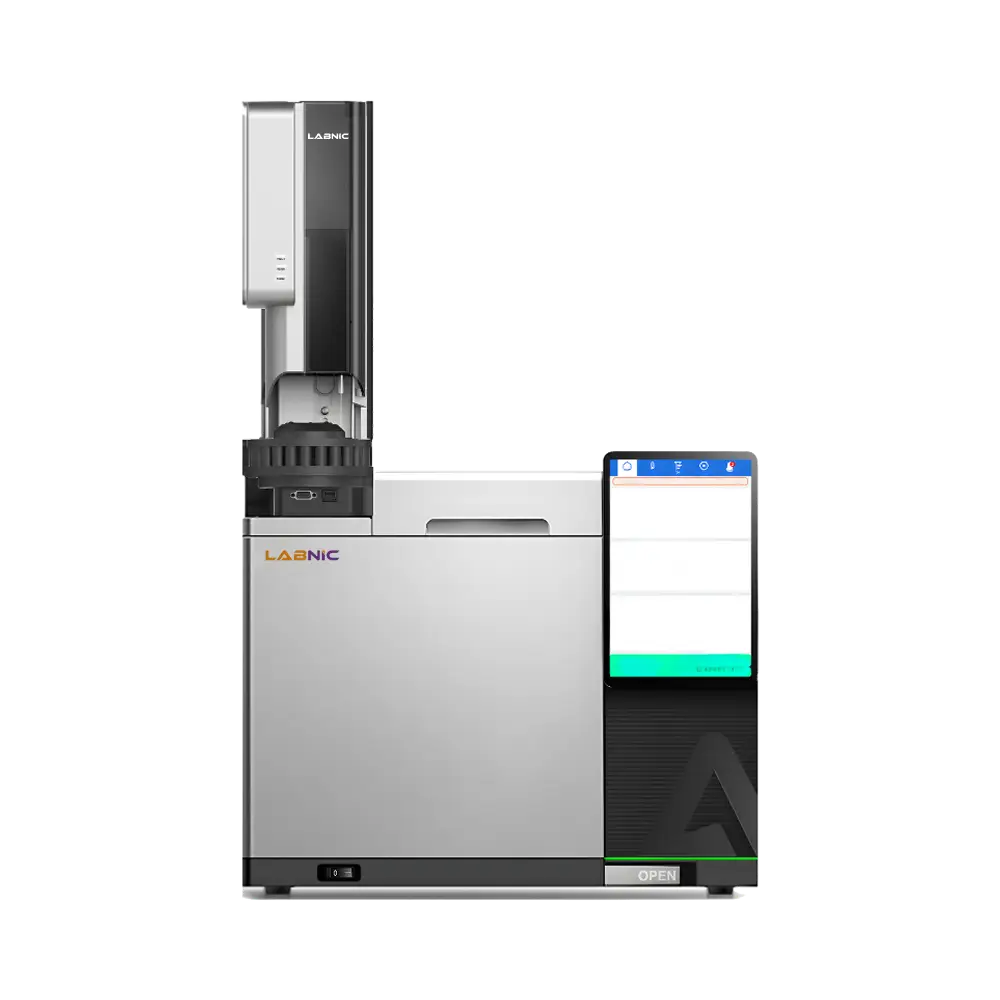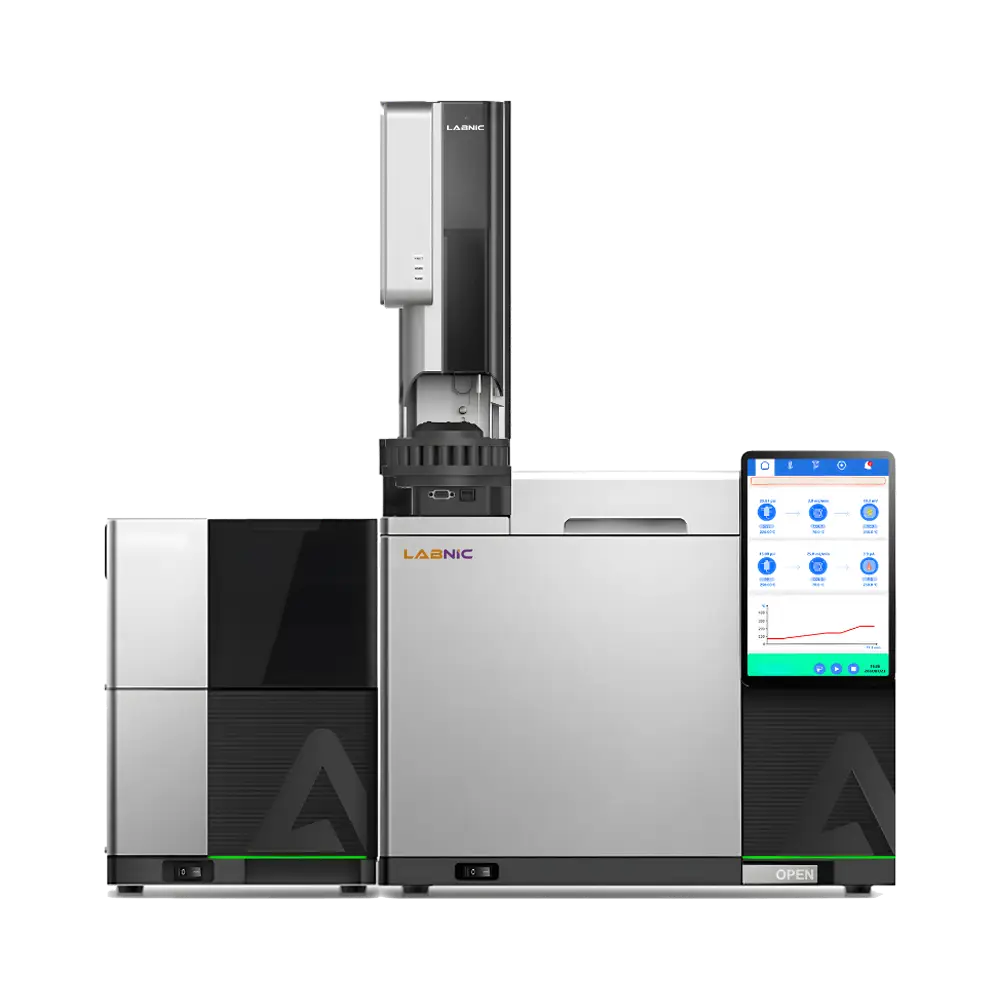
Gas Chromatography–Mass Spectrometry System LBN-GC122 delivers precise analytical performance by combining the upgraded LBN-GC111 gas chromatograph with a high-resolution mass spectrometer. It features intelligent control algorithms that ensure stable and continuous operation during complex analytical processes. Equipped with split/splitless injection, 450°C inlet temperature capability, and 32-step programmable temperature ramps for optimized separation. Integrated broad mass range up to 1250 amu, fast 20,000 amu/s scanning, and Smart Lab CDS GC-MS workstation supporting scan and SIM modes. Our Gas Chromatography–Mass Spectrometry System is ideal for petrochemical, environmental, pharmaceutical, food safety, forensic, research, and industrial quality control testing.
| Mass Range | 0.5 amu – 1250 amu |
| Maximum Scan Speed | 20,000 amu/s |
| Dynamic Range | 10⁶ |
| Ionization Energy | 15 to 250 eV |
| Ion Source Temperature | 150 to 350°C |
| Transfer Line Temperature | 100 to 350°C |
| Mass Stability | < 0.10 amu / 48 hrs |
| Acquisition Modes | Scan / SIM / Scan+SIM |
| Injection Port Type | Split / Splitless |
| Maximum Inlet Temperature | 450°C |
| Pressure Control Precision | 0.001 psi |
| Pressure Control Range | 0 to 100 psi |
| Maximum Split Ratio | 12,500:1 |
| Carrier Gas Options | N₂, H₂, He, Ar |
| Flow Range (N₂ Carrier) | 0 to 500 mL/min |
| Oven Temperature Range | +4°C above ambient to 450°C |
| Temperature Steps | 32 Steps / 33 Platforms |
| Maximum Heating Rate | ≥75°C/min |
| Cooling Time | 450°C to 50°C < 5 min |
| Maximum Program Time | 9999.99 min |
| Autosampler Capacity | 16 Positions |
| Injection Volume | 0.1 to 5 mL |
| Solvent Bottles / Waste Bottle | 2 / 1 |
| Software | Smart Lab CDS GC-MS Workstation |
| Power Supply | 220V ±10%, 50Hz ±2% |
| Working Environment Temperature | 5°C to 40°C |
| Relative Humidity | 20% to 85% RH |
Installation kit
Liquid Autosampler, 16 positions
HP-5MS Column
Gas Chromatography–Mass Spectrometry System LBN-GC122 is ideal for petrochemical testing, pharmaceutical research, environmental analysis, forensic toxicology, food safety inspection, academic laboratories, and industrial quality control environments.
Gas Chromatography–Mass Spectrometry System LBN-GC122 is ideal for petrochemical testing, pharmaceutical research, environmental analysis, forensic toxicology, food safety inspection, academic laboratories, and industrial quality control environments.
Most Frequently Asked Questions
1. What is gas chromatography-mass spectrometry?
Ans. It is an analytical technique that combines gas chromatography and mass spectrometry to separate and identify chemical compounds in a sample.
2. What is gas chromatography-mass spectrometry used for?
Ans. It is used on forensic analysis, environmental testing, food safety, pharmaceutical research, and chemical analysis.
3. What types of samples can be analyzed using gas chromatography-mass spectrometry?
Ans. It is commonly used for volatile and semi-volatile organic compounds in gases, liquids, and solids.
4. What gases are used in gas chromatography-mass spectrometry?
Ans. Helium, nitrogen, or hydrogen are commonly used carrier gases in the gas chromatograph.
5. How long does a gas chromatography-mass spectrometry analysis take?
Ans. The duration varies typically ranges from a few minutes to an hour, depending on the complexity of the sample.
Gas Chromatography–Mass Spectrometry System LBN-GC122 delivers precise analytical performance by combining the upgraded LBN-GC111 gas chromatograph with a high-resolution mass spectrometer. It features intelligent control algorithms that ensure stable and continuous operation during complex analytical processes. Equipped with split/splitless injection, 450°C inlet temperature capability, and 32-step programmable temperature ramps for optimized separation. Integrated broad mass range up to 1250 amu, fast 20,000 amu/s scanning, and Smart Lab CDS GC-MS workstation supporting scan and SIM modes. Our Gas Chromatography–Mass Spectrometry System is ideal for petrochemical, environmental, pharmaceutical, food safety, forensic, research, and industrial quality control testing.