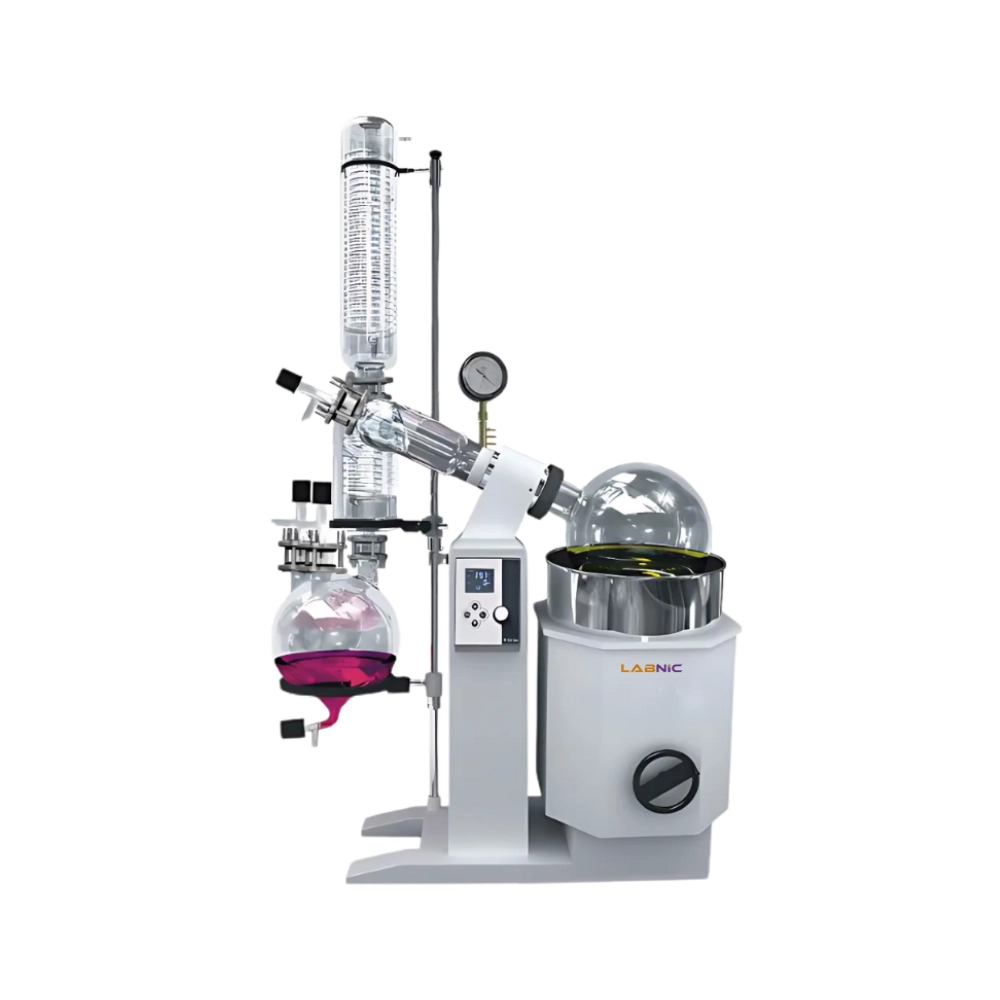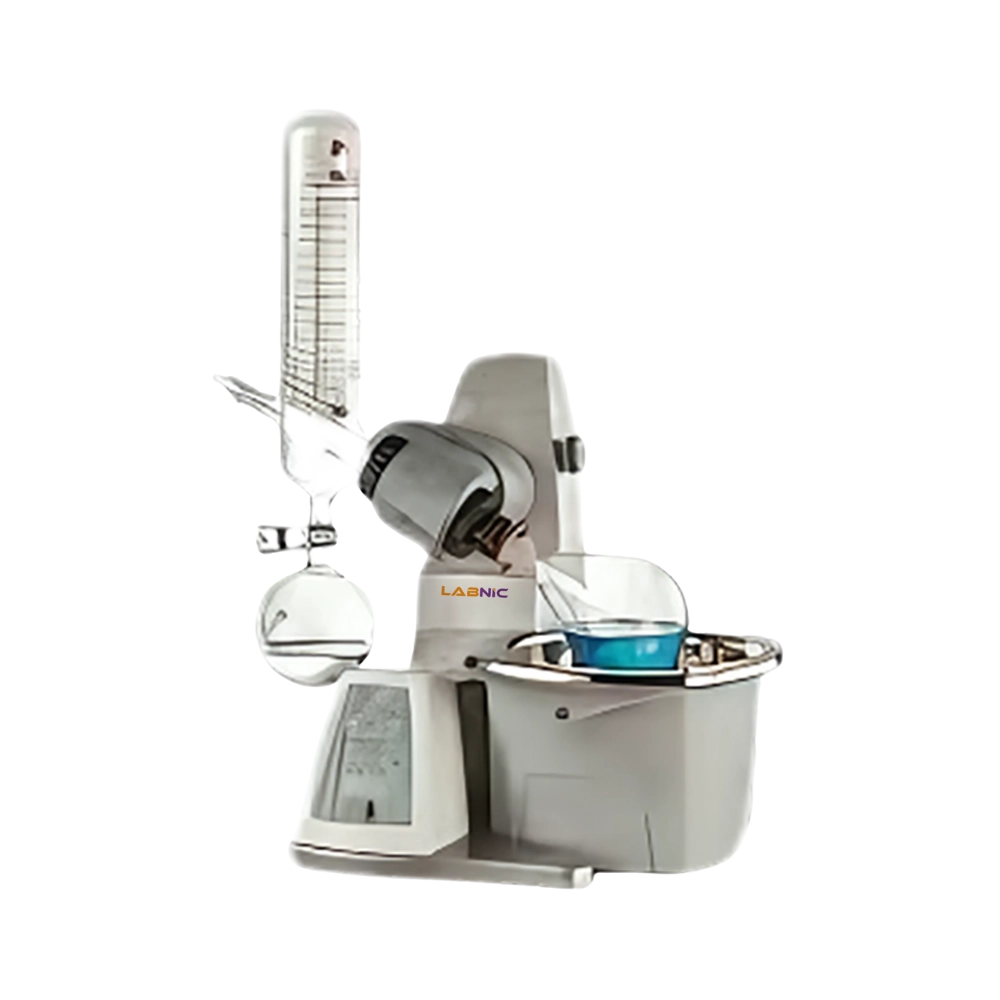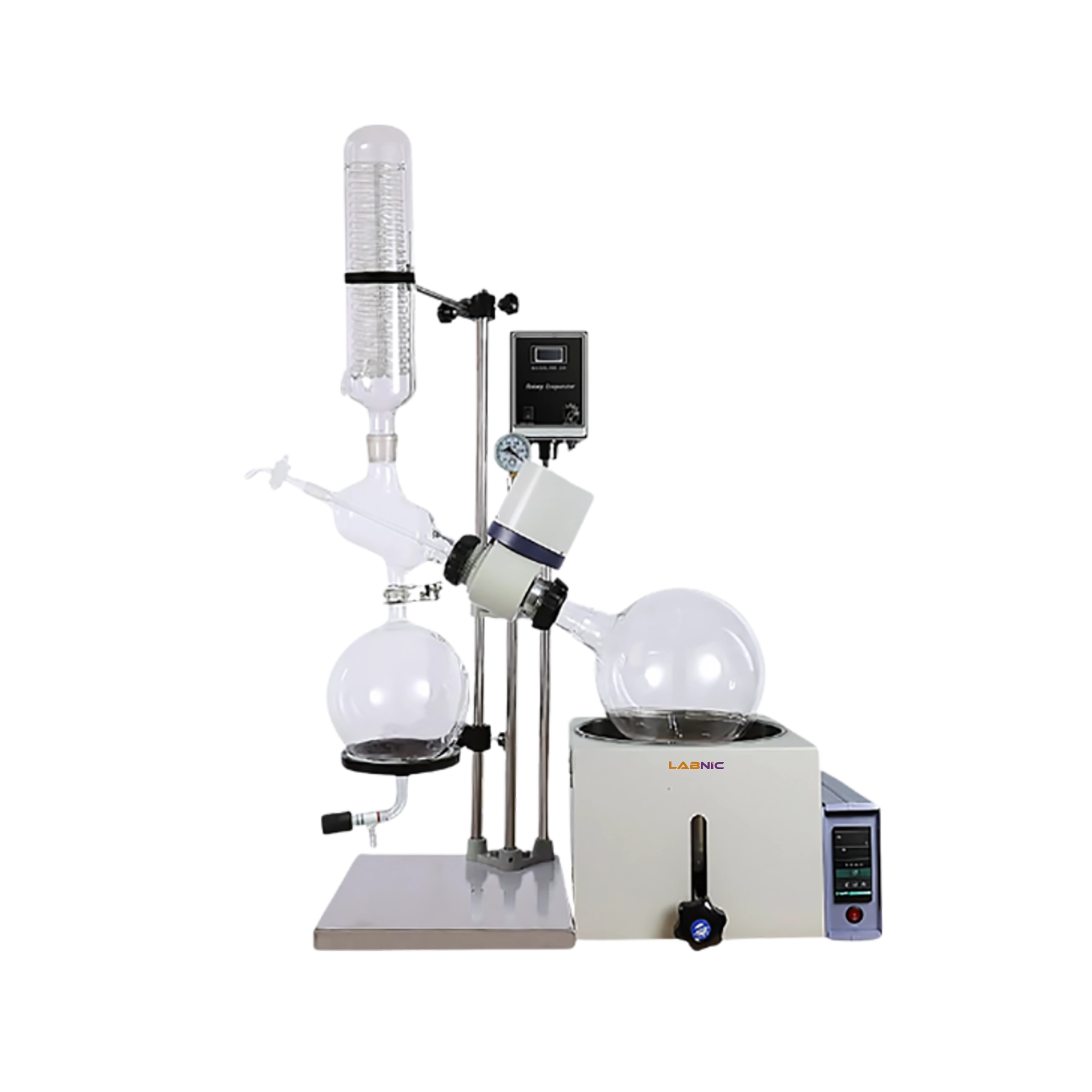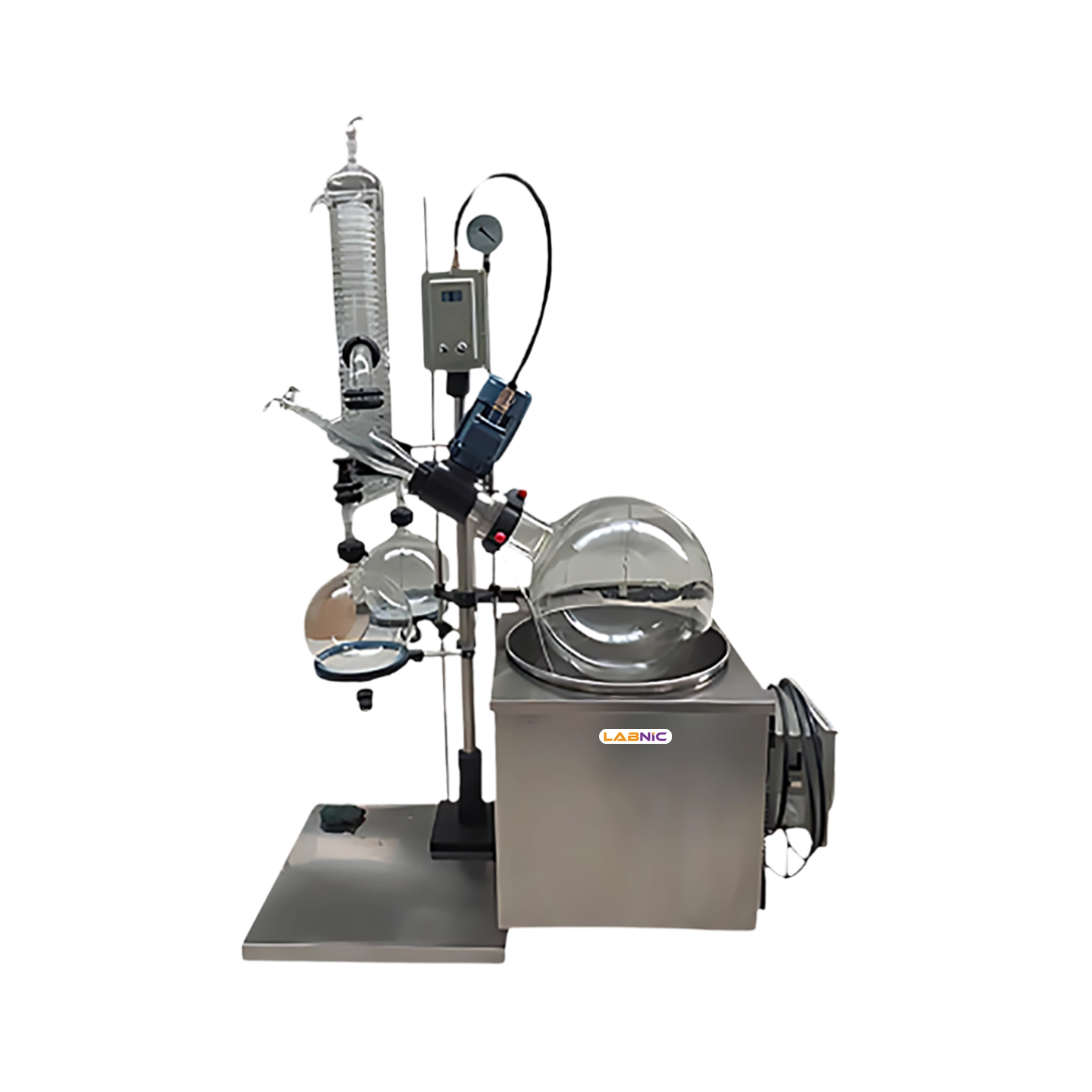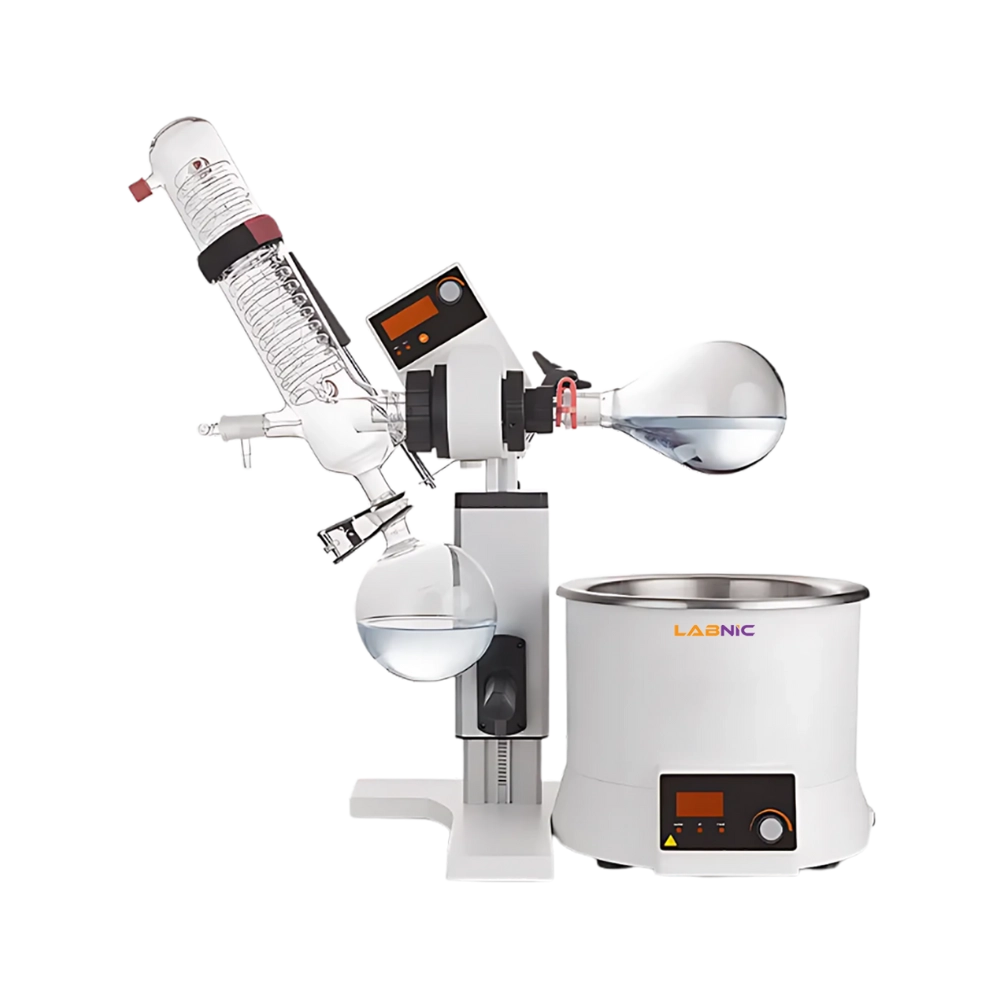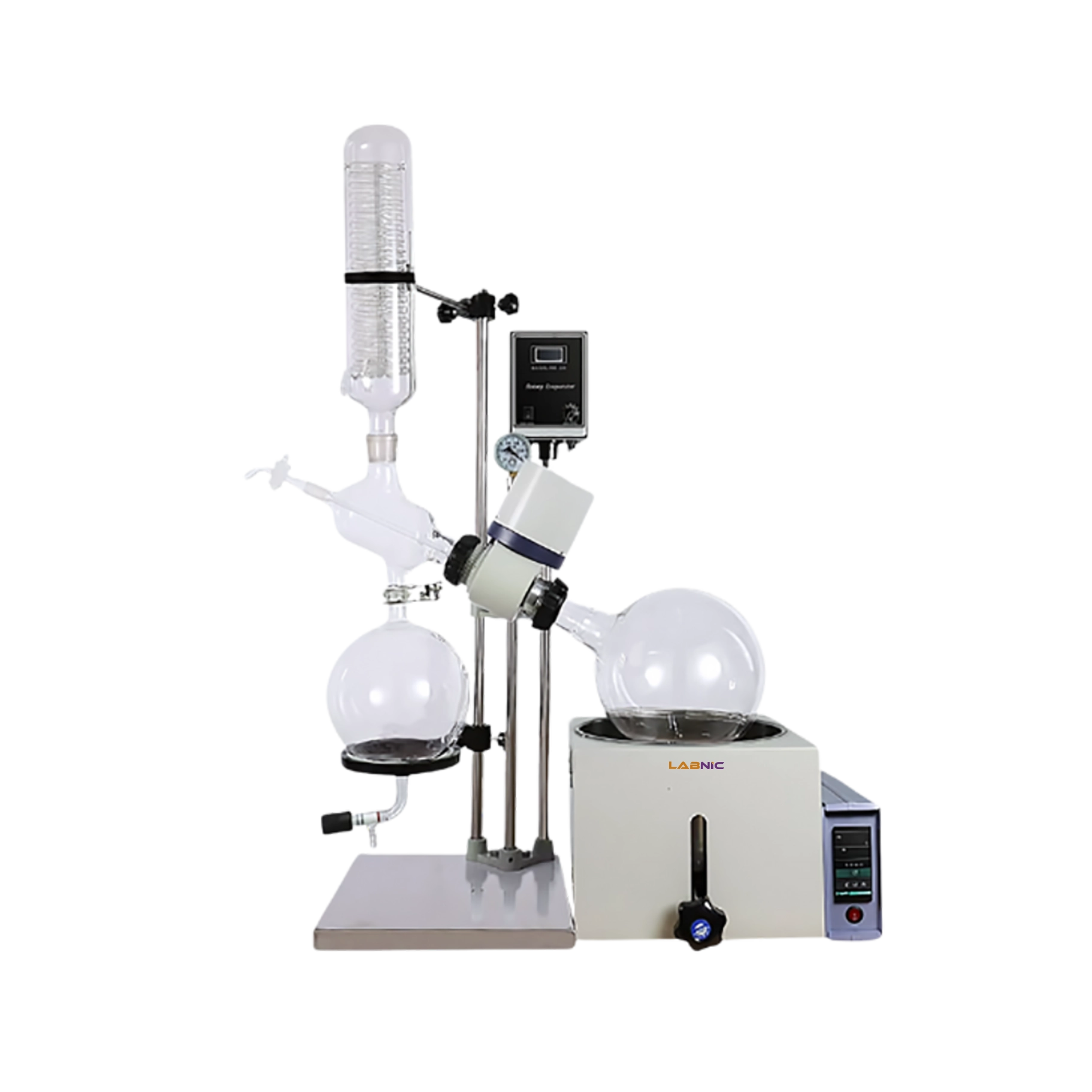
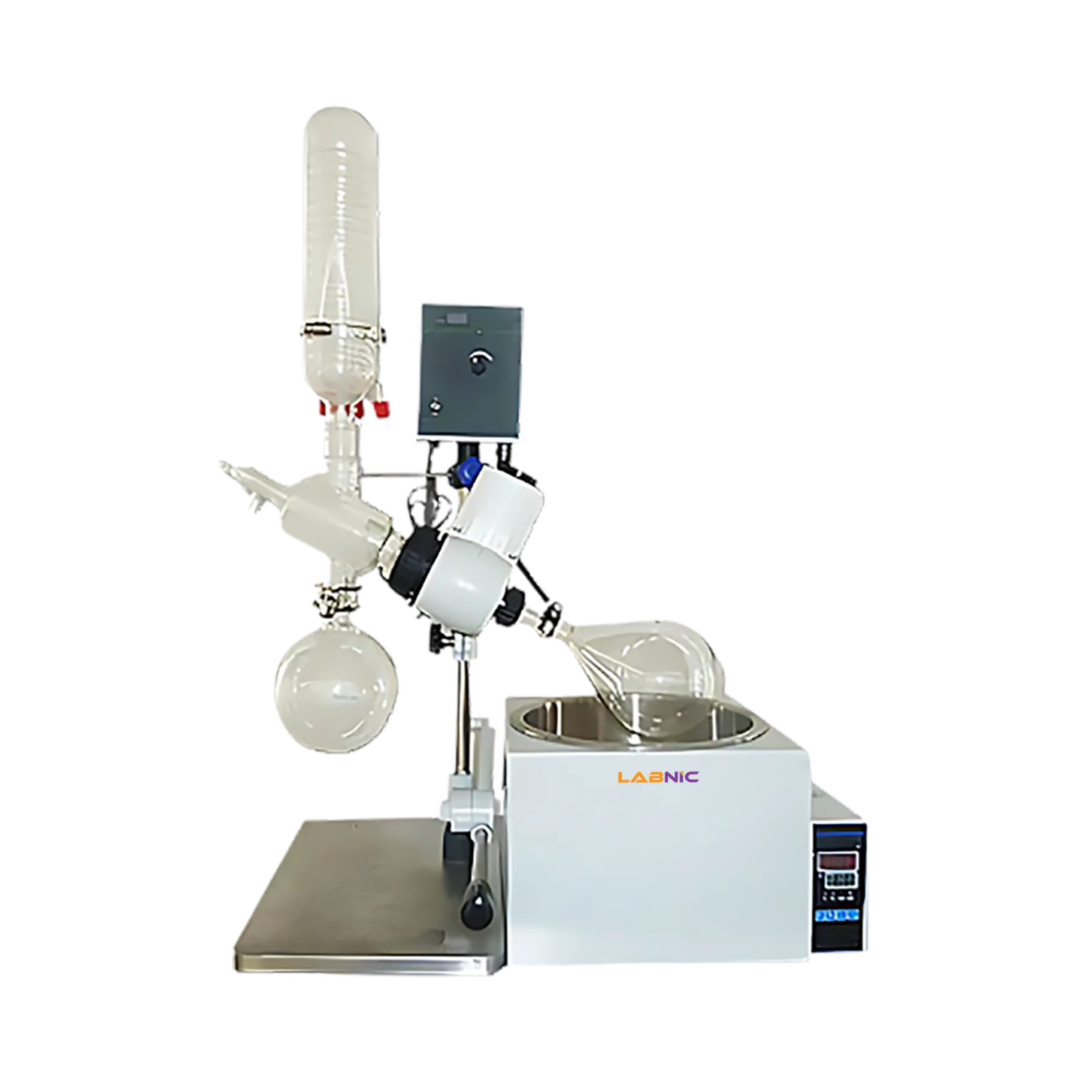
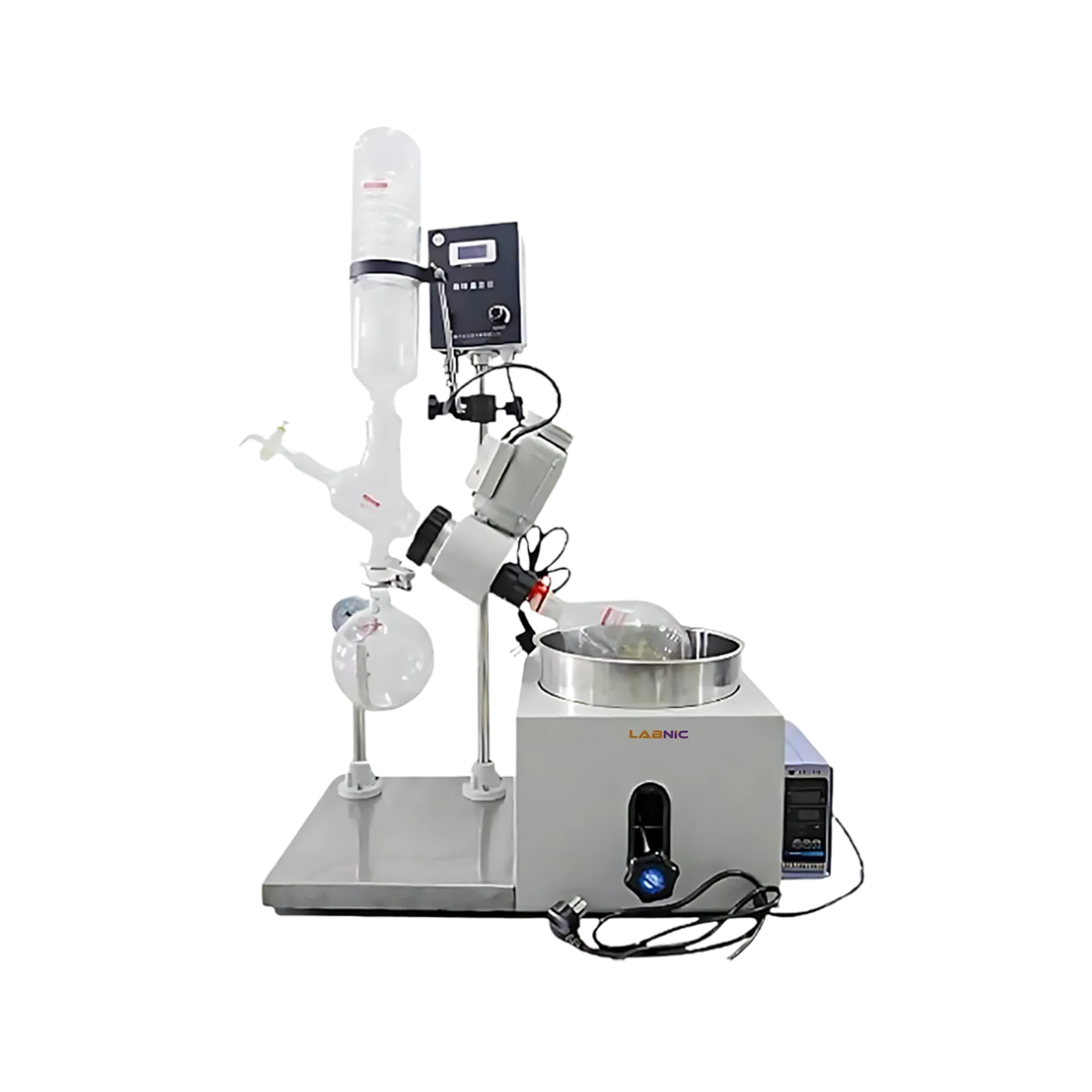
Rotary Evaporator LBN-RE139 has automatic lifting type. It has maximum rotation speed of about 0 to 110 rpm. Equipped with digital display to view the data clearly and conveniently at any time. It has balling milling mouth for good sealing performance and stainless-steel clamp to fix collection flask well. It is provided with a maximum temperature range of RT -98 ℃ with water bath and RT to 180 ℃ with oil bath.
| Rotating Flask | 5L |
| Optional Rotating Flask | 3L, 2L, 1L |
| Receiving Flask | 3L |
| Lifting Type | Automatic lifting |
| Condenser | Vertical, various types condensers are available, include cold trap condenser, dual condensers, etc, customization with greatest flexibility |
| Rotation Speed | 0-110 rpm |
| Vacuum pump | Available, Reachable Vacuum Rate < 133Pa (1.33mbar, 1 Torr) |
| Chiller | Available |
| Bath Power | 2.2 KW |
| Staic Temp. Control Range & Wave | RT-99 + - 2 (150) + - 0.2 Celsius degree |
It is widely applied for chemistry laboratory, modern organic laboratory, university teaching, to remove solvent from samples by evaporation, concentration purpose, to recover ethanol / alcohol after ethanol extraction process
It is widely applied for chemistry laboratory, modern organic laboratory, university teaching, to remove solvent from samples by evaporation, concentration purpose, to recover ethanol / alcohol after ethanol extraction process
Most Frequently Asked Questions
1. What are Rotary Evaporators used for?
Ans. Rotary Evaporators are used for efficient solvent removal and concentration of samples in laboratory processes.
2. How does a Rotary Evaporator remove solvents effectively?
Ans. Rotary Evaporators use a rotating flask combined with a vacuum system for controlled evaporation.
3. Why do Rotary Evaporators operate under reduced pressure?
Ans. Rotary Evaporators operate under reduced pressure to lower boiling points and protect heat-sensitive samples.
4. How do Rotary Evaporators prevent sample degradation?
Ans. Rotary Evaporators ensure gentle evaporation conditions, maintaining sample integrity and high-quality recovery.
5. What are the main components of a Rotary Evaporator?
Ans. Rotary Evaporators consist of a rotating flask, vacuum system, condenser, and heating bath.
6. Where are Rotary Evaporators commonly used?
Ans. Rotary Evaporators are widely used in research laboratories, chemical processing, and production environments.
Rotary Evaporator LBN-RE139 has automatic lifting type. It has maximum rotation speed of about 0 to 110 rpm. Equipped with digital display to view the data clearly and conveniently at any time. It has balling milling mouth for good sealing performance and stainless-steel clamp to fix collection flask well. It is provided with a maximum temperature range of RT -98 ℃ with water bath and RT to 180 ℃ with oil bath.