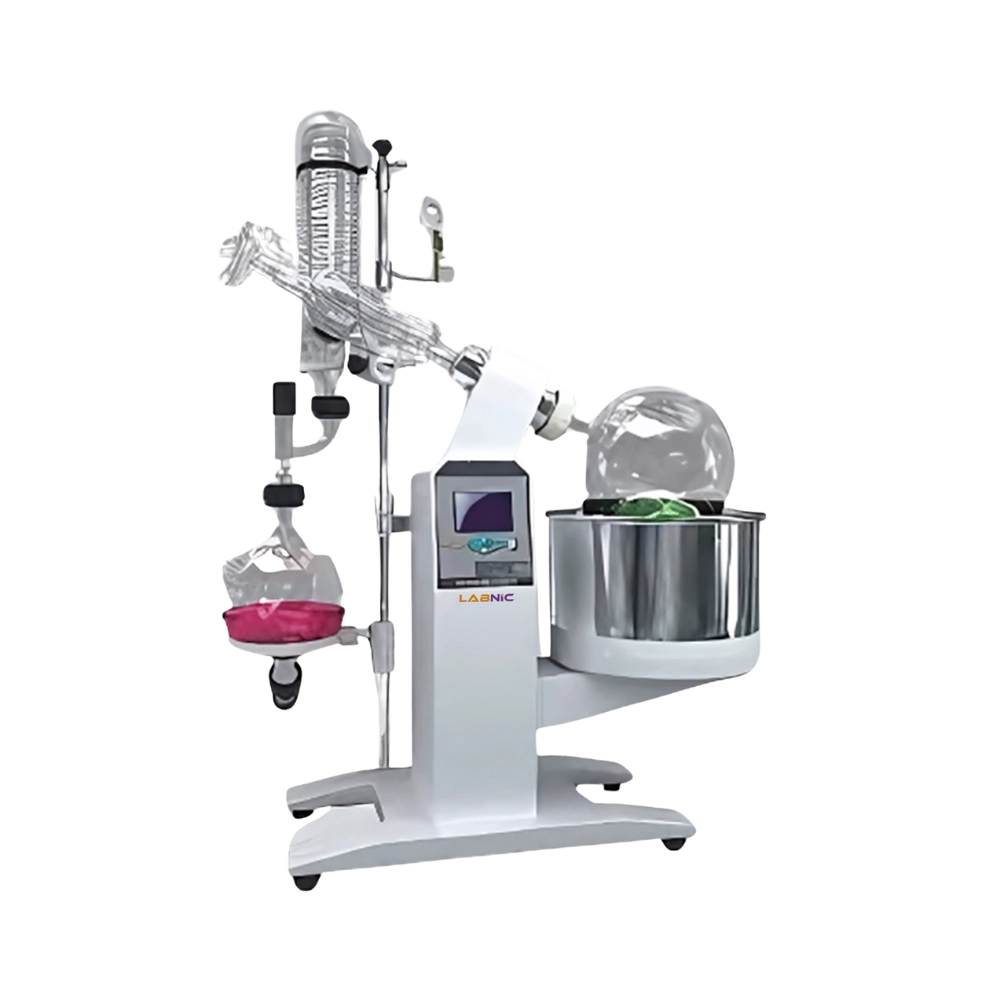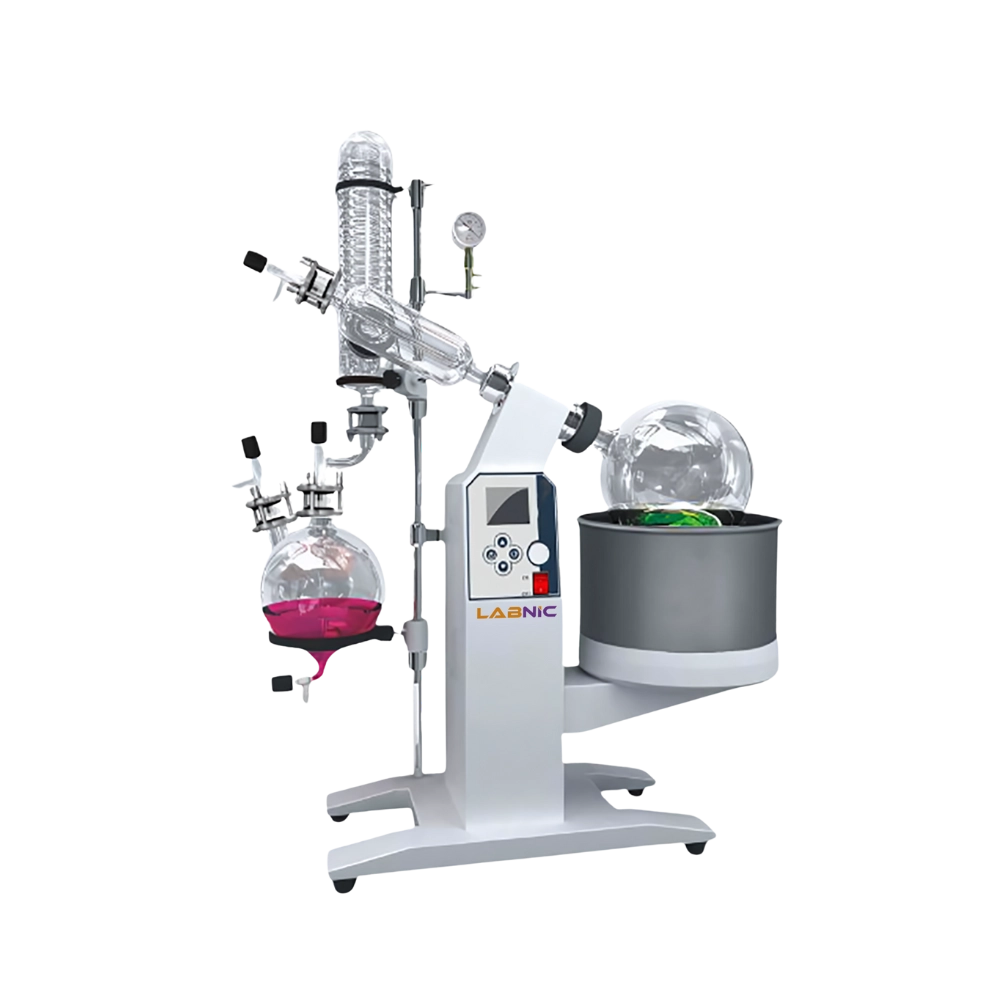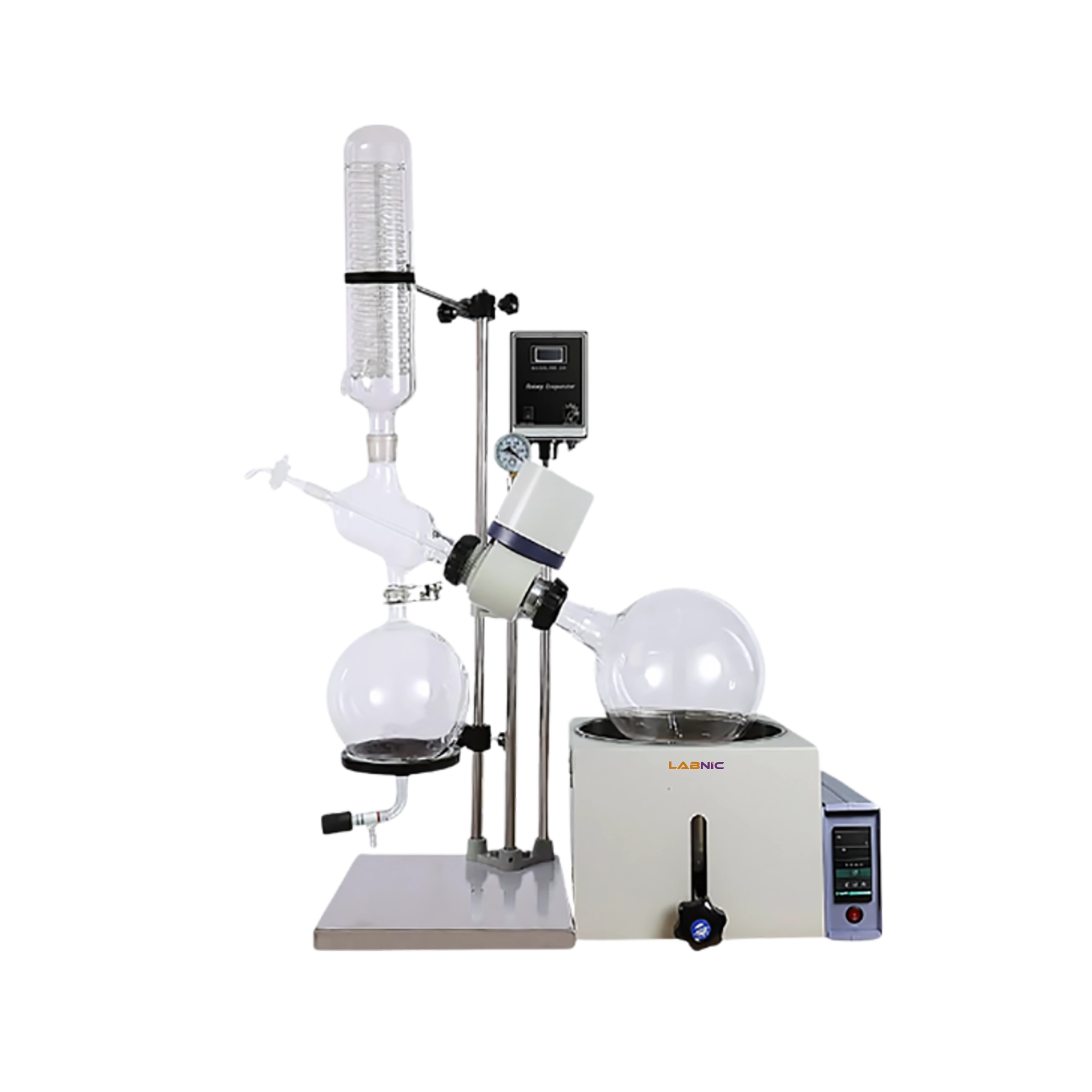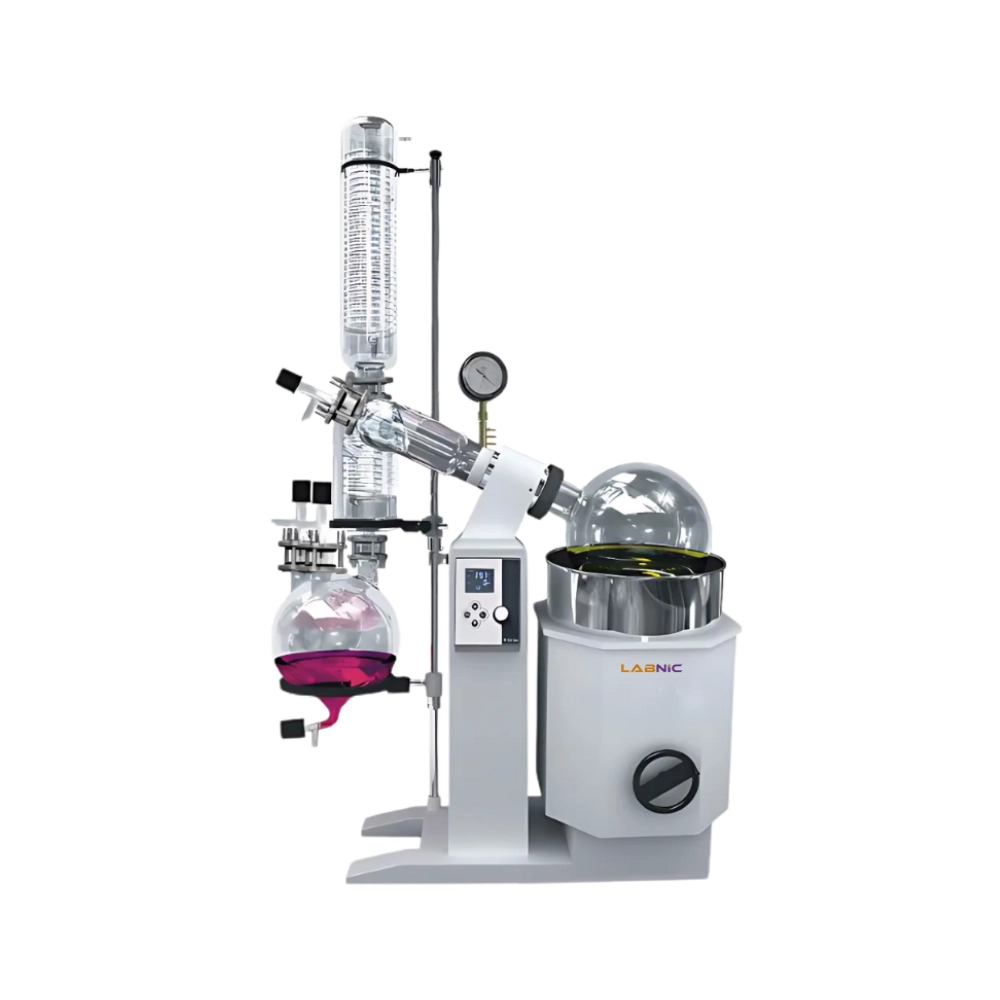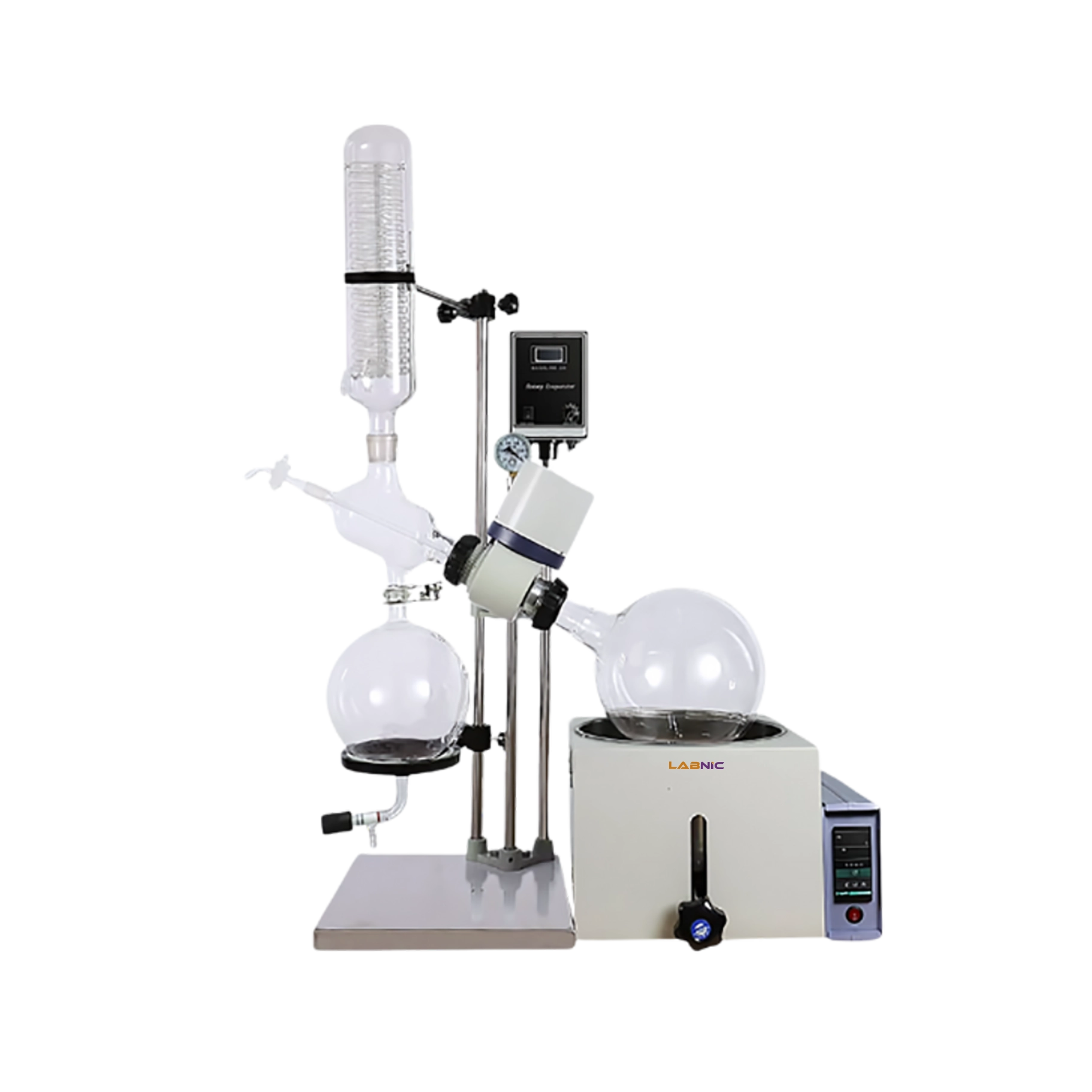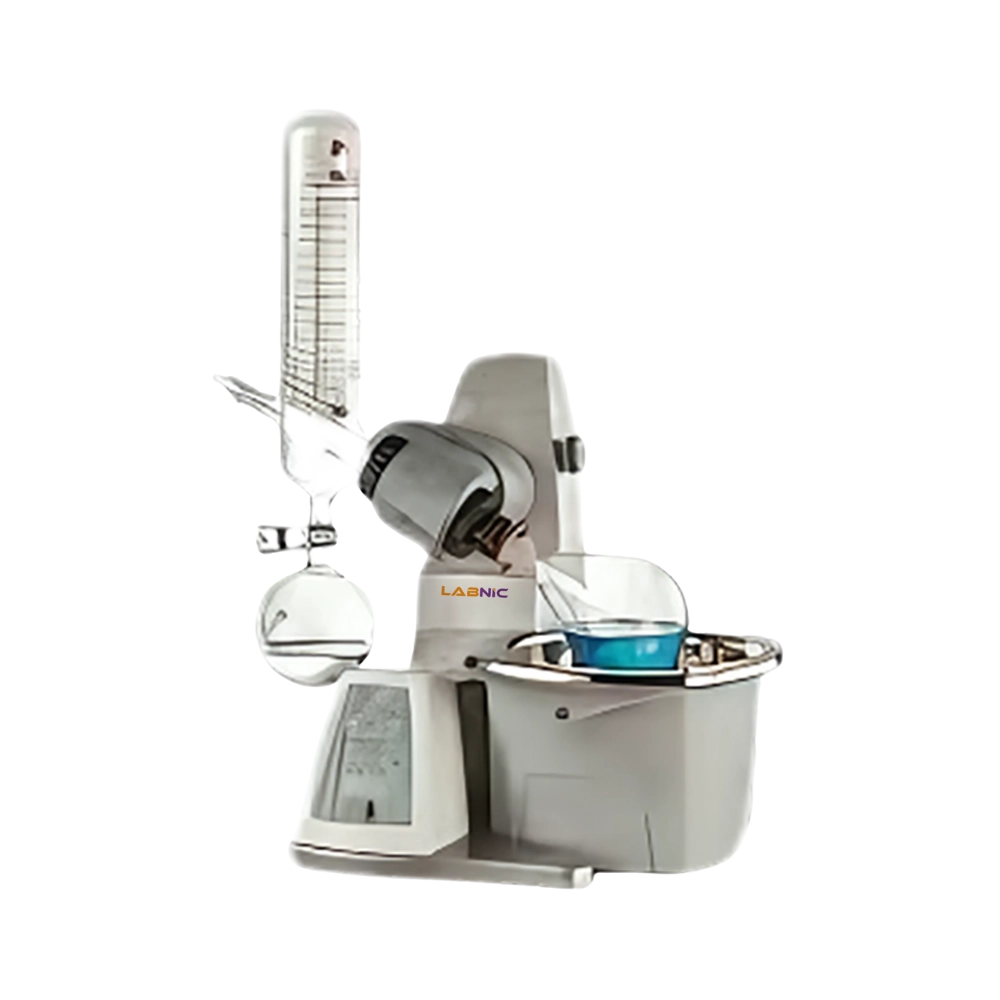
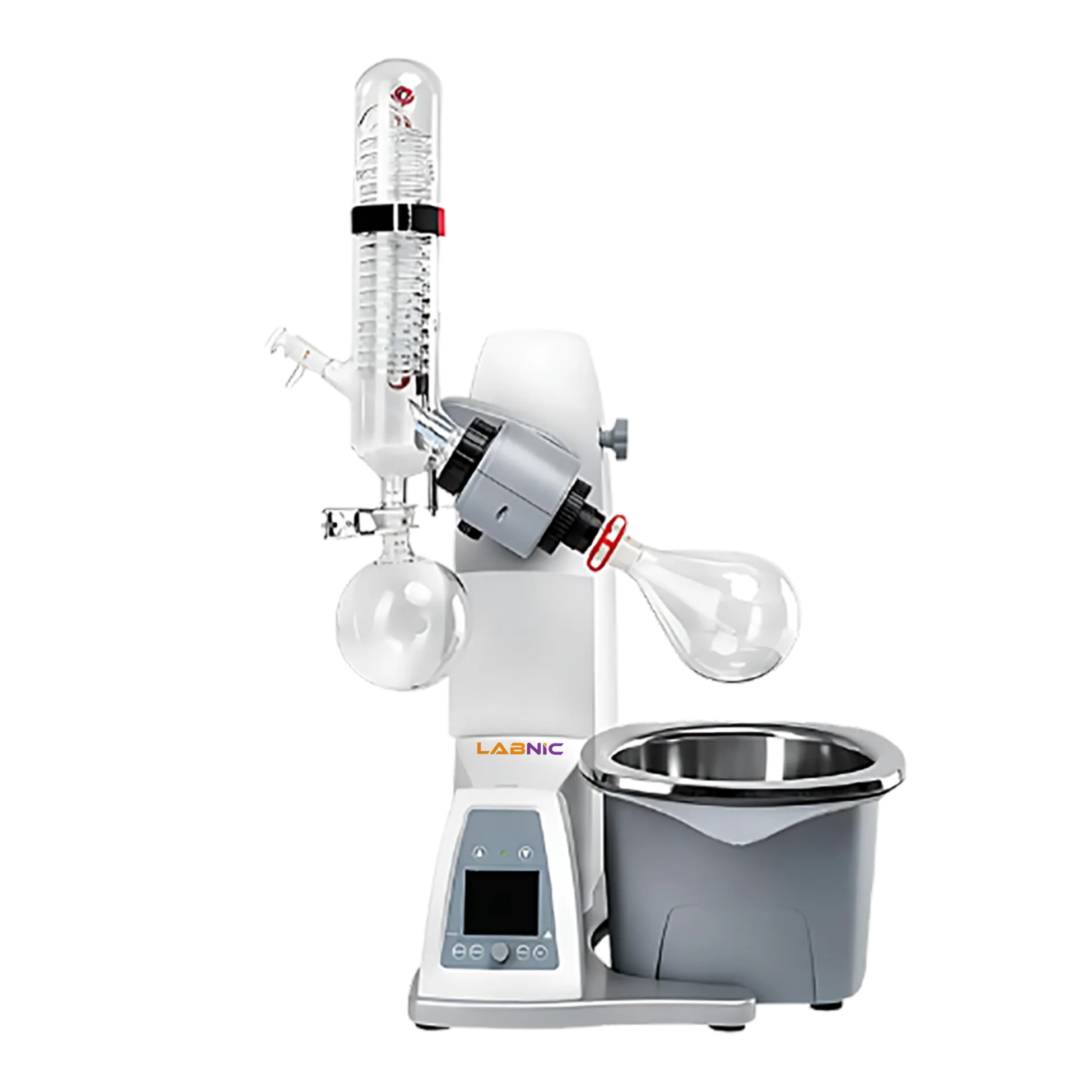
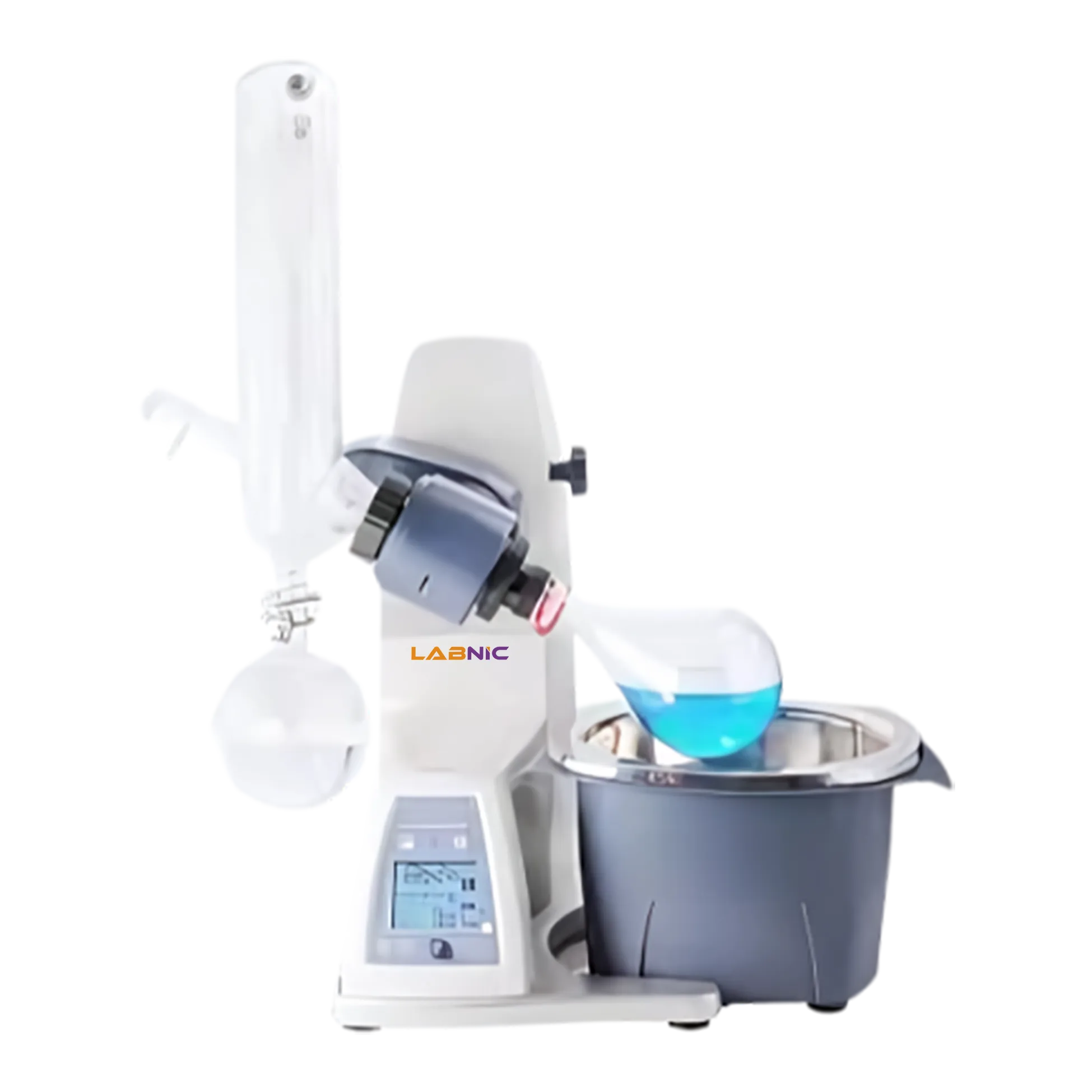
Rotary Evaporator LBN-RE121 is a must-have evaporator that meets the basic requirements of economic evaporation and is constructed to high quality standards. It has a knob-controlled speed range of 20 to 180 rpm and a sliding manual lift for precise positioning of the glassware. The unique 0.5 to 2 L bath design allows for quick heat up, allowing for faster experiments. The bath can reach 99°C and is designed to be user-friendly while maintaining the highest level of safety. This piece of equipment includes a digital display for monitoring and controlling rotation speed parameters.
| Rotary Flask Capacity | 0.5 L to 2 L |
| Receiving Flask Capacity | 1 L |
| Water Bath Capacity | 6.5 L |
| Bath Size | ɸ254×130 mm |
| Evaporating Speed | 20 ml/min |
| Rotating Speed | 20 to 180 rpm |
| Lifting Distance | 100 mm + 150 mm |
| Lifting Function | Sliding + Manual Lift |
| Vacuum | ≤ 399.9 Pa |
| Temperature Range | RT to 99°C |
| Working Environment Temperature | 5°C to 35°C |
| Condenser Cooling Surface | 1260 cm² |
| Condenser Type | Vertical |
| Speed Control | Knob setting |
| Display | Digital display |
| Heating Power | 1.05 kW |
| Motor Power | 25 W |
| Dimension (W×D×H) | 560×320×660 mm |
| Package Dimension (W×D×H) | 106×60×52 cm |
| Weight | 28.4 Kg |
It is an indispensable instrument for evaporation, concentration, crystallization, separation and solvent recovery in research and production of medicine, chemical and biological products etc.
It is an indispensable instrument for evaporation, concentration, crystallization, separation and solvent recovery in research and production of medicine, chemical and biological products etc.
Most Frequently Asked Questions
1. What are Rotary Evaporators used for?
Ans. Rotary Evaporators are used for efficient solvent removal and concentration of samples in laboratory processes.
2. How does a Rotary Evaporator remove solvents effectively?
Ans. Rotary Evaporators use a rotating flask combined with a vacuum system for controlled evaporation.
3. Why do Rotary Evaporators operate under reduced pressure?
Ans. Rotary Evaporators operate under reduced pressure to lower boiling points and protect heat-sensitive samples.
4. How do Rotary Evaporators prevent sample degradation?
Ans. Rotary Evaporators ensure gentle evaporation conditions, maintaining sample integrity and high-quality recovery.
5. What are the main components of a Rotary Evaporator?
Ans. Rotary Evaporators consist of a rotating flask, vacuum system, condenser, and heating bath.
6. Where are Rotary Evaporators commonly used?
Ans. Rotary Evaporators are widely used in research laboratories, chemical processing, and production environments.
Rotary Evaporator LBN-RE121 is a must-have evaporator that meets the basic requirements of economic evaporation and is constructed to high quality standards. It has a knob-controlled speed range of 20 to 180 rpm and a sliding manual lift for precise positioning of the glassware. The unique 0.5 to 2 L bath design allows for quick heat up, allowing for faster experiments. The bath can reach 99°C and is designed to be user-friendly while maintaining the highest level of safety. This piece of equipment includes a digital display for monitoring and controlling rotation speed parameters.