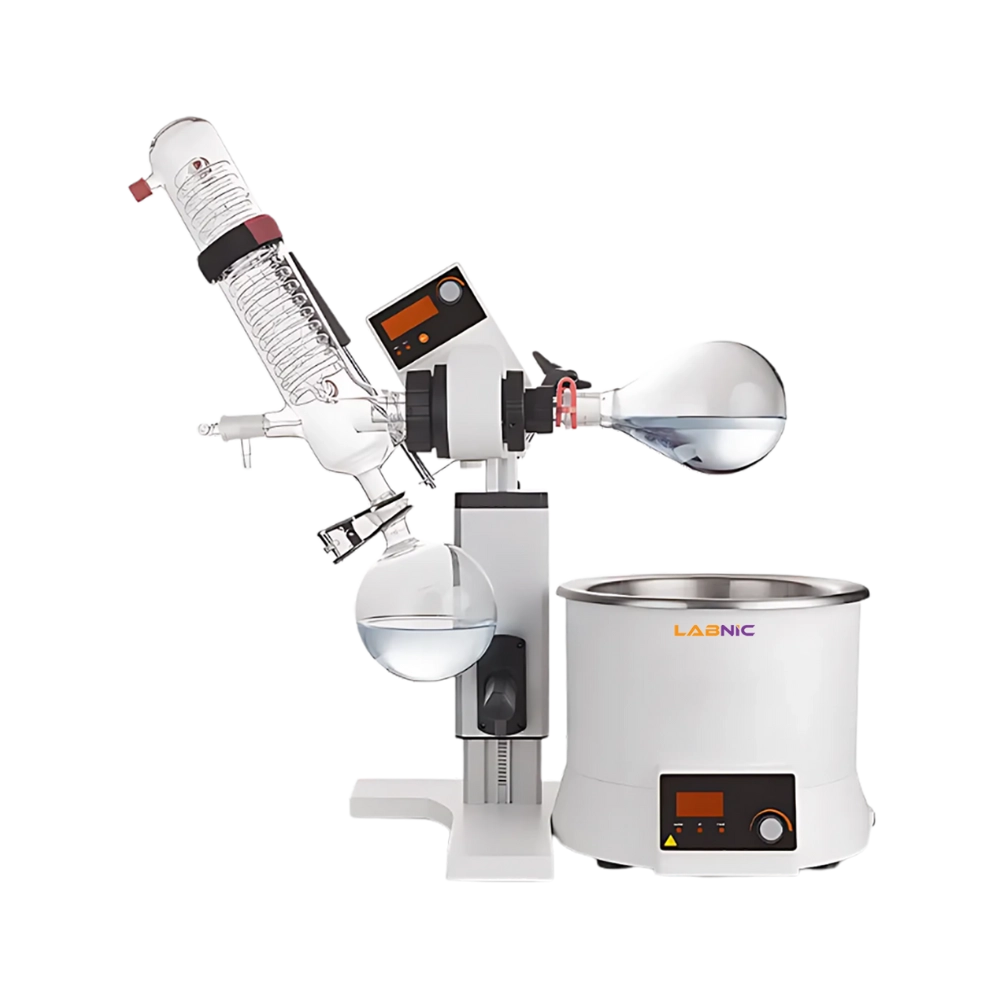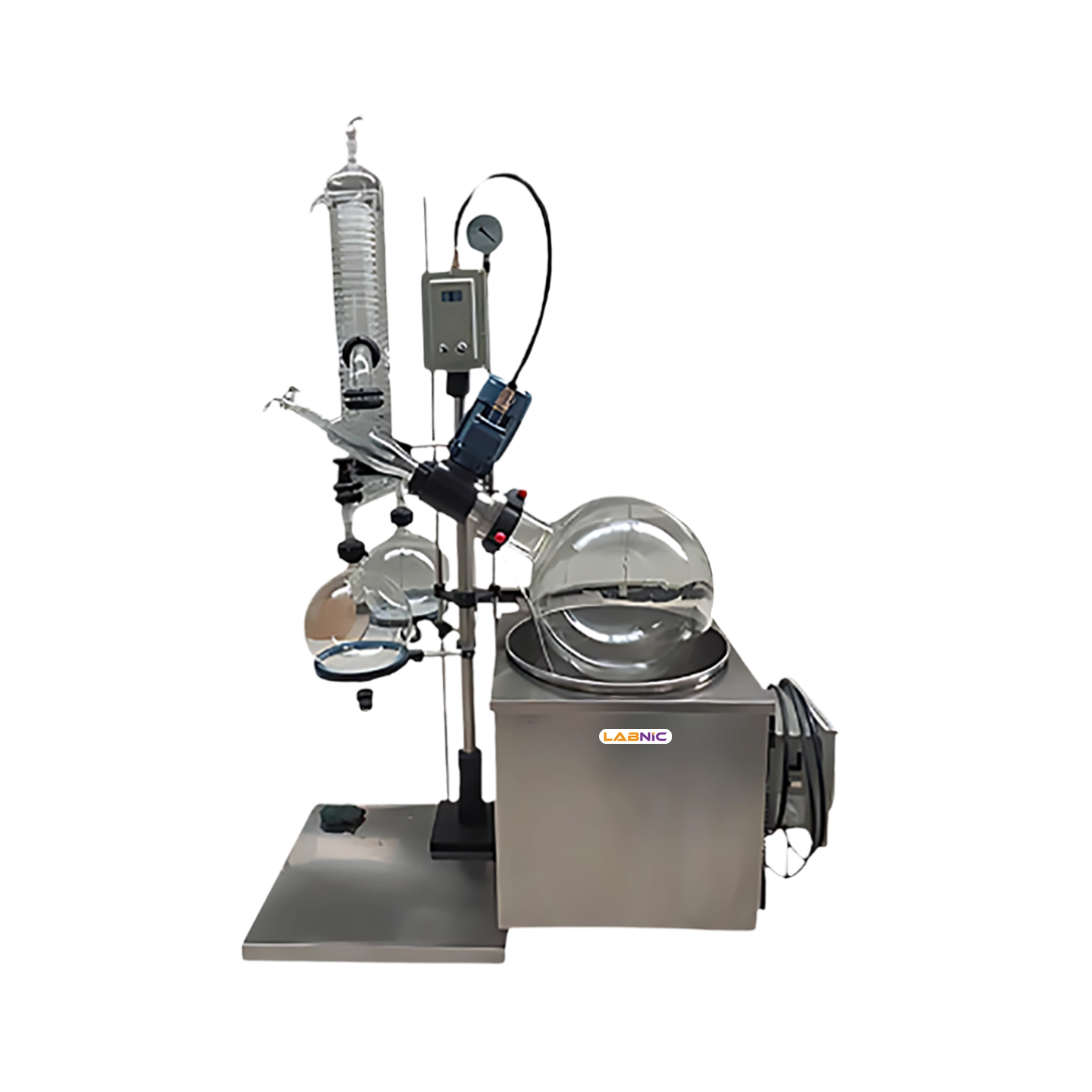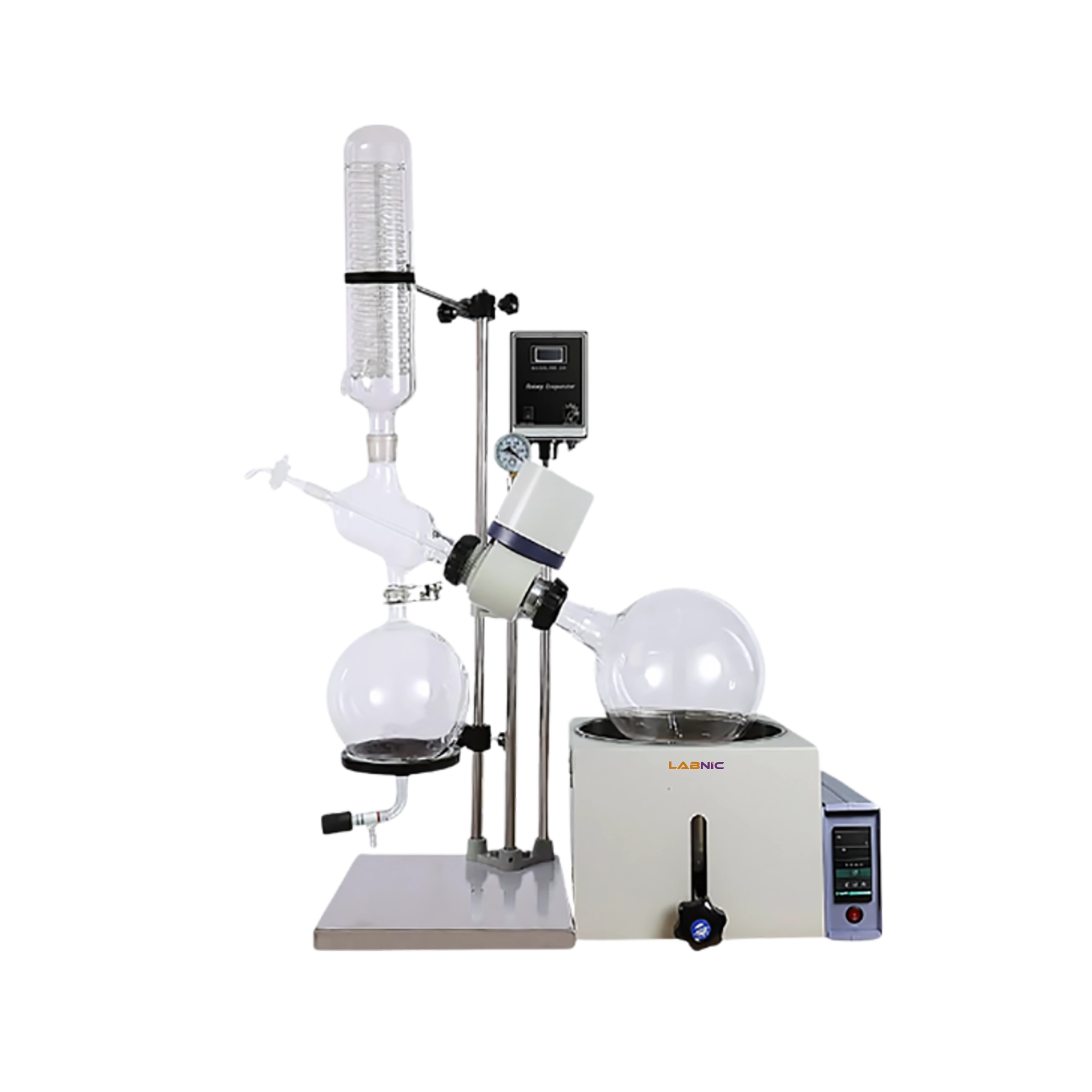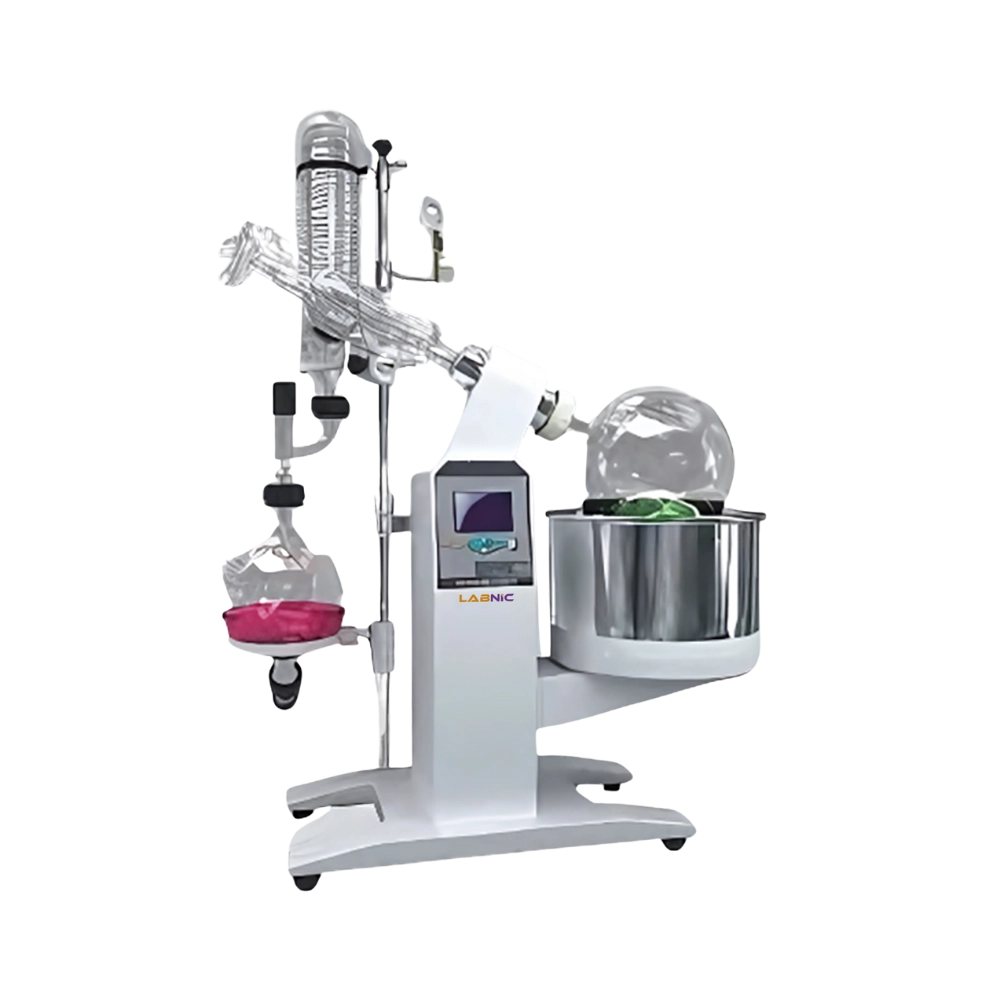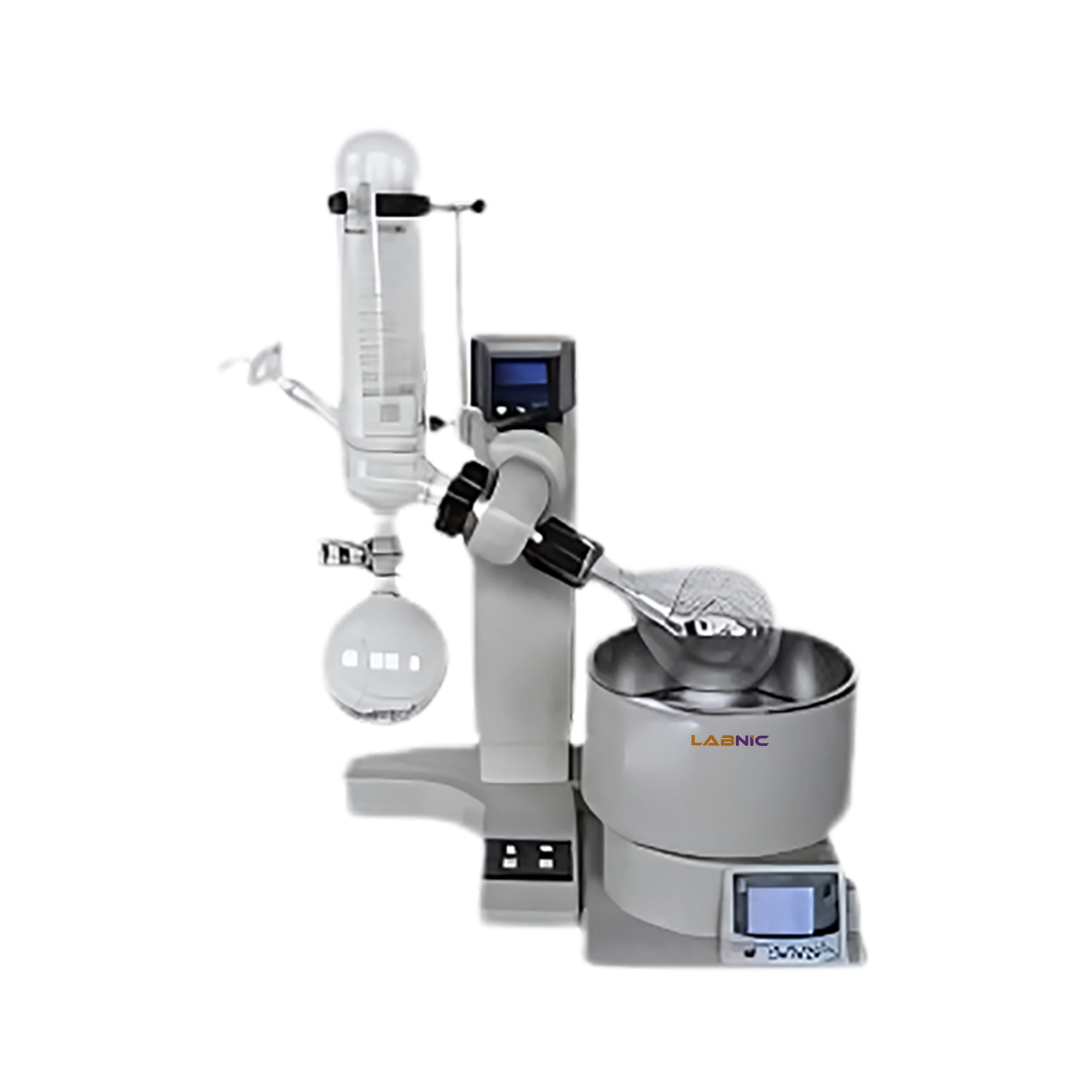
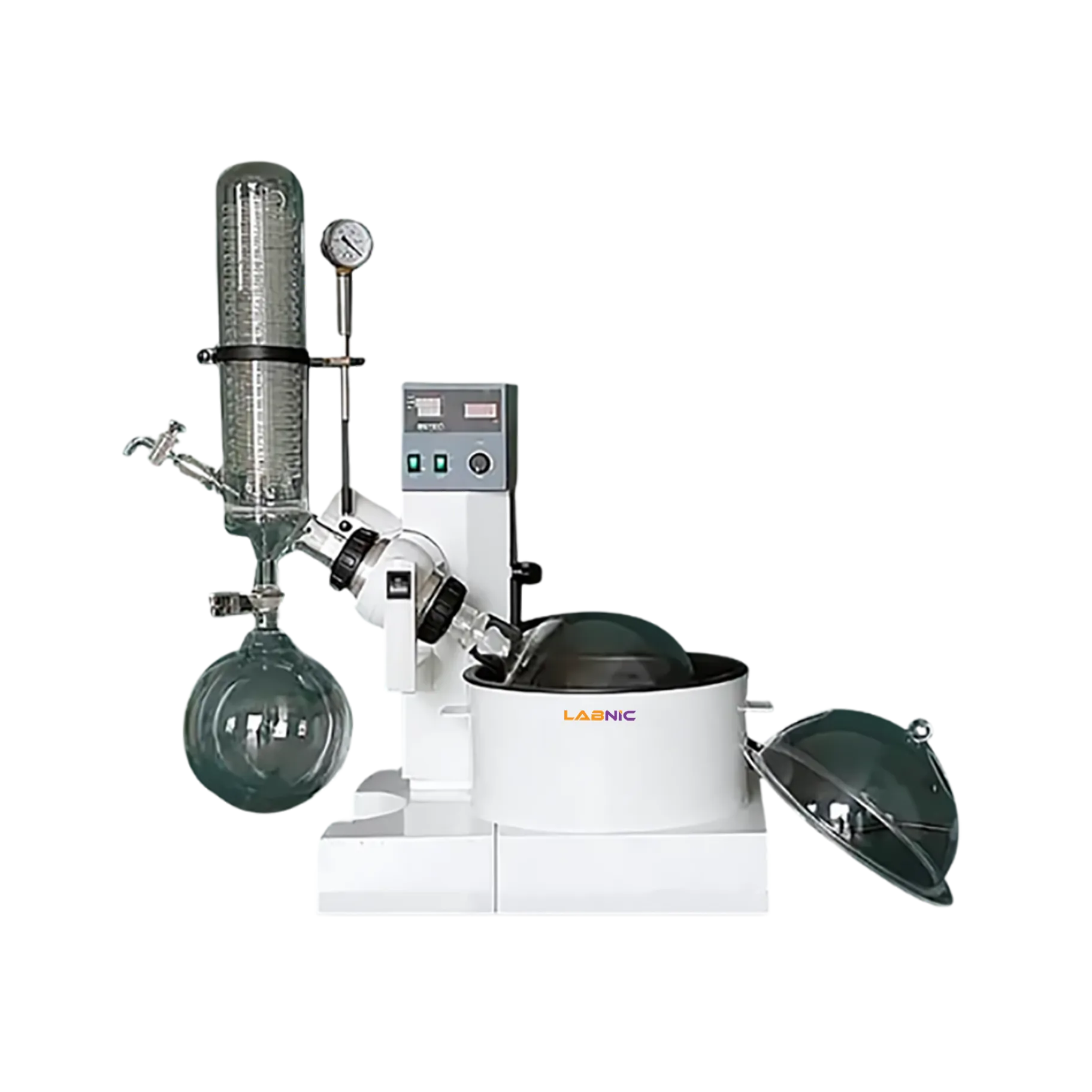
Rotary evaporator LBN-RE135 has excellent air tightness, high evaporation rate and anti-corrosion function. Rotational flask is 5L and receiving flask is 3L capacity. Rotational speed is 0-110rpm. It includes chillers, vacuum pump, vacuum controller. Vacuum meter is available to read vacuum degree correctly. Consists of digital display for rotational speed and temperature, ball milling mouth for good sealing performance, taper joint lock and release device, lift heating bath and lid for water bath.
| Rotating Flask | 5L |
| Optional Rotating Flask | 3L, 2L, 1L |
| Receiving Flask | 3L |
| Lifting Type | Automatic lifting |
| Condenser | Vertical, various types condensers are available, include cold trap condenser, dual condensers, etc., customization with greatest flexibility |
| Rotation Speed | 0-110 rpm |
| Vacuum pump | Available, Reachable Vacuum Rate < 133Pa (1.33mbar, 1 Torr) |
| Chiller | Available |
| Bath Power | 2.2 KW |
| Staic Temp. Control Range & Wave | RT-99 + - 2 (150) + - 0.2 Celsius degree |
Rotary evaporation is a gentle and efficient method for liquid separation and purification. Evaporators are designed to remove aqueous or volatile liquid from samples, leaving desired analytic material intact Specific rotary evaporation applications include: Concentration of solutions and suspensions, Crystallization or recrystallization, Chemical synthesis, Solvent distillation and recycling
Rotary evaporation is a gentle and efficient method for liquid separation and purification. Evaporators are designed to remove aqueous or volatile liquid from samples, leaving desired analytic material intact Specific rotary evaporation applications include: Concentration of solutions and suspensions, Crystallization or recrystallization, Chemical synthesis, Solvent distillation and recycling
Most Frequently Asked Questions
1. What are Rotary Evaporators used for?
Ans. Rotary Evaporators are used for efficient solvent removal and concentration of samples in laboratory processes.
2. How does a Rotary Evaporator remove solvents effectively?
Ans. Rotary Evaporators use a rotating flask combined with a vacuum system for controlled evaporation.
3. Why do Rotary Evaporators operate under reduced pressure?
Ans. Rotary Evaporators operate under reduced pressure to lower boiling points and protect heat-sensitive samples.
4. How do Rotary Evaporators prevent sample degradation?
Ans. Rotary Evaporators ensure gentle evaporation conditions, maintaining sample integrity and high-quality recovery.
5. What are the main components of a Rotary Evaporator?
Ans. Rotary Evaporators consist of a rotating flask, vacuum system, condenser, and heating bath.
6. Where are Rotary Evaporators commonly used?
Ans. Rotary Evaporators are widely used in research laboratories, chemical processing, and production environments.
Rotary evaporator LBN-RE135 has excellent air tightness, high evaporation rate and anti-corrosion function. Rotational flask is 5L and receiving flask is 3L capacity. Rotational speed is 0-110rpm. It includes chillers, vacuum pump, vacuum controller. Vacuum meter is available to read vacuum degree correctly. Consists of digital display for rotational speed and temperature, ball milling mouth for good sealing performance, taper joint lock and release device, lift heating bath and lid for water bath.