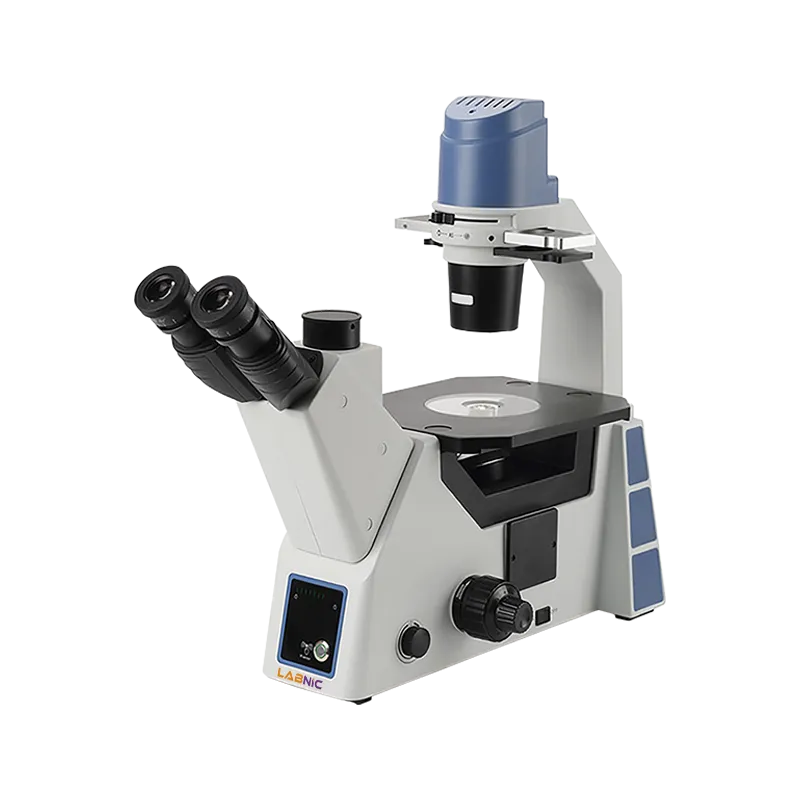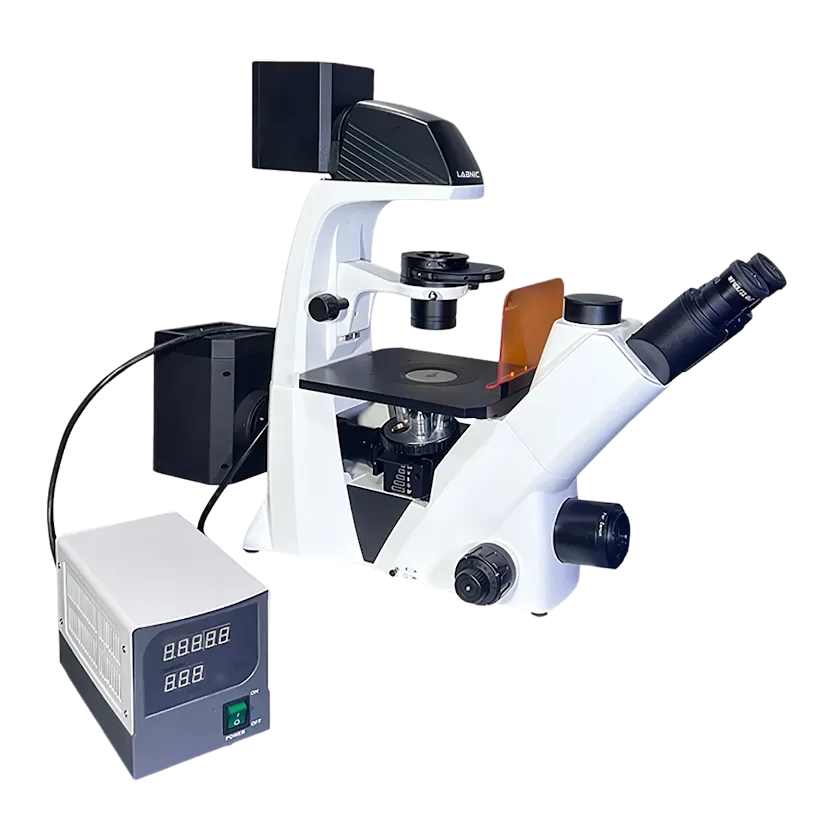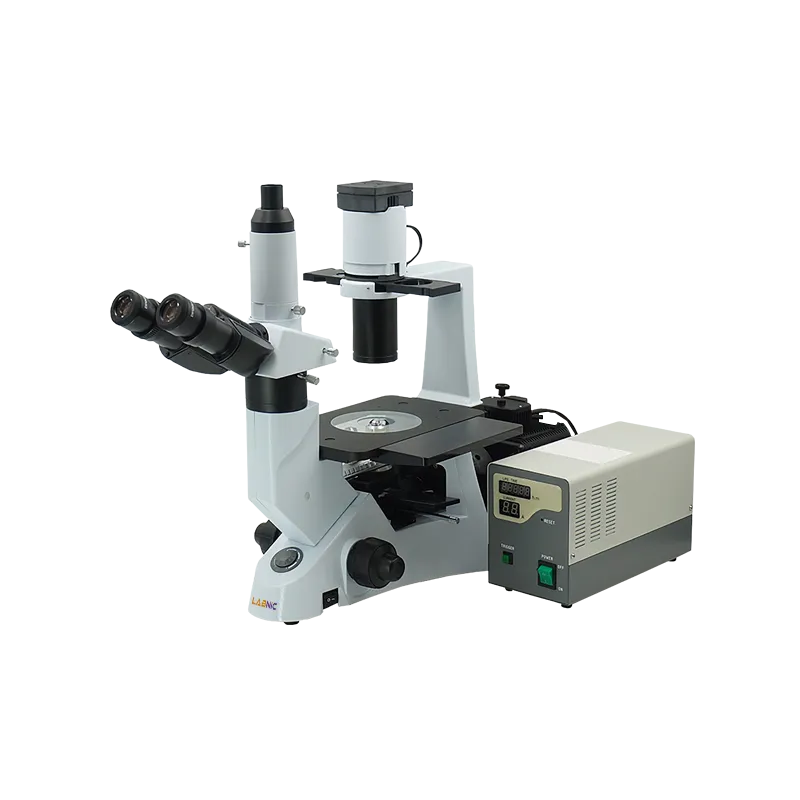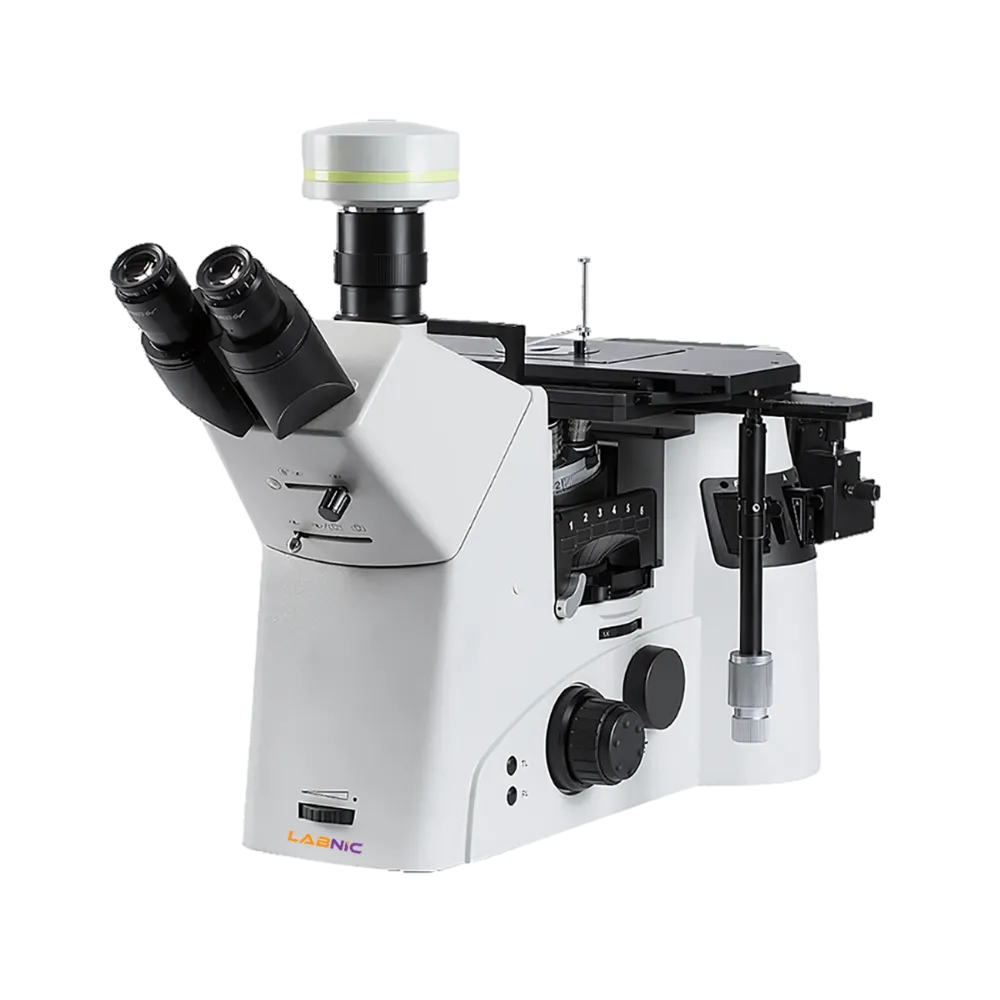

Inverted Metallurgical Microscope LBN-IM123 has an infinity-plan optical system of 50x–500x magnification. It consists of a Siedentopf trinocular head type with a built-in Bertrand lens of 45° inclination. The microscope has a DIC 6-hole nosepiece, a phase contrast objective, and a triple-layer mechanical working stage. Turret 0.55 N. A condenser and halogen are incorporated.
| Optical Type | Infinity Plan |
| Standard Magnification | 50x - 500x |
| Head Type | Siedentopf Trinocular |
| Inclination | 45° |
| Rotation | 360° |
| Interpupillary | 47-78 mm |
| Diopter | Adjustable |
| Eyepiece Diameter | 30 mm |
| Eyepiece | SW10x/22 mm, 2 pcs |
| Nosepiece | DIC Slot, 6-holes |
| Objective | NIS60 Infinity Plan Semi-APO LWD PH Objective, Glass Slide Thickness 1.2 mm, 10x/0.3, W.D 6mm, 20x/0.45, W.D 3.1mm, 40x/0.60, W.D 2.2mm, 60x/0.85, W.D 1.2mm |
| Working Stage Type | Triple Layer Mechanical |
| Stage Size | 340 × 230 mm |
| Moving | 130 × 230 mm |
| Stage | Metal Plate Diameter 20mm, Metal Plate Diameter 28mm, Metal Plate Water Drop Shape |
| Focusing Range | 9 mm |
| Condenser | Turret 0.55 N. A, W.D 26mm, with 6 Positions for Phase Contrast, DIC, Bright Field View |
| Light Source | Halogen, Fluorescent |
| Transmit Light | 12V100W Halogen |
| Reflect Light | 100W Mercury HBO Fluorescent Light |
| Power Supply | AC 100V-240V Wide Voltage Power Cord Detachable |
| Phase Contrast | Phase Contrast Annulus Built-in Turret Condenser, for 10x, 20x, 40x, DIC Slider |
| Polarizing | Polarizing Cube, Round Polarizing Cube, Analyzer Slide |
| Fluorescent Band | B, G, UV, V |
| Fluorescence | Reflect 100W Mercury HBO Fluorescent Light, 3 Filter Among B, G, V, UV, Field Diaphragm Slide, Aperture Diaphragm Slide, Filter Holder Slide with ND6, ND25 Filters |
| Dimensions (L × D × H) | 1200 × 800 × 700 mm |
| Net Weight | 50 Kg |
| Gross Weight | 60 Kg |
Inverted Metallurgical microscopes have applications in the fields of alloy and metal engineering and the mineral industry. They are used for the inspection of thin metal plates, electric circuits, opaque metals, and minerals.
Inverted Metallurgical microscopes have applications in the fields of alloy and metal engineering and the mineral industry. They are used for the inspection of thin metal plates, electric circuits, opaque metals, and minerals.
Most Frequently Asked Questions
1. What is an Inverted Biological Microscope?
Ans. An Inverted Biological Microscope is designed for observing live cells, tissue cultures, and liquid samples from below, with the light source and objective lenses positioned beneath the stage.
2. What are the key applications of an Inverted Biological Microscope?
Ans. It is widely used in cell biology, microbiology, IVF research, pharmaceutical studies, and live-cell imaging for observing adherent cells, tissue cultures, and microorganisms.
3. What types of samples can be observed with an Inverted Biological Microscope?
Ans. It is suitable for adherent cells, tissue cultures, microorganisms, embryos, and aquatic specimens in liquid media.
4. Does an Inverted Biological Microscope require special objective lenses?
Ans. Yes, it uses long working distance (LWD) objective lenses, allowing focus through thick samples or liquid media.
5. What are the advantages of using an Inverted Biological Microscope?
Ans. It allows non-invasive live-cell observation, supports larger sample containers like flasks and petri dishes, and is compatible with advanced imaging techniques such as fluorescence and phase contrast.
Inverted Metallurgical Microscope LBN-IM123 has an infinity-plan optical system of 50x–500x magnification. It consists of a Siedentopf trinocular head type with a built-in Bertrand lens of 45° inclination. The microscope has a DIC 6-hole nosepiece, a phase contrast objective, and a triple-layer mechanical working stage. Turret 0.55 N. A condenser and halogen are incorporated.