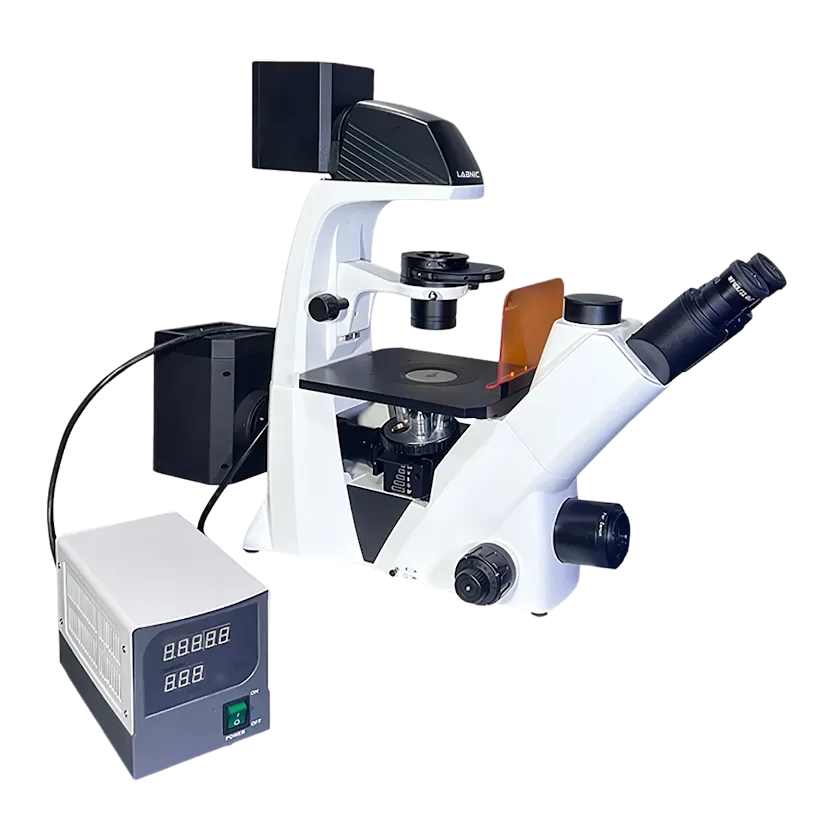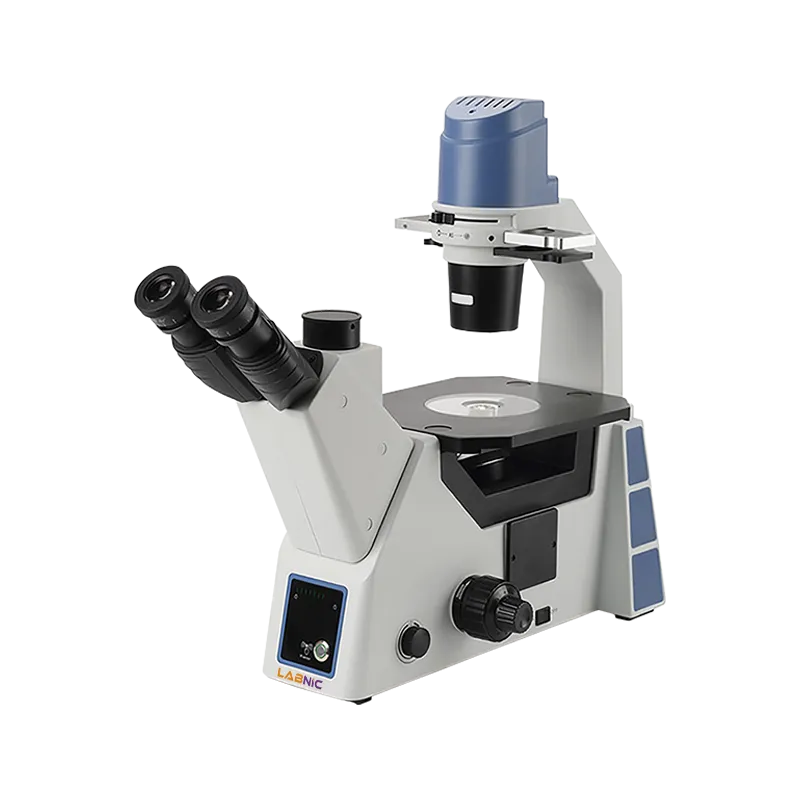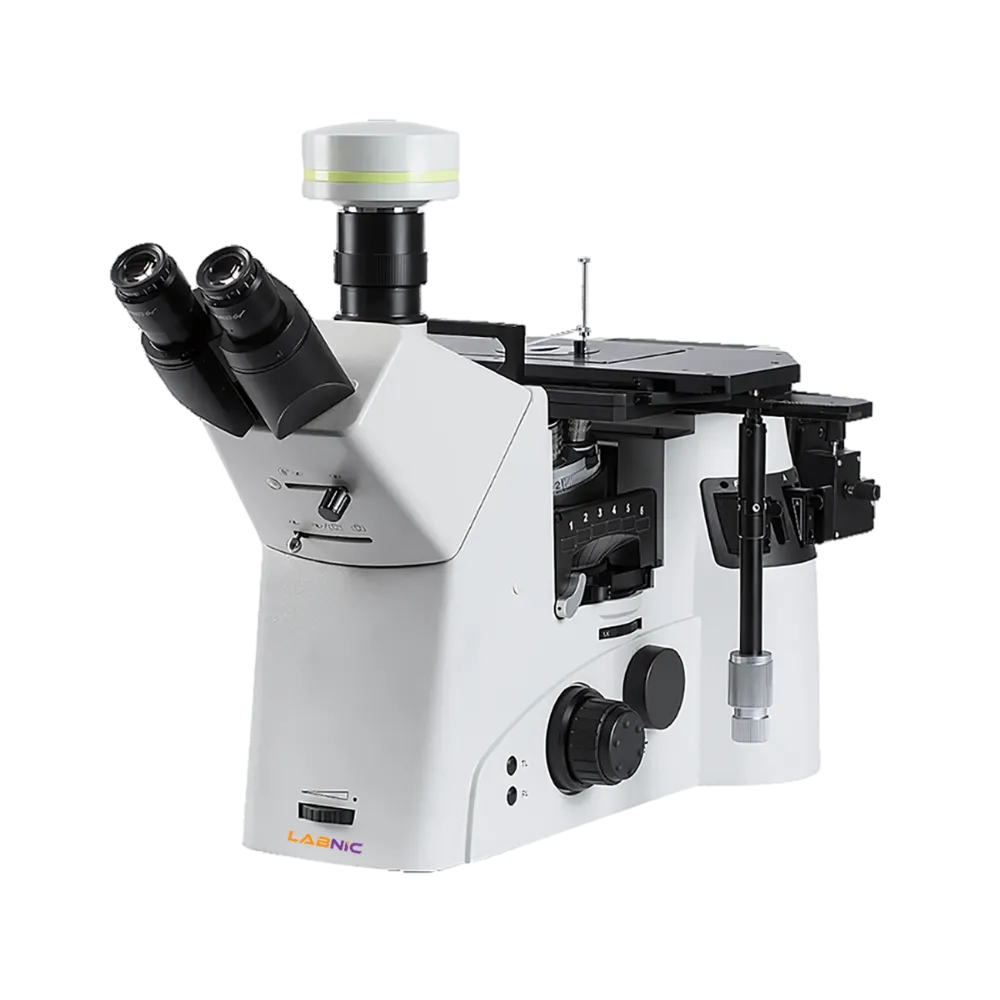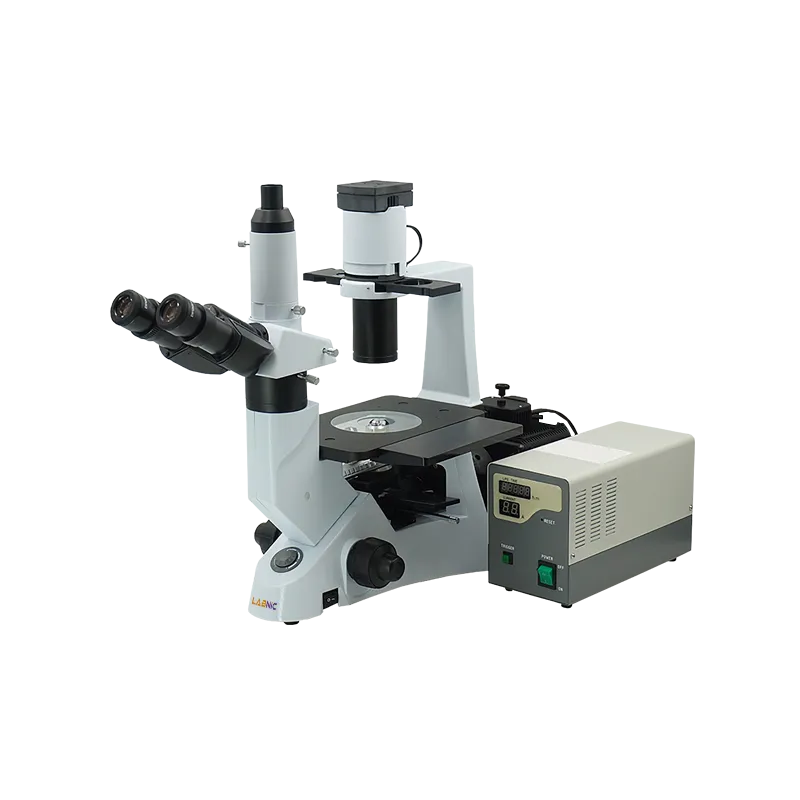


Inverted Fluorescence Microscope LBN-IM122 consists of an infinity optical system with Siedentopf trinocular heads, a 30° inclination, and an adjustable diopter. It has a quintuple nosepiece with fine-coarse specimen focusing. An ELWD 0.3-aperture condenser and plain working stage are incorporated in the microscope.
| Model | LBN-IM122 |
| Optical System | Infinity Optical System |
| Head | Siedentop Trinocular |
| Inclination | 30° |
| Interpupillary | 48-75 mm |
| Diopter | Adjustable |
| Eyepiece | EW10x/22mm |
| Nosepiece | Quintuple |
| Objective | 4x/0.1, W.D 18mm, 40x/0.6, W.D 2.6mm, PH10x/0.25, W.D 10mm, PH20x/0.40, W.D 5.1mm |
| Focusing Stroke | 37.7mm per rotation, 0.2mm per rotation |
| Working Stage Type | Plain Stage 160 ´ 250 mm |
| Auxiliary Stage | 70 × 180 mm |
| Condenser | ELWD, 0.3 N. A |
| Distance | 72 mm |
| Phase Contrast | Phase Contrast Slide, 2 holes for 10x-20x objective |
| Fluorescent System | B, G, V, UV excitation filter |
| Dimensions (L × D × H) | 470 × 400 × 670 mm |
| Gross Weight | 21Kg |
Inverted Fluorescence Microscope is used for sample, blood cell, and tissue culture inspection at medical research facilities, biological research labs, metallurgy, health clinics, etc.
Inverted Fluorescence Microscope is used for sample, blood cell, and tissue culture inspection at medical research facilities, biological research labs, metallurgy, health clinics, etc.
Most Frequently Asked Questions
1. What is an Inverted Biological Microscope?
Ans. An Inverted Biological Microscope is designed for observing live cells, tissue cultures, and liquid samples from below, with the light source and objective lenses positioned beneath the stage.
2. What are the key applications of an Inverted Biological Microscope?
Ans. It is widely used in cell biology, microbiology, IVF research, pharmaceutical studies, and live-cell imaging for observing adherent cells, tissue cultures, and microorganisms.
3. What types of samples can be observed with an Inverted Biological Microscope?
Ans. It is suitable for adherent cells, tissue cultures, microorganisms, embryos, and aquatic specimens in liquid media.
4. Does an Inverted Biological Microscope require special objective lenses?
Ans. Yes, it uses long working distance (LWD) objective lenses, allowing focus through thick samples or liquid media.
5. What are the advantages of using an Inverted Biological Microscope?
Ans. It allows non-invasive live-cell observation, supports larger sample containers like flasks and petri dishes, and is compatible with advanced imaging techniques such as fluorescence and phase contrast.
Inverted Fluorescence Microscope LBN-IM122 consists of an infinity optical system with Siedentopf trinocular heads, a 30° inclination, and an adjustable diopter. It has a quintuple nosepiece with fine-coarse specimen focusing. An ELWD 0.3-aperture condenser and plain working stage are incorporated in the microscope.