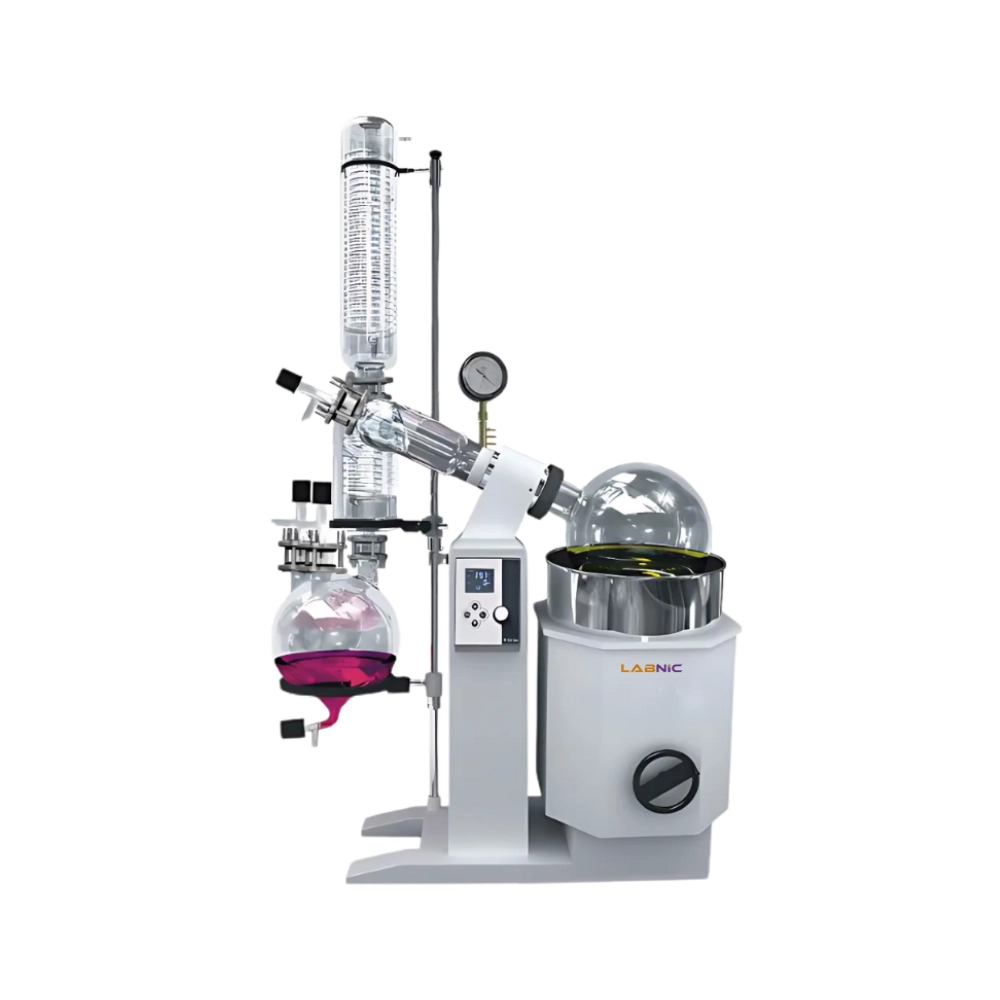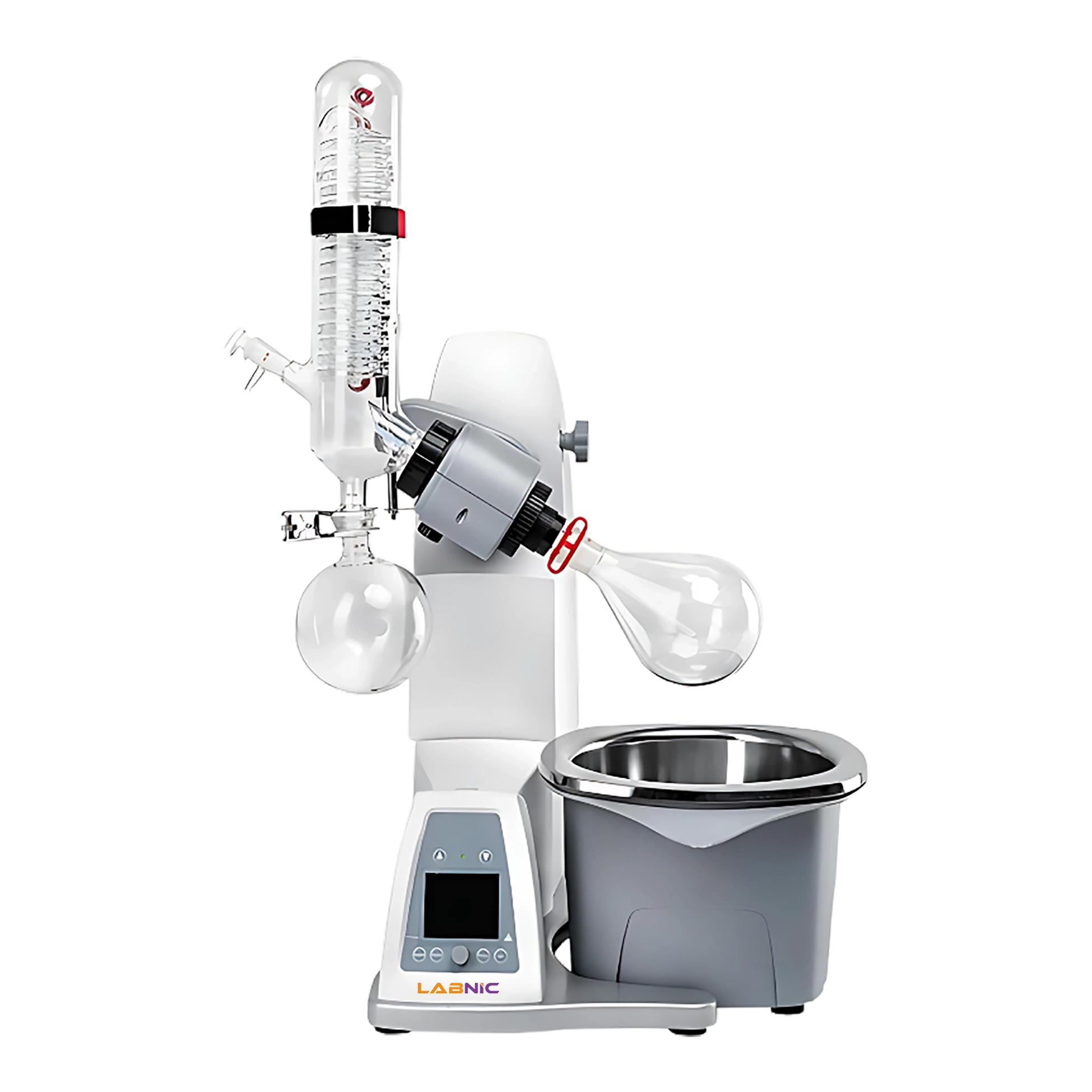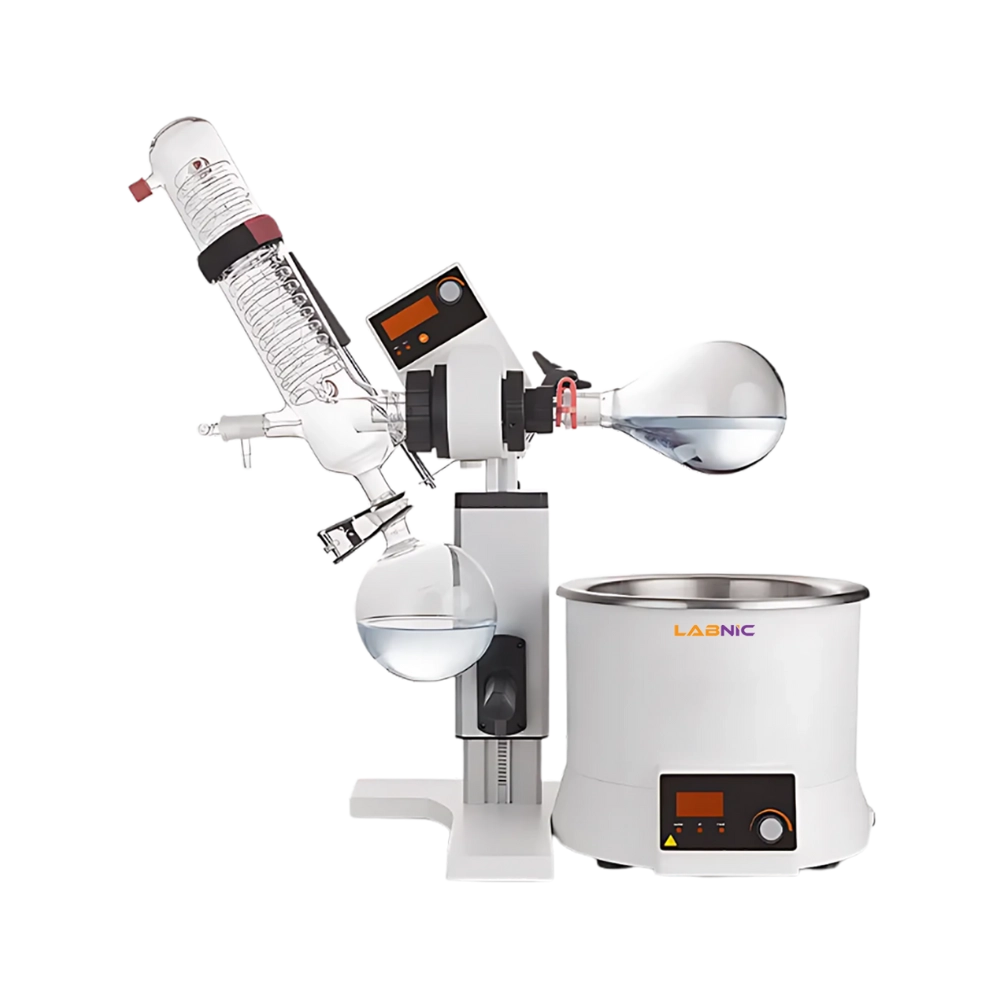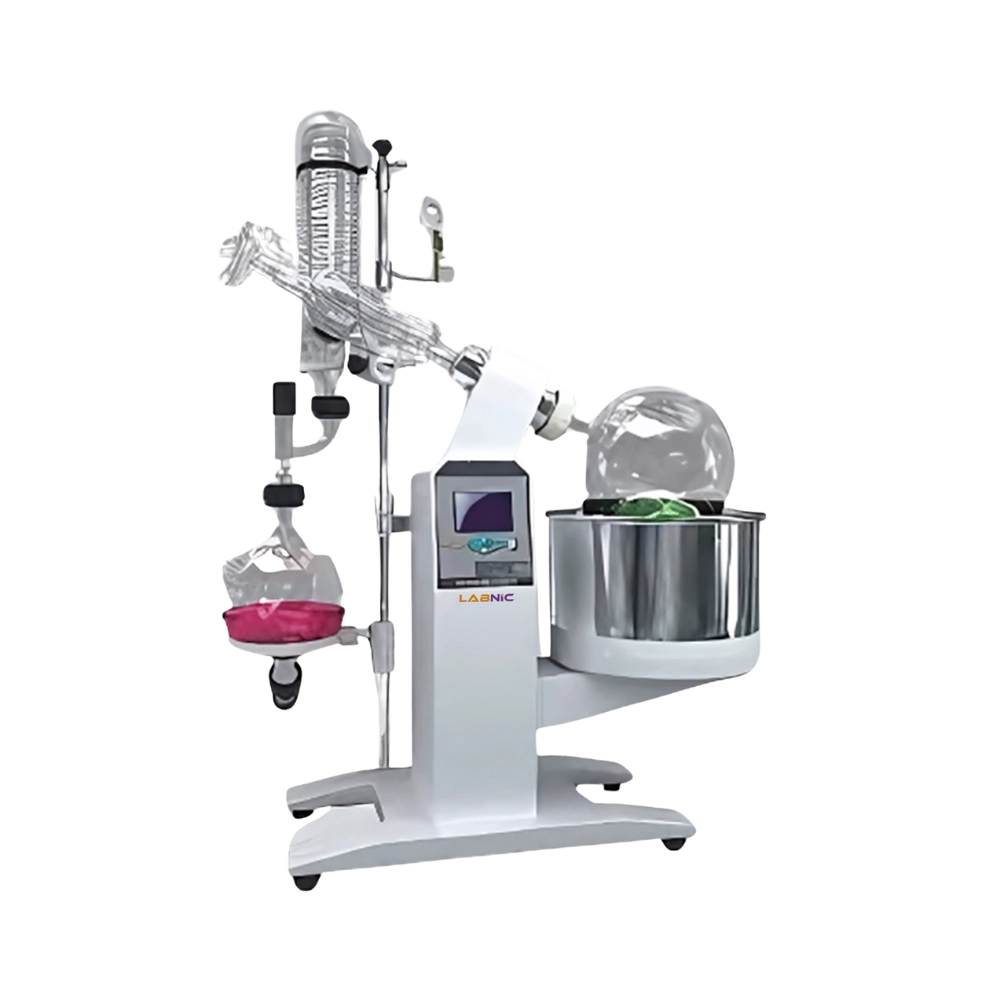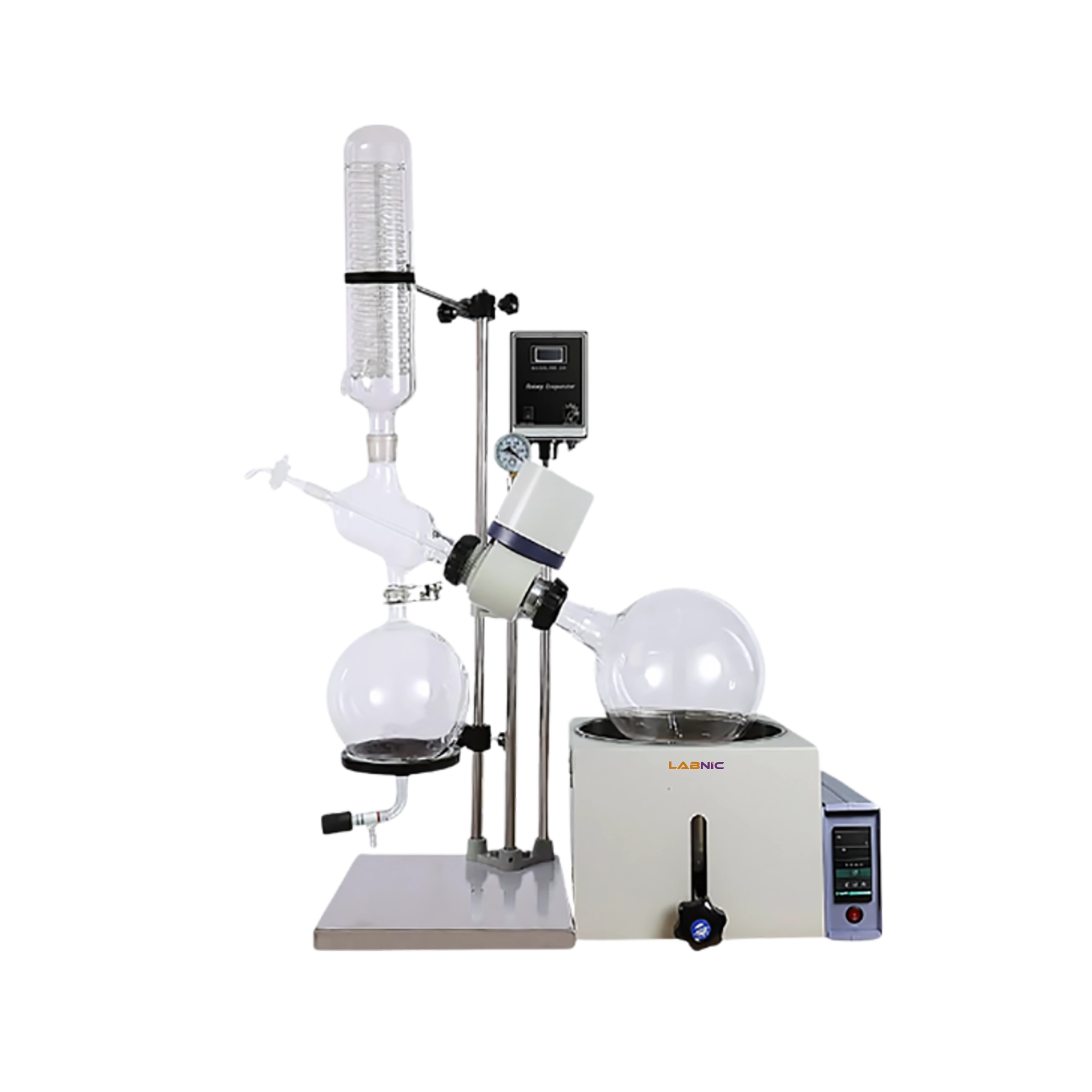
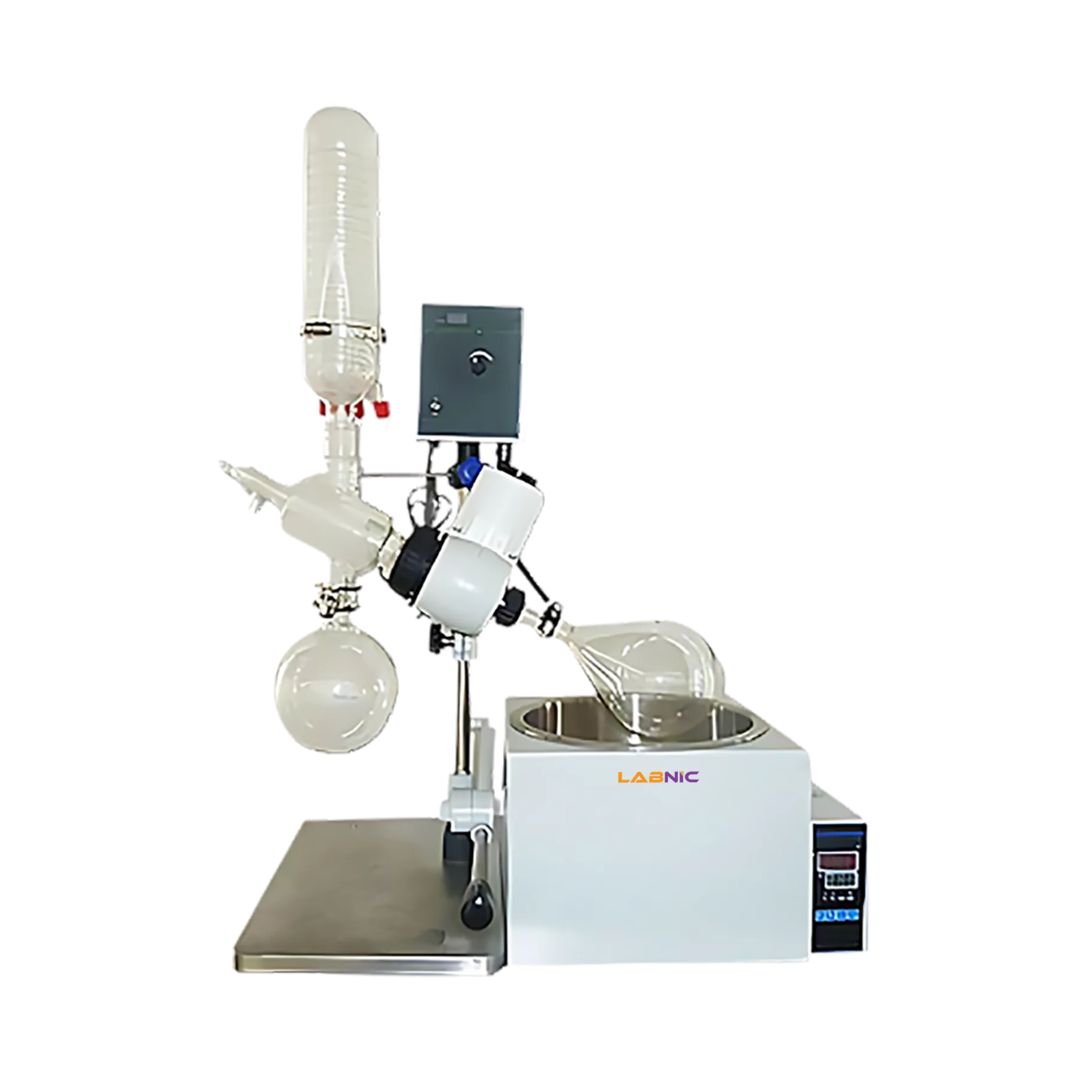
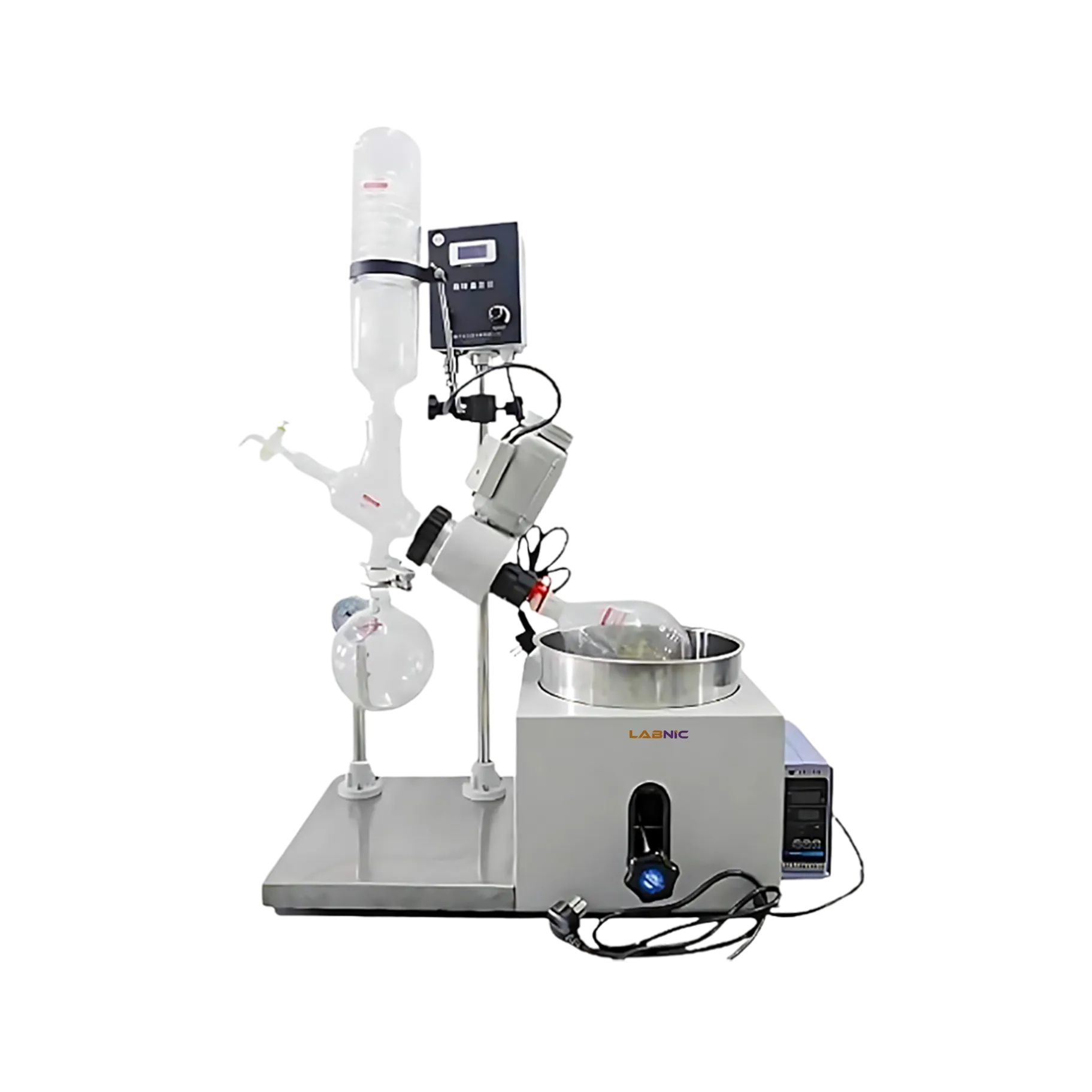
Rotary evaporator LBN-RE136 has a capacity ranging from 0.05L to 50L and temperature is -98˚ with water bath and -180˚c with oil bath. Vacuum pump, chiller, explosion protection of motor, controller and bath and available. It consists of a main condenser and a sub condenser, double collection flask. The flask is made up of high quality borosilicate glass. It consists of explosion proof motor and UL certified motor. It has integral explosion proof control panel and anti-corrosion sealing system.
| Down mode | Automatic lifting |
| The speed range | 20 to 110(rpm) |
| Temperature range | (water )RT to 98(℃) |
| condenser | Vertical type, double serpentine tube |
| Rotating bottle maximum capacity | 10L |
| Maximum capacity to collect bottles | 5L |
| Motor power | 3180W |
| Size | 950×500×1600 |
Rotary evaporation is a gentle and efficient method for liquid separation and purification. Evaporators are designed to remove aqueous or volatile liquid from samples, leaving desired analytic material intact Specific rotary evaporation applications include: Concentration of solutions and suspensions, Crystallization or recrystallization, Chemical synthesis, Solvent distillation and recycling.
Rotary evaporation is a gentle and efficient method for liquid separation and purification. Evaporators are designed to remove aqueous or volatile liquid from samples, leaving desired analytic material intact Specific rotary evaporation applications include: Concentration of solutions and suspensions, Crystallization or recrystallization, Chemical synthesis, Solvent distillation and recycling.
Most Frequently Asked Questions
1. What are Rotary Evaporators used for?
Ans. Rotary Evaporators are used for efficient solvent removal and concentration of samples in laboratory processes.
2. How does a Rotary Evaporator remove solvents effectively?
Ans. Rotary Evaporators use a rotating flask combined with a vacuum system for controlled evaporation.
3. Why do Rotary Evaporators operate under reduced pressure?
Ans. Rotary Evaporators operate under reduced pressure to lower boiling points and protect heat-sensitive samples.
4. How do Rotary Evaporators prevent sample degradation?
Ans. Rotary Evaporators ensure gentle evaporation conditions, maintaining sample integrity and high-quality recovery.
5. What are the main components of a Rotary Evaporator?
Ans. Rotary Evaporators consist of a rotating flask, vacuum system, condenser, and heating bath.
6. Where are Rotary Evaporators commonly used?
Ans. Rotary Evaporators are widely used in research laboratories, chemical processing, and production environments.
Rotary evaporator LBN-RE136 has a capacity ranging from 0.05L to 50L and temperature is -98˚ with water bath and -180˚c with oil bath. Vacuum pump, chiller, explosion protection of motor, controller and bath and available. It consists of a main condenser and a sub condenser, double collection flask. The flask is made up of high quality borosilicate glass. It consists of explosion proof motor and UL certified motor. It has integral explosion proof control panel and anti-corrosion sealing system.