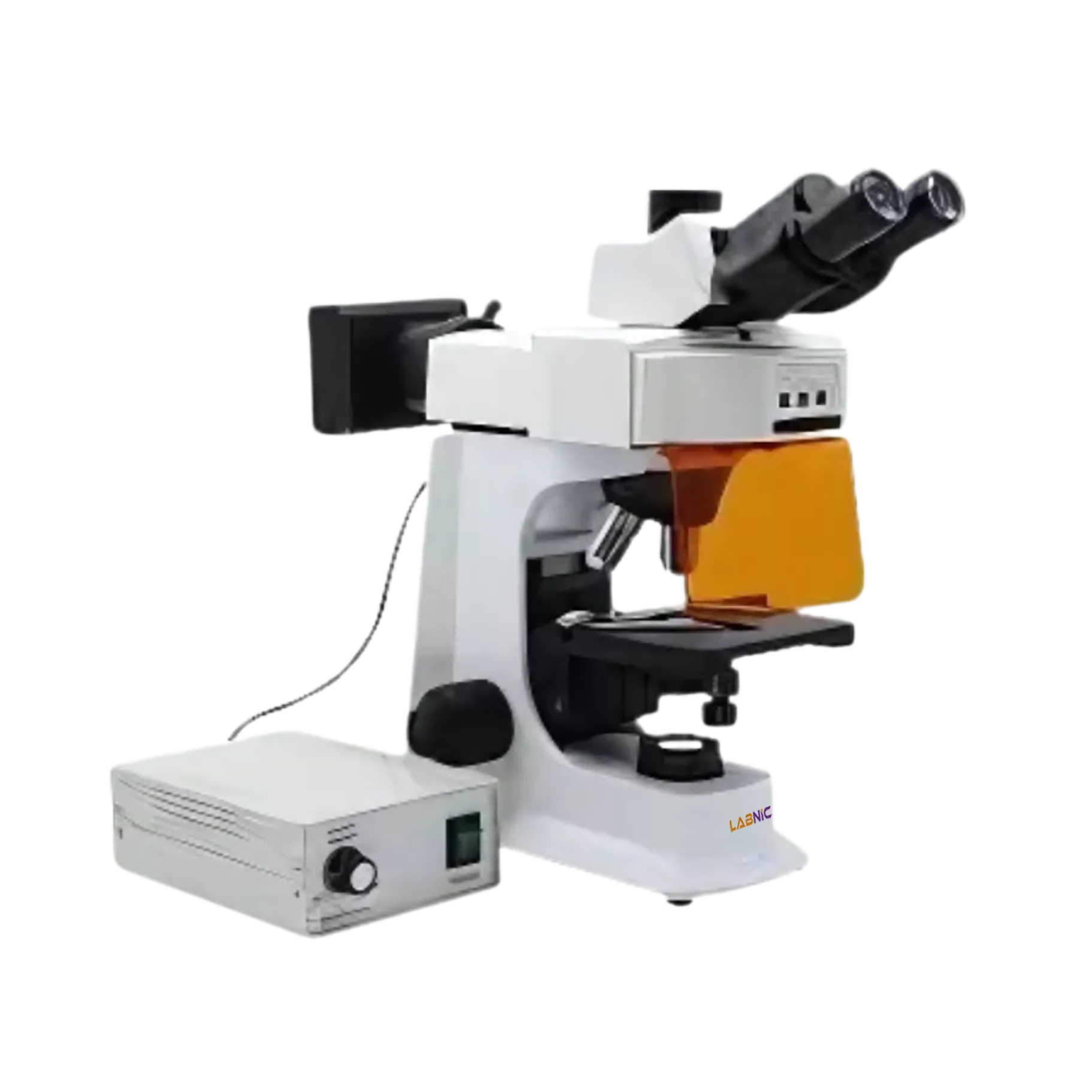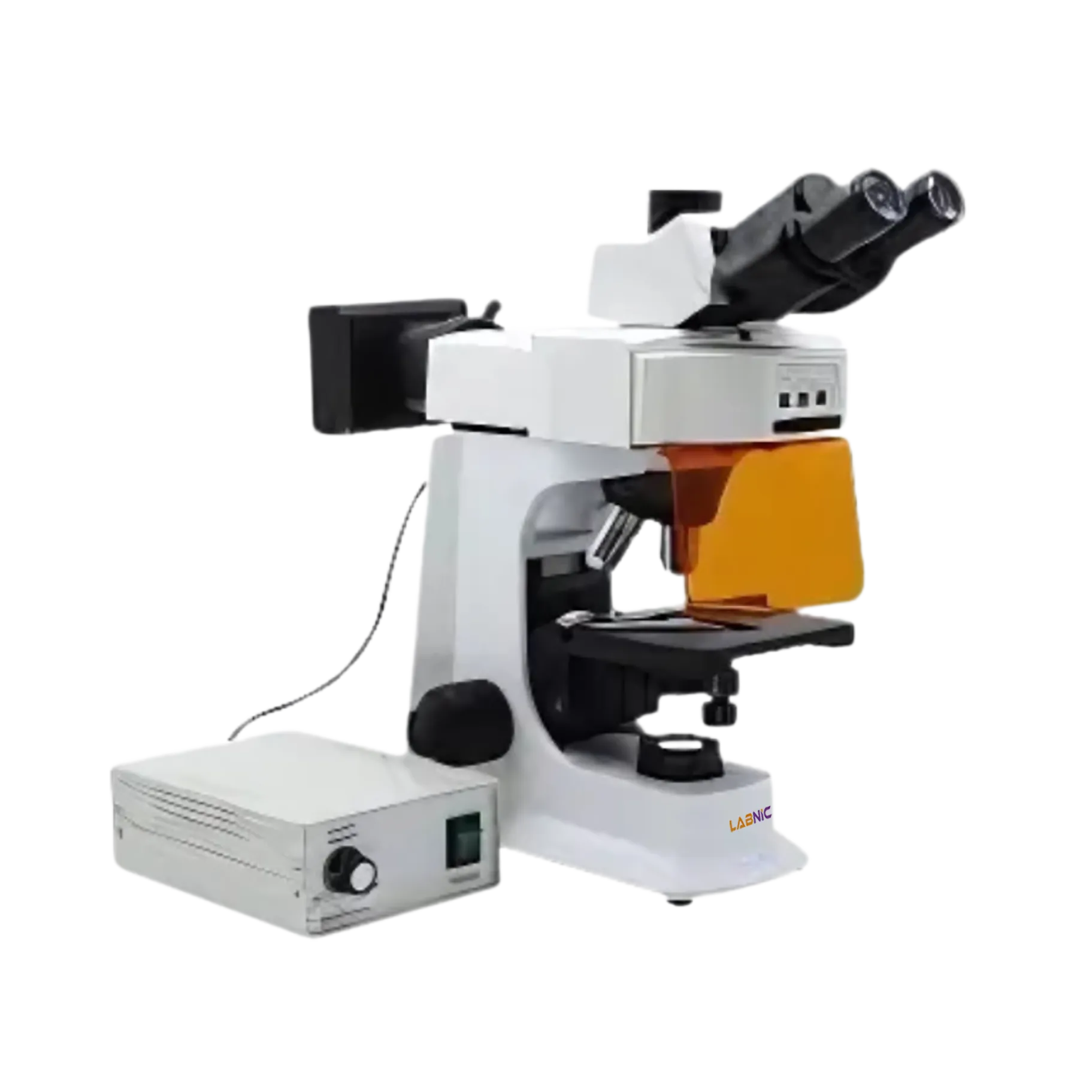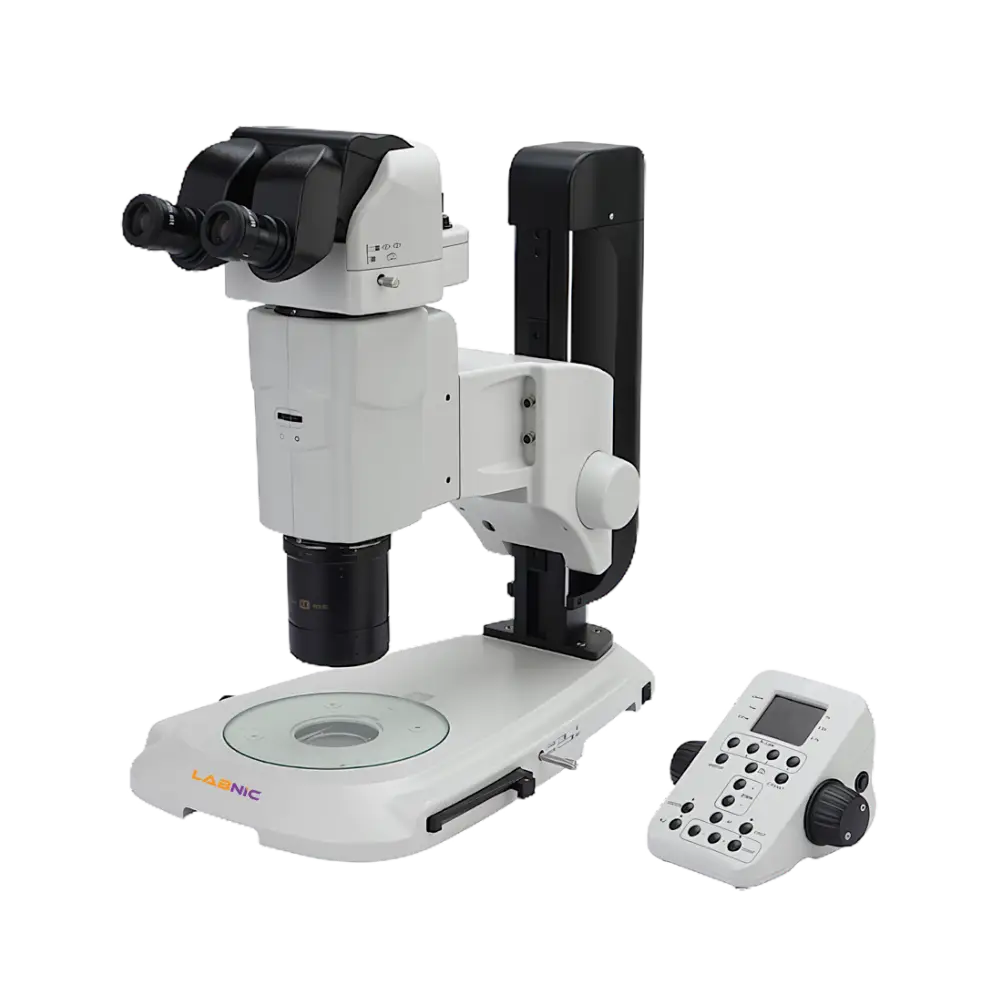
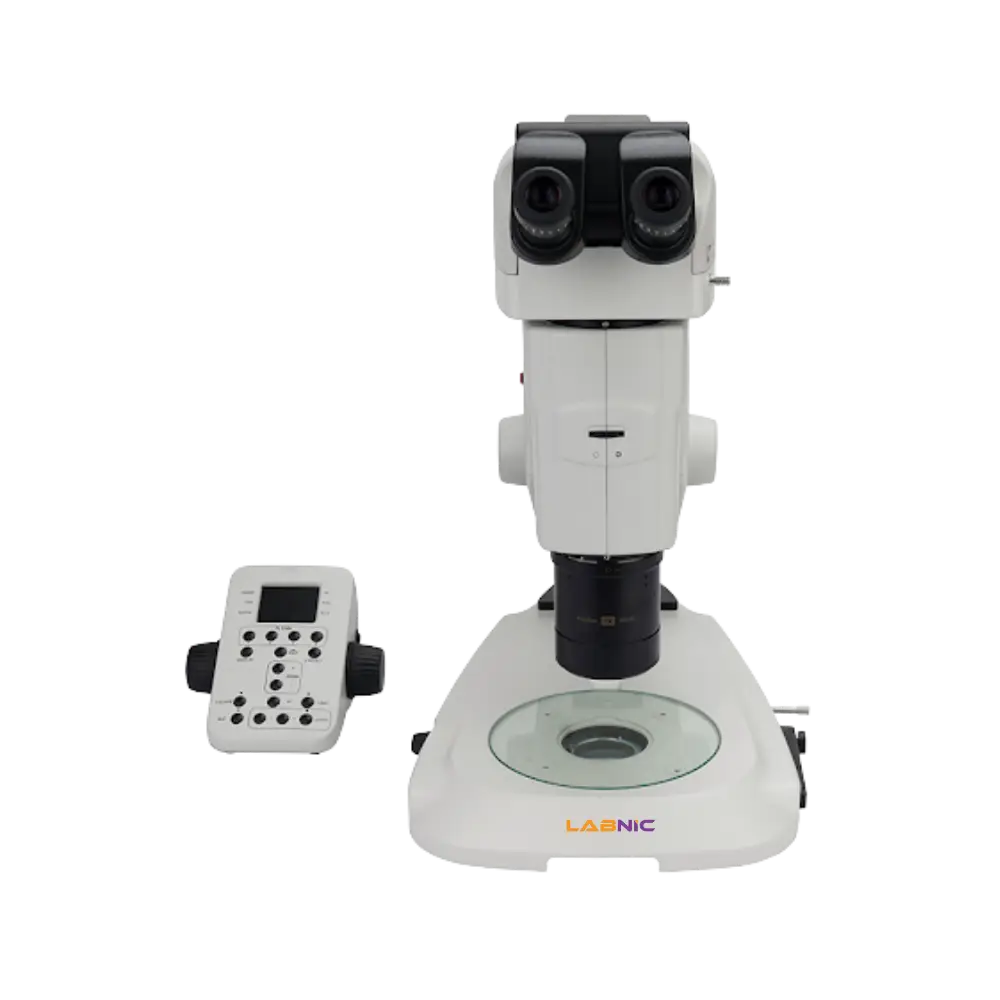
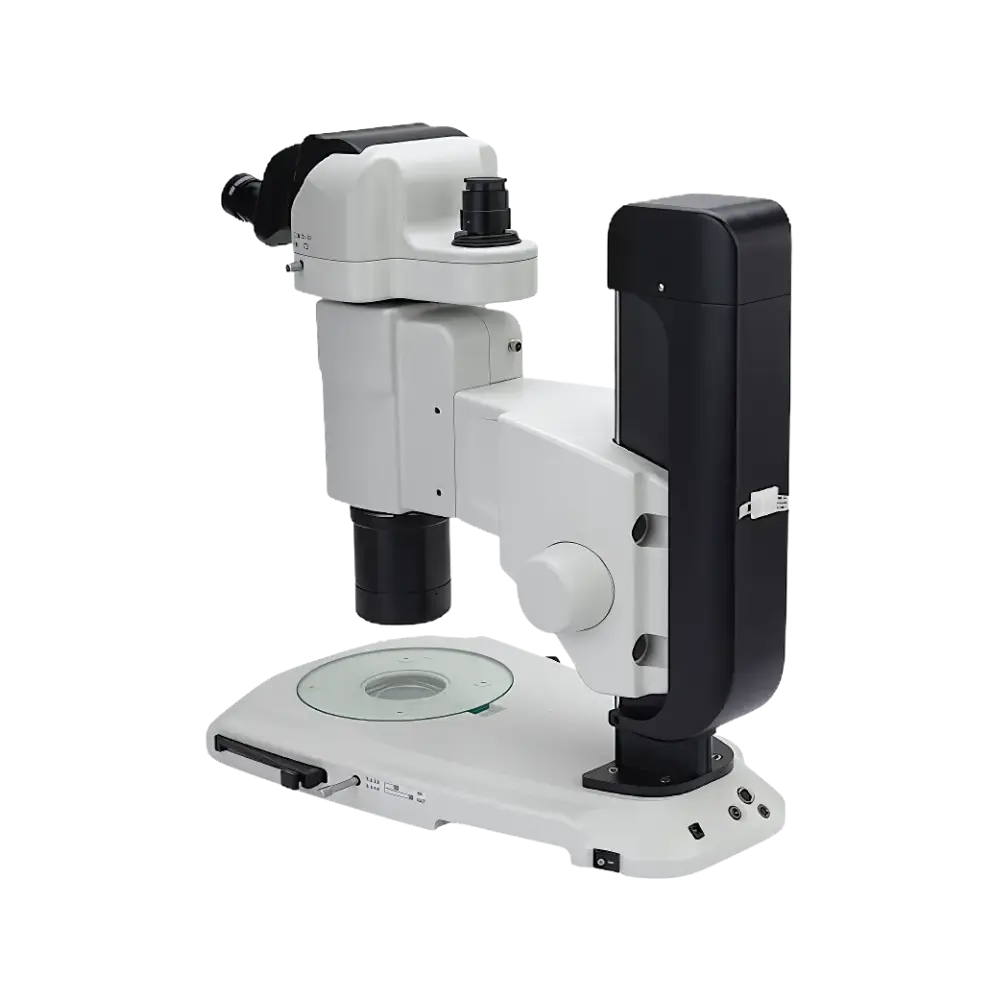
Fluorescence Microscope LBN-FM123 is a motorized research-level zoom stereo microscope with an infinite parallel Galileo optical system.It delivers sharp, high-contrast, and true-color images using plan apochromatic objectives with wide zoom range and smooth magnification.Equipped with a trinocular head and motorized controls, it ensures easy to use and precise focusing.Integrated EPI-fluorescent attachment with 5-hole module and four-band LED illumination ensures flexible fluorescence imaging.Our product LBN-FM123 is ideal for life sciences, biomedical research, semiconductors, materials science, industrial inspection, and education.
| Optical System | Infinite Parallel Galileo Zoom |
| Viewing Head |
20° inclined trinocular head; switchable between binocular/trinocular (100:0 or 0:100), Interpupillary Distance: 50–76 mm Fixed Eyepiece tube with lock screw |
| Eyepieces |
Standard: PL10×/23 mm Diopter Adjustable Optional: PL15×/16 mm or PL20×/12 mm |
| Zoom Range | 0.75× – 13.5× with click stops at key magnifications (0.75, 1, 2, 3, 4, 5, 6, 8, 10, 11, 12, 13, 13.5×); built-in aperture diaphragm |
| Objective Lens |
Plan Apochromatic 1× Working Distance 60 mm Numerical Aperture (N.A.): 0.15 |
| Zoom Ratio | 18:1 |
| Focusing Unit |
Motorized, three-speed focusing; range: 110 mm Remote control; supports coarse, fine, ultra-fine focusing; accuracy ≤0.01 mm Speed 0.1 mm/s |
| Base |
Plan base with transmitted LED illumination Ø180 mm glass insert plate OIC (Optical Image Control) function |
| Illumination |
Standard: LED transmitted, brightness adjustable Optional: LED Ring Light or Cold Light Source |
| Camera Adapter | 1× C-mount adapter |
| Fluorescence Attachment |
EPI-Fluorescent with 5-hole turret Supports up to 4 fluorescence modules + 1 bright field module Four-band LED light with adjustable brightness; filters FL-FITC, mCherry, V, FL-DAPI |
| Net Weight | 20 kg |
| Packing | 1 set/carton |
| Gross Weight | 22 kg |
LED Ring light
Cold light source
Fluorescence Microscope LBN-FM123 is ideal for life science and biomedical research, live cell imaging, IVF experiments.Industrial inspection, material science, microelectronics testing, gemology, and education/training in labs.
Fluorescence Microscope LBN-FM123 is ideal for life science and biomedical research, live cell imaging, IVF experiments.Industrial inspection, material science, microelectronics testing, gemology, and education/training in labs.
Most Frequently Asked Questions
1. Why is it called a Fluorescence Microscope?
Ans. A Fluorescence Microscope gets its name because it uses fluorescence to visualize samples. It excites fluorescent molecules, which then emit light, allowing for high-contrast imaging of specific structures.
2. What type of light source is used?
Ans. We use LEDs in our fluorescence microscopes because they are energy-efficient, long-lasting, and provide stable illumination for accurate imaging.
3. What is the use of an Abbe condenser in Fluorescence Microscope?
Ans. An Abbe condenser is needed to enhance contrast in transmitted light applications.
4. Can Fluorescence Microscopy be used for live-cell imaging?
Ans. Yes, our fluorescence microscopes are equipped with time-lapse imaging and controlled environmental conditions, making them ideal for live-cell studies.
5. Can a Fluorescence Microscope detect multiple colors simultaneously?
Ans. Yes, by using different fluorophores with distinct emission wavelengths, our fluorescence microscope can detect multiple colors in a single sample.
Fluorescence Microscope LBN-FM123 is a motorized research-level zoom stereo microscope with an infinite parallel Galileo optical system.It delivers sharp, high-contrast, and true-color images using plan apochromatic objectives with wide zoom range and smooth magnification.Equipped with a trinocular head and motorized controls, it ensures easy to use and precise focusing.Integrated EPI-fluorescent attachment with 5-hole module and four-band LED illumination ensures flexible fluorescence imaging.Our product LBN-FM123 is ideal for life sciences, biomedical research, semiconductors, materials science, industrial inspection, and education.