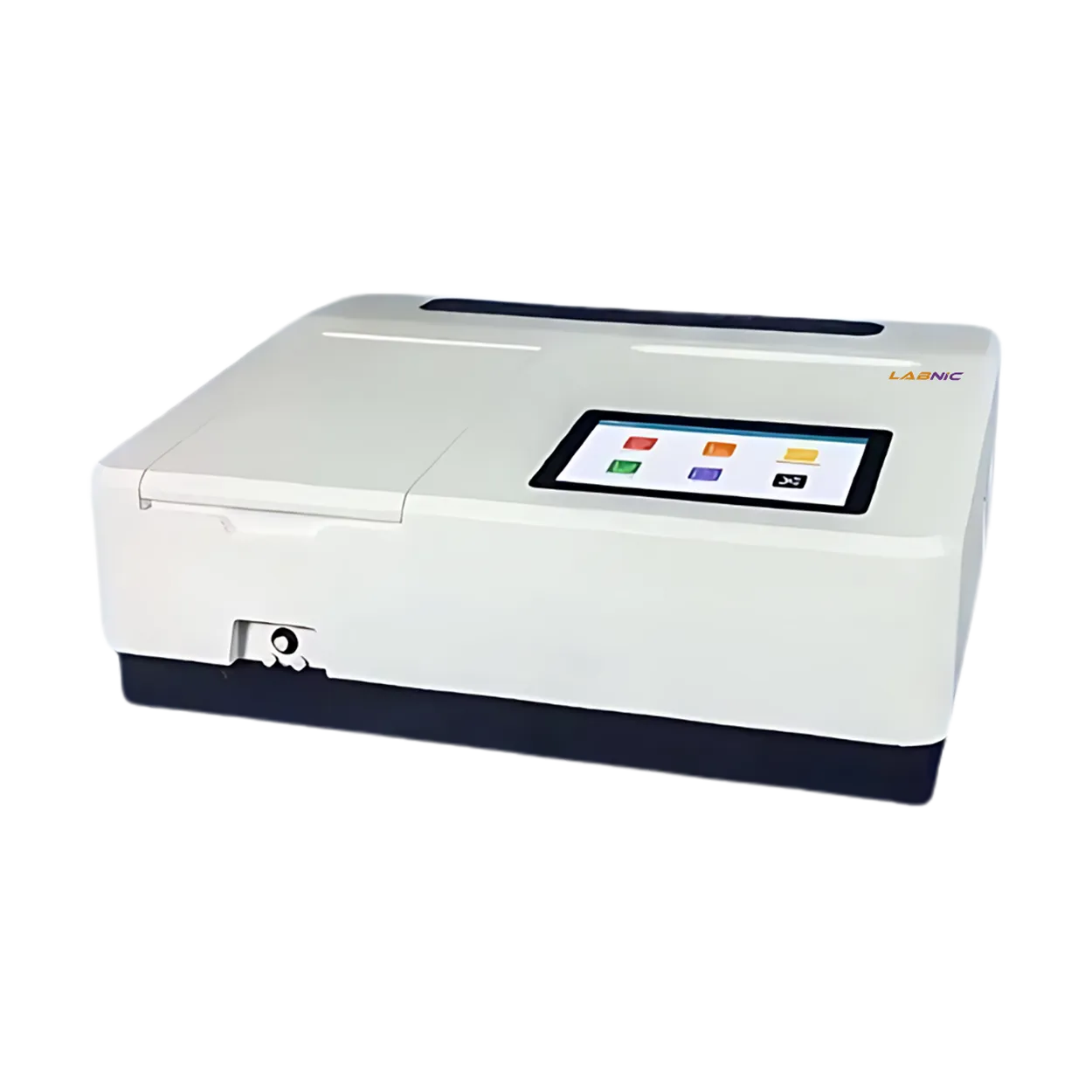
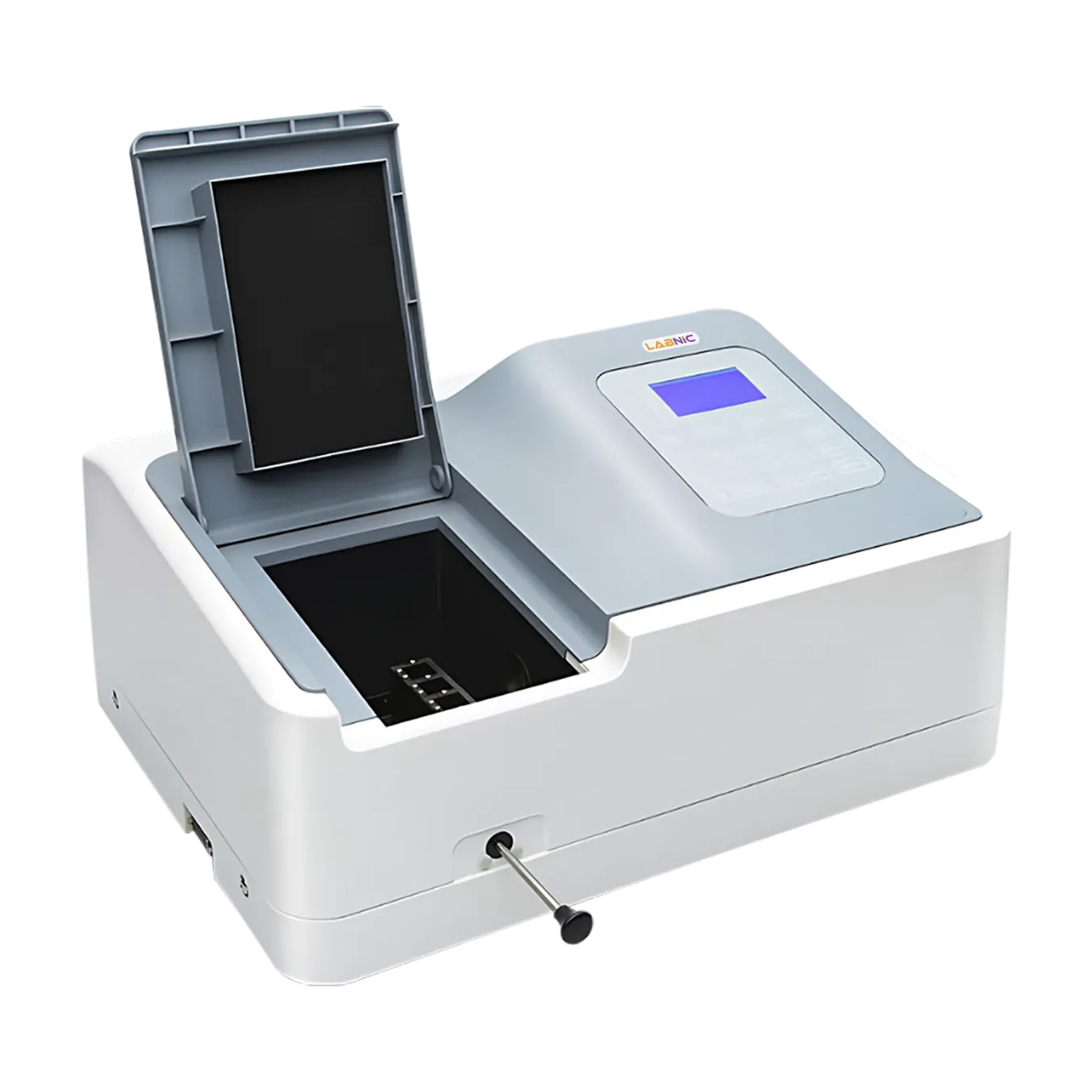
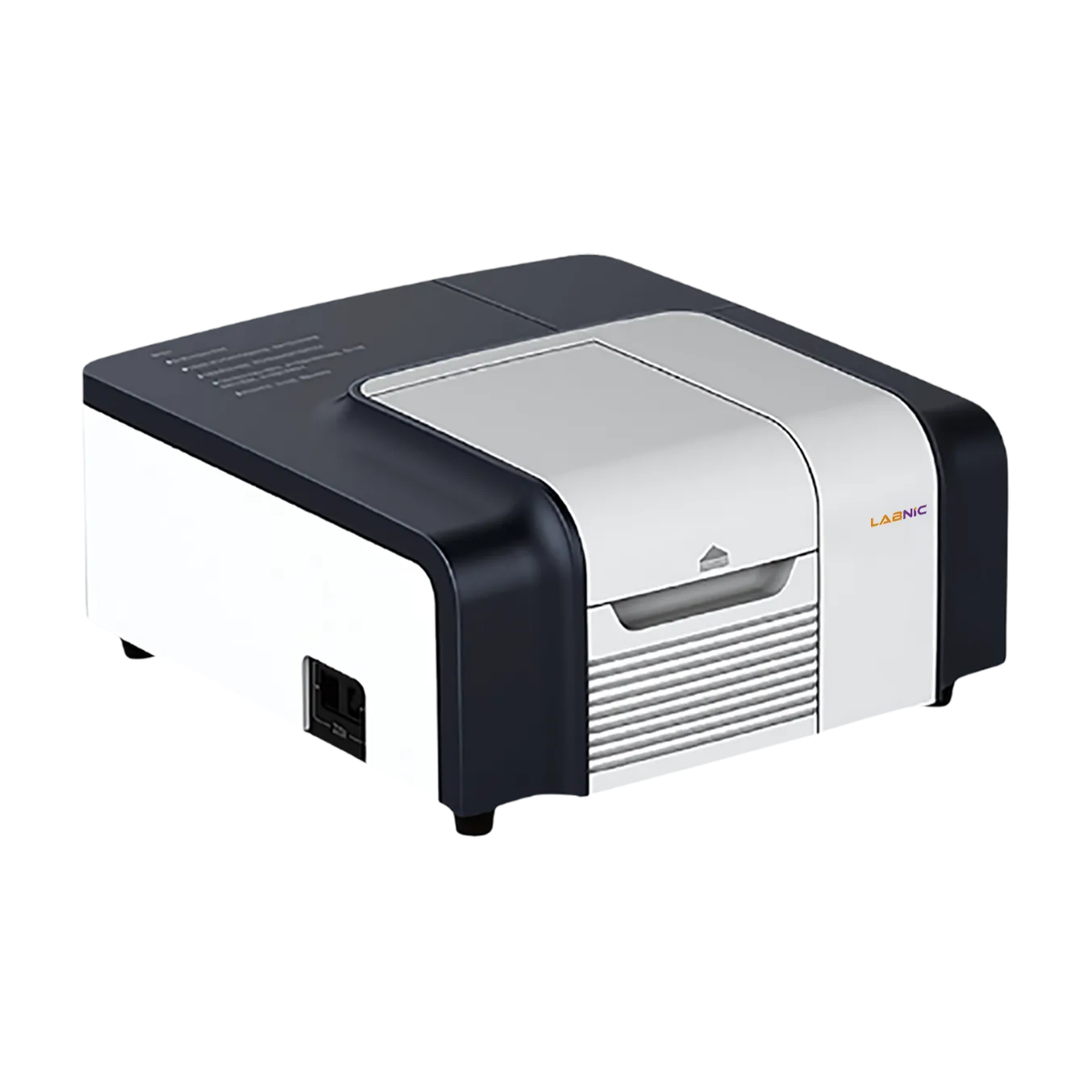
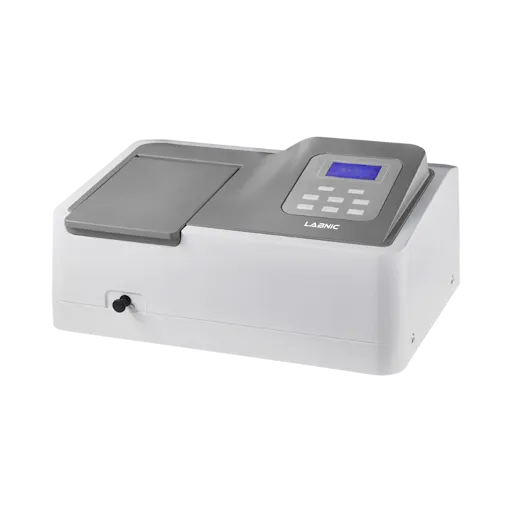
UV- Visible Spectrophotometer LBN-UV135 is a high-precision double-beam system designed for reliable and accurate quantitative and qualitative analysis. It features a 10-inch color touchscreen with an operating system for smooth navigation and easy result interpretation. Equipped with stable deuterium/halogen light source ensures excellent wavelength accuracy and long-term measurement stability. Integrated measurement modes including wavelength scan, time scan, multi-wavelength testing, derivative modes, and DNA/protein analysis meet diverse industrial requirements. Our UV-Vis Spectrophotometer is ideal for biological research, pharmaceuticals, environmental testing, food safety, clinical labs, and academic institutions.
| Optical Path | Double-Beam Spectrophotometer |
| Wavelength Range | 190 to 1100 nm |
| Bandwidth | 0.5 / 1.0 / 2.0 / 4.0 / 5.0 nm (adjustable) |
| Wavelength Accuracy | ±0.3 nm |
| Wavelength Repeatability | 0.1 nm |
| Photometric Accuracy | ±0.2% τ |
| Photometric Repeatability | 0.1% τ |
| Stray Light | ≤0.02% τ |
| Stability | 0.0003 A/h @ 500 nm |
| Photometric Mode | T, A, C, E |
| Wavelength Setting | Automatic |
| Photometric Display Range | –4 to 4 A |
| Display | 10-inch Color Touchscreen |
| Detector | Imported Silicon Photodiode |
| Light Source | Imported Deuterium Lamp + Tungsten Halogen Lamp |
| Power Requirement | AC 220V/50Hz or 110V/60Hz |
| Dimensions (W × D × H) | 650 × 430 × 240 mm |
| Weight | 21 kg |
Water bath constant temperature colorimeter holder,
Integrating Sphere
Flat Reflection Accessory
Film Sample Holder
Circular Test Tube Holder
Spectrophotometer Main Unit 1set
1cm glass cuvette 4 pcs
1cm quartz cuvette 2pcs
Dust Cover 1 pc
Power line 1 pc
Instruction Manual 1set
Software
UV-Visible Spectrophotometer LBN-UV135 is used for quantitative and qualitative analysis in biological research, pharmaceutical testing, environmental monitoring, food safety, chemical analysis, clinical diagnostics, and academic laboratories.
UV-Visible Spectrophotometer LBN-UV135 is used for quantitative and qualitative analysis in biological research, pharmaceutical testing, environmental monitoring, food safety, chemical analysis, clinical diagnostics, and academic laboratories.
Most Frequently Asked Questions
1. What are UV-Visible Spectrophotometers used for?
Ans. UV-Visible Spectrophotometers are used for precise optical measurements to analyze sample absorbance and detect contaminants.
2. How do UV-Visible Spectrophotometers ensure reliable measurement results?
Ans. UV-Visible Spectrophotometers deliver accurate and stable optical performance for consistent and dependable analysis.
3. How do UV-Visible Spectrophotometers support early contamination detection?
Ans. UV-Visible Spectrophotometers enable early stage contamination detection through sensitive absorbance measurement.
4. What design features support efficient laboratory workspace usage?
Ans. UV-Visible Spectrophotometers feature a compact footprint that helps optimize laboratory bench space.
5. What sample handling features are included in UV-Visible Spectrophotometers?
Ans. UV-Visible Spectrophotometers include large sample chambers for easy handling and quick sample replacement.
6. Where are UV-Visible Spectrophotometers commonly used?
Ans. UV-Visible Spectrophotometers are commonly used in clinical examination, medical industries, biochemistry laboratories, and research institutes.
UV- Visible Spectrophotometer LBN-UV135 is a high-precision double-beam system designed for reliable and accurate quantitative and qualitative analysis. It features a 10-inch color touchscreen with an operating system for smooth navigation and easy result interpretation. Equipped with stable deuterium/halogen light source ensures excellent wavelength accuracy and long-term measurement stability. Integrated measurement modes including wavelength scan, time scan, multi-wavelength testing, derivative modes, and DNA/protein analysis meet diverse industrial requirements. Our UV-Vis Spectrophotometer is ideal for biological research, pharmaceuticals, environmental testing, food safety, clinical labs, and academic institutions.